

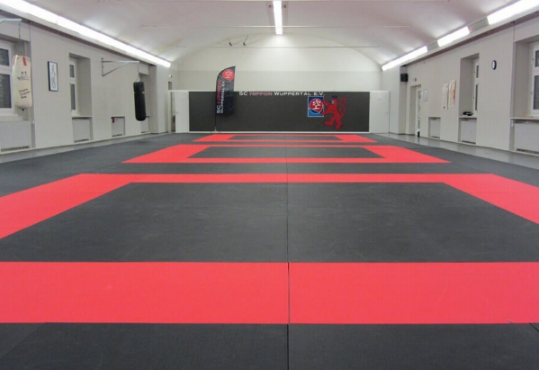
A throw lasts only a moment, but the surface beneath it affects every stage of practice. It influences how athletes move before contact, how confidently they commit to technique and how the body meets the floor afterwards. For that reason, the surface is not a background detail. It is part of the environment coaches manage every session.
Judo relies on transitions between standing work and ground contact. Athletes need enough grip to move with control, but a surface that feels inconsistent can change footwork and timing. If sections shift, rise or create obvious changes underfoot, people may start adjusting their movement without realising it. A stable area helps focus on posture, balance and technique instead of anticipating the floor.
Impact management is another important consideration. Coaches teach athletes how to receive a throw safely through appropriate falling technique, progressive drills and controlled practice. The surface works alongside that teaching. Well-suited judo mats provide a consistent place for repeated landings, but they do not replace correct instruction or sensible progression. A beginner still needs to learn how to fall before being asked to absorb the speed and force of a demanding throw.
Consistency across the whole training area matters because movement is rarely limited to one square. Partners travel during entries, combinations and defensive reactions. A difference between sections can become noticeable when athletes are concentrating on each other rather than looking at the floor. The layout should therefore be checked as a complete working area, including edges, joins and zones that receive particularly heavy use.
Surface condition can affect the rhythm of a session. Dirt, moisture or loose debris may reduce confidence in footing, while damaged sections can create an avoidable distraction. Cleaning and inspection routines should fit the material in use and follow relevant manufacturer guidance. Staff should know how to report a concern and what happens next, so questionable areas are not simply left for another class to discover.
Space around the active area deserves equal attention. A well-prepared central surface cannot solve problems caused by poor boundaries or obstacles placed too close to training. Coaches should consider how far pairs may travel and where athletes wait between turns. Clear separation between active practice and circulation routes can make the room easier to supervise and reduce unnecessary interruptions.
Different sessions can place different demands on judo mats. A technical lesson with controlled entries may involve frequent kneeling and repeated low-intensity contact, while randori or more advanced throwing work can create faster movement and heavier landings. Facilities need to consider their programme, participant mix and training style when selecting and arranging a surface. A choice that suits one setting may not be the best fit for another.
Athlete behaviour also provides useful information. If people repeatedly avoid a section, hesitate before committing to movement or comment on changes in firmness or grip, coaches should pay attention. These signs do not automatically identify a defect, but they can prompt a closer check. Early observation is often more useful than waiting for a problem to become obvious.
Before practice begins, judo mats should feel like one dependable part of the training system rather than a variable athletes have to manage. When the surface is stable, appropriately maintained and supported by good coaching, athletes can direct their attention to the throw itself: the entry, the balance, the timing and the controlled finish.
Communication between training partners matters too. Athletes should know how to signal discomfort, stop a drill and reset their position before continuing. These habits support controlled practice and help coaches notice when a surface issue, fatigue or uncertainty is affecting the quality of a throw.


More Stories
What if the best place to heal is the place we call home?
Dr. Dain Heer: Why Being You Matters More Than Ever
Little Wardrobes and Peaceful Nights Begin With Better Clothing Choices