

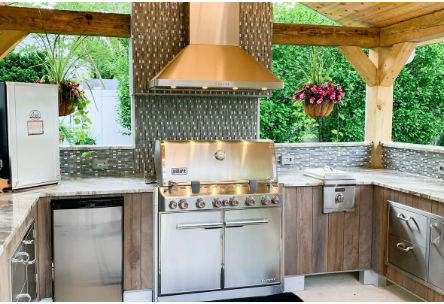
Cooking creates more airborne grease, steam, and odor than most homeowners expect, especially on larger ranges. Across American kitchens, wide cooktops and professional-style ranges are increasingly common, and they demand ventilation sized to match. This is why a 42-inch kitchen hood is a popular choice for spaces that need extra coverage without moving into oversized commercial territory. Capture area is the key idea: a hood should extend at least as far as the cooktop beneath it, because rising vapor spreads outward before it is drawn upward. When the hood is too narrow, residue settles on cabinets, walls, and countertops, and lingering smells follow. Understanding how width, airflow, and installation requirements work together helps you choose equipment that keeps the room comfortable and clean. The sections below cover sizing, airflow ratings, venting options, and maintenance habits that make a real difference over years of daily use.
Sizing and Airflow Basics
Sizing starts with the cooktop, but airflow decides performance. A common guideline suggests choosing a hood at least as wide as the cooking surface, and many installers prefer a few extra inches on each side for better capture. A 42-inch kitchen hood suits 36-inch ranges well because the added width on both sides catches vapor that drifts outward, and it also pairs nicely with 42-inch cooktops. Airflow is measured in cubic feet per minute, or CFM. A simple rule of thumb for gas ranges is about 100 CFM for every 10,000 BTU of burner output, while electric cooktops often need less. High CFM brings noise, so check sone ratings too, since lower numbers mean a quieter kitchen. Mounting height matters as well: most manufacturers recommend placing the bottom of the hood roughly 24 to 36 inches above the cooking surface. Too high reduces capture, and too low creates a safety and visibility problem. Also consider makeup air, because powerful fans in tight homes can pull air back down chimneys or other vents. Always verify the specifications against the range manufacturer’s guidance.
Ducted or Ductless: Picking the Right Venting Method
Venting is the next decision, and it shapes both installation and results. Ducted systems send air outdoors through a duct run, which removes heat, moisture, and combustion byproducts completely. For serious cooking, this is usually the stronger option, and a 42-inch kitchen hood with a short, straight duct of adequate diameter performs best. Every elbow and extra foot of duct adds resistance, so shorter paths keep airflow close to the rated number. Ductless, or recirculating, models pull air through charcoal filters and return it to the room. They suit apartments, condos, or walls where ducting is impossible, though they cannot remove heat or humidity, and the filters need replacing every few months. Slim, low-profile designs are common in this category, and they work best for light to moderate cooking. Exterior wall caps, backdraft dampers, and properly sealed joints also deserve attention, since leaks quietly waste fan power. Check local building codes before you begin, because some jurisdictions have specific rules for high-output hoods.
Conclusion
Maintenance and smart planning protect your investment. Metal mesh or baffle filters should be washed monthly with warm water and degreaser, while charcoal filters in recirculating units are replaced on the manufacturer’s schedule. Wipe the exterior regularly, and run the fan a few minutes after cooking to clear lingering moisture. Always switch it on before you start, since early capture is far more effective than chasing smoke later. A well-chosen 42-inch kitchen hood that is sized correctly, vented properly, and cleaned often will keep air fresher and surfaces cleaner for many years. If your home cannot support ducting, reviewing the top 6 slim range hoods for ductless models can help you compare compact recirculating options and understand which features matter most. Whatever route you take, measure your cooktop, confirm the CFM you need, and check mounting clearances before buying. Good ventilation is not just about comfort; it also supports healthier indoor air by reducing combustion byproducts and cooking particles. A little planning now prevents costly changes after installation and keeps your kitchen comfortable through every season.

More Stories
How to Compare Brokerage Charges Across Different Brokers
Understanding What Makes a Guest House Feel Like Home
Maximizing Production Line Uptime with Eagle Packing Systems