

Introduction: Why Wedding Guest Dressing Is Worth Getting Right
A wedding is one of the few occasions in adult life where dressing well carries genuine emotional weight. You are part of someone else’s most important day — and the care you take with your outfit communicates something real about your respect for the occasion and the people celebrating it.
Getting it right does not require an enormous budget or an exhaustive knowledge of fashion. It requires understanding a handful of clear principles: what the dress code actually means, which colors work and which to avoid, what silhouettes suit different venues and seasons, and how to accessorize a wedding guest dress so that the complete look feels genuinely considered rather than simply assembled.
This guide covers all of it. For specific dress recommendations organized by formality, season, and occasion — with direct links to wedding guest dresses that work beautifully across every celebration — the complete Wedding Guest Outfit guide at BTK Collections is the most detailed resource available.
The First Rule: Understand the Dress Code
Wedding invitations communicate formality — but only if you know how to read them. Here is what each dress code actually means for women:
Black Tie: Floor-length gown or an exceptionally sophisticated cocktail dress in a formal fabric. Satin, lace, chiffon, or velvet. Fine jewelry and an evening bag. This is the most formal wedding dress code and rewards the most deliberate dressing.
Black Tie Optional / Formal: The same quality of dressing as black tie with slightly more flexibility in hemline. A beautifully constructed midi dress in an elegant fabric works alongside floor-length options.
Cocktail / Semi-Formal: The most common wedding dress code — and the most consistently misunderstood. Knee-to-midi length in a polished fabric. Not a party dress and not a work outfit. The elevated middle ground that most occasion dressing occupies.
Smart Casual: A well-chosen midi dress in a quality fabric with appropriate accessories. Relaxed enough to be comfortable, considered enough to honor the occasion.
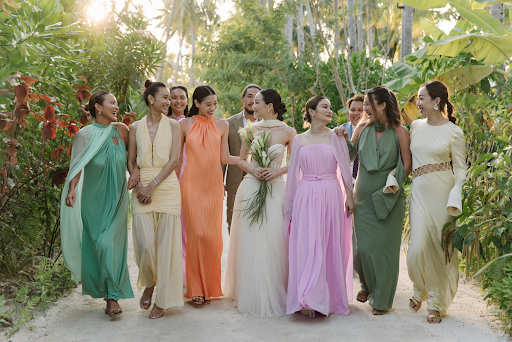
Garden Party / Outdoor: Floaty fabrics that move beautifully, block heels or wedges that work on grass, and prints or colors that suit natural light. The most forgiving dress code — and one of the most enjoyable to dress for.
Beach / Destination Wedding: Lightweight fabrics, appropriate coverage for potentially conservative local customs, and footwear that genuinely works in sand or on cobblestones.
The Color Question: What to Wear and What to Avoid
Color is the single most discussed aspect of wedding guest dressing — and the most straightforward once the core principles are understood.
Always avoid:
- White, ivory, cream, and any shade close enough to a bridal gown to create ambiguity — this remains the most universally respected rule in wedding guest dressing regardless of what the bride says she doesn’t mind
- True white in any silhouette or fabric combination
Universally safe and beautiful:
- Deep jewel tones — navy, emerald, sapphire, burgundy, deep plum — work at every formality level, in every season, and for every venue. These are the colors that photograph beautifully against wedding backdrops and communicate genuine dressing intention.
- Dusty rose, mauve, and muted blush — romantic without approaching bridal territory, and beautiful in both natural and artificial light
- Sage green, warm terracotta, and muted mustard — particularly effective at outdoor and garden weddings where earth tones feel seasonally and visually right
- Classic black — once considered inappropriate for weddings, now widely accepted at formal and evening celebrations globally
Approach with confidence, not anxiety:
- Pastels generally work well for daytime and spring weddings — soft lavender, powder blue, and mint all photograph beautifully
- Bold prints and patterns can work at casual and outdoor weddings — choose prints with enough color complexity that no single element reads as bridal
- Metallics — champagne, gold, silver — are appropriate and beautiful for evening celebrations
Silhouettes That Work: Choosing the Right Shape
The silhouette you choose should do two things simultaneously: flatter your body and suit the formality of the occasion. A few principles that work across body types:
The midi length is the most universally appropriate and universally flattering choice for wedding guest dressing. Long enough to communicate formal intention, proportioned beautifully in photographs, and versatile enough to work from a garden ceremony to a ballroom reception.
The maxi and floor-length are the natural choice for black-tie and formal weddings — and for women who simply prefer the elegance of a longer silhouette. In the right fabric, a floor-length dress at a wedding is one of the most beautiful choices available.
The cocktail length — at or just above the knee — works for semi-formal and cocktail-code weddings. Pair with heels to keep the look elevated rather than casual.
A-line and fit-and-flare silhouettes are the most universally flattering shapes — the defined waist and flared skirt work beautifully on every body type and move well for a long day of standing, sitting, and dancing.
Wrap dresses are a reliable choice for weddings because the adjustable fit accommodates the body changes that a long, celebratory day inevitably involves — and the V-neckline is consistently flattering.
Seasonal Wedding Guest Dressing
Spring Weddings
Spring weddings are the most joyful dressing occasion of the year — the combination of returning warmth, natural light, and floral backdrops creates conditions for genuinely beautiful photographs and genuinely enjoyable dressing.
Florals, soft prints, and pastel midis are the natural choices. Lightweight fabrics — chiffon, silk-touch crepe, cotton voile — suit the season’s warmth without being oppressive. Add a light wrap or structured blazer for morning ceremonies that warm up as the day progresses.
Best colors: Blush, soft lavender, sage green, dusty blue, and warm coral all photograph beautifully in spring light.
Summer Weddings
Summer weddings — particularly outdoor and destination celebrations — require the same practical thinking as any warm-weather dressing occasion. Breathable fabrics, block heels or wedges for outdoor settings, and colors that remain beautiful in strong natural light.
A floaty chiffon maxi, a printed midi in a lightweight fabric, or a structured sundress in a quality material all work beautifully for summer celebrations. Avoid anything that clings or wrinkles in heat — jersey, quality crepe, and chiffon are the most reliable summer wedding fabrics.
Best colors: Vibrant jewel tones look extraordinary in summer light — cobalt, fuchsia, deep coral. Softer options: white-adjacent pastels work at summer weddings more successfully than at any other season.
Autumn Weddings
Autumn weddings offer the richest and most satisfying palette of any season — and women who dress for autumn celebrations have access to the most beautiful color choices available in occasion dressing.
Burgundy, rust, deep forest green, warm plum, and burnt orange are all colors that feel specifically calibrated for autumn wedding settings. Velvet, structured crepe, and heavier chiffon suit the cooling temperatures. Knee-high boots or court shoes handle the varied outdoor surfaces of autumn venues.
Best colors: Burgundy is autumn’s definitive wedding guest color — rich, sophisticated, and universally flattering. Deep green and warm rust are close seconds.
Winter Weddings
Winter weddings — particularly candlelit evening celebrations — create the most dramatic and atmospheric settings of any wedding context. Velvet, lace, and satin are the definitive fabrics. Deep, rich colors: midnight navy, emerald, deep burgundy, and classic black all carry the gravitas of a winter celebration.
Long sleeves and covered shoulders suit both the formality of winter venues and the practical requirement of staying warm between outdoor photographs and heated reception rooms.
Best colors: Deep jewel tones dominate winter wedding guest dressing — navy and emerald particularly beautiful under candlelight and indoor venue lighting.
How to Accessorize a Wedding Guest Outfit
The accessories chosen for a wedding guest outfit determine whether the overall look feels genuinely complete or simply dressed. A few principles:
Shoes: Match the venue as much as the dress. A block heel or wedge for outdoor ceremonies. A strappy heeled sandal or court shoe for indoor venues. Avoid stilettos at garden or outdoor weddings — grass and cobblestones make them impractical and uncomfortable.
Bag: A small structured clutch or evening bag keeps the look appropriate for the formality of a wedding. Avoid large totes or casual bags regardless of how beautiful the dress — the bag signals formality as clearly as any other element.
Jewelry: Wedding guest jewelry should be considered and personal rather than excessive. One statement piece — either earrings or a necklace — is more elegant than wearing both simultaneously. Pearl jewelry carries a timeless appropriateness for wedding occasions; fine gold chains add warmth; crystal or diamanté pieces suit formal evening celebrations.
Wrap or cover-up: A structured blazer, a silk wrap, or an embellished bolero adds both warmth and versatility — allowing a dress chosen for a reception to be appropriately covered for a ceremony.
The Mistakes Most Women Make — and How to Avoid Them
Overdressing for the venue: A floor-length gown at a casual beach wedding creates as much discomfort as underdressing. Always read the venue alongside the dress code.
Underdressing for the formality: Smart casual does not mean casual. A well-chosen midi dress in a quality fabric with appropriate accessories — not a sundress and flat sandals at a hotel reception.
Choosing comfort over fit: A dress that fits perfectly is more comfortable than a dress that is technically in a comfortable fabric but fits poorly. Fit is the foundation of every successful wedding guest outfit.
Leaving the accessories to the last minute: The shoes, bag, and jewelry complete the outfit — and choosing them in the five minutes before leaving the house is a reliable way to undermine an otherwise excellent dress choice. Decide the complete look in advance.
Forgetting about the full day: A wedding is a long event — ceremony, reception, dinner, dancing. The best wedding guest dress is the one that still looks and feels good at midnight, not just at noon.
Final Thought: Dress With Intention, Celebrate With Joy
The best wedding guest outfits share one quality that has nothing to do with price, brand, or trend: they were chosen with genuine care. A woman who has thought about the dress code, the season, the venue, and the couple — and chosen accordingly — will always look more beautiful than a woman who simply wore the most expensive thing she owned.
Dress with intention. Choose quality over novelty. And remember that the finest compliment a wedding guest outfit can receive is not “that dress is beautiful” but “you look beautiful” — which is always, ultimately, about the woman inside it.
For the complete collection of wedding guest dresses organized by formality, season, color, and occasion — with specific styling recommendations for every wedding type — the Wedding Guest Outfit guide at BTK Collections has everything you need to make the right choice with complete confidence.


More Stories
Holiday Dresses for Women: What to Wear Every Celebration
Murisa Harba on Why Great Performances Aren’t About Talent—They’re About Repeatable Systems
Reasons to Consider Best Business Development Photographer In TX