

|
What this covers
|
Most people treat a water loss as a drying problem from start to finish. Get the air moving, pull the moisture out, done. For the first day or two of a clean-source loss that is broadly right.
Left longer, it stops being only a drying problem and becomes an air quality one, and the moment it crosses that line the correct equipment changes. The trouble is that the line is invisible, and the move that feels most natural, pointing fans at the wet area, is exactly the move that spreads the problem once it is crossed.
A Clean Loss Has a Shelf Life
Category one water originates from a clean source: a supply line, a water heater feed, a tap left running. On the first day it carries nothing of concern, and drying it in place is straightforward.
The catch is that water category degrades over time in a warm building. Water sitting in warm, wet material supports biological growth, so a loss that was unambiguously clean on Monday is commonly treated as contaminated by midweek, and nothing about the water changed. Time and temperature changed it.
That degradation is the whole reason the response window matters, and it is a better reason than urgency for its own sake. Inside the window the job is drying. Past it, the job increasingly involves air, filtration and removal.
Why Fans Become the Wrong Tool
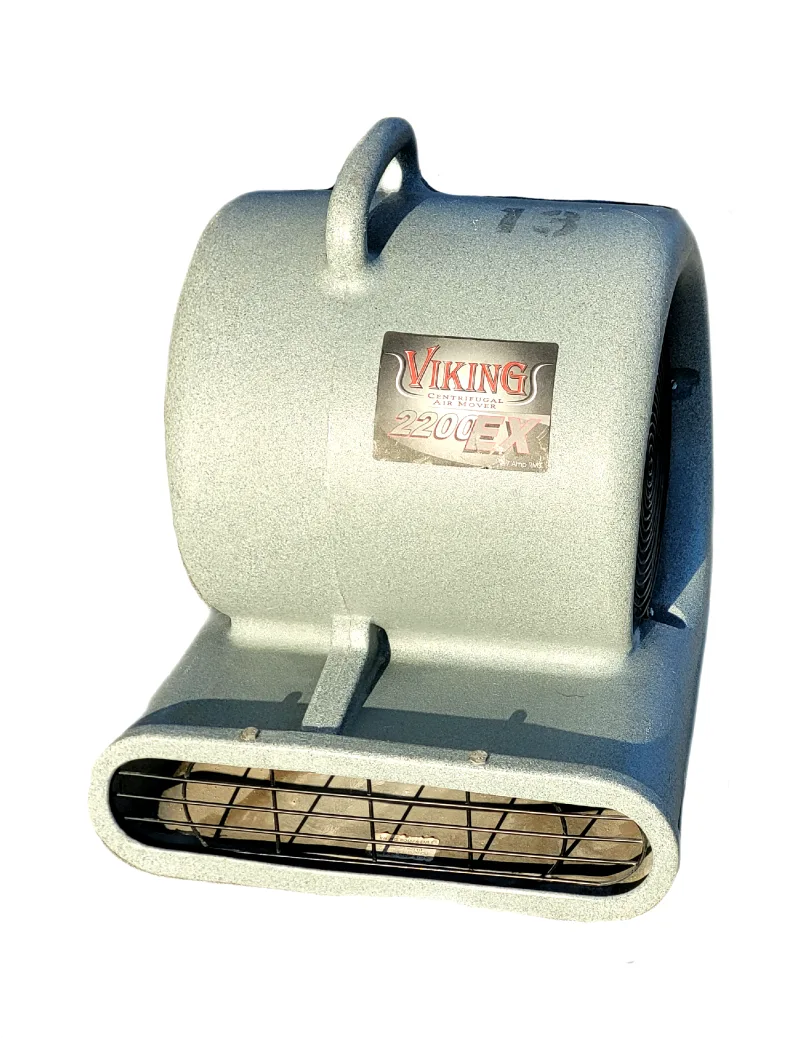
On a clean, fresh loss, pointing air movers at the wet area helps. On a loss that has crossed into contaminated, the same move is the most damaging thing available.
Disturbing contaminated wet material releases particles into the air, and fast air moving across it lifts whatever is in that material into the air of the building. The problem stops being confined to the floor you can see and starts traveling wherever the air goes. This is why professional setups on an older or contaminated loss pair airflow with filtration and containment rather than running airflow alone.
The rule that keeps you out of trouble: if the water has been sitting more than a day, or you do not know what it came from, do not blow air across it until the air is being controlled.
What the Equipment Changes To
Once a loss is an air quality job, three pieces appear that a fresh drying job never needed.
- A HEPA air scrubber filters particles from the air of a room, so the airborne load comes down rather than being moved around.
- Containment, meaning plastic sheeting that seals the work area, keeps what is disturbed from reaching the rest of the building.
- Negative pressure, created by ducting a scrubber to vent outside the sealed area, makes air leak into the work zone rather than out of it.
The drying equipment is still there. It just runs inside a controlled space now instead of an open one.
|
Stage of the loss |
Equipment focus |
|
Clean, same day |
Air movers and a dehumidifier |
|
Clean, caught early |
The same, with readings |
|
Sitting, or contaminated |
Add HEPA filtration and containment |
|
Growth visible |
Containment first, then removal and drying |
The Air-Handler Mistake
There is one move that turns a contained problem into a whole-building one in minutes, and it is common because it feels helpful. Running the air conditioning to cool and dry the space.
An air conditioner can move moisture through ductwork, and if the water reached the return, the air handler or the ducts, running the system distributes damp air and whatever it is carrying to every room on the circuit. A loss that was confined to one room becomes a reading in four. The rule is simple: if the water may have reached the HVAC, the system stays off until that is cleared.
The Los Angeles Timing
Two local factors shape how fast this line gets crossed. The warm climate speeds the degradation, because warm damp conditions support biological growth faster than cool ones, so the window from clean to contaminated is shorter here than in a cold market. And a large share of the housing is tenanted and managed rather than owner occupied, which means the person who finds the loss often cannot authorize the response, and the delay while that gets sorted is frequently longer than the window itself.
The practical consequence is that a Los Angeles loss left over a weekend is more likely to be an air quality job by Monday than the same loss in a cooler city.
Renting for Both Halves of the Job
Because a loss can start as drying and become air, the sensible equipment relationship covers both. Suppliers who see the water damage equipment range hold the drying side and the HEPA filtration and containment side together, which matters because sourcing scrubbers separately mid-week, after the loss has turned, is how a schedule slips. The Los Angeles service area is on the Google Business Profile.
How to Tell Which Side of the Line You Are On
The line between a drying job and an air quality job is invisible, but there are signals that you have crossed it, and they are worth knowing because the equipment decision hangs on them.
Time is the first. A clean-source loss handled the same day is almost always still a drying job. The same loss left for most of a week is almost always past the line, because the degradation runs on its own regardless of whether anyone acted.
Smell is the second. A musty odor appearing in a space that was a clean loss is the material telling you growth has started, and it is a reliable sign the job has changed character even when nothing is visible. The third is simply the source: if the water came from anything other than a clean supply, or you cannot say where it came from, treat it as past the line from the start.
|
Signal |
Still a drying job |
Now an air quality job |
|
Time since the loss |
Same day |
Sitting for days |
|
Smell |
None |
Musty odor present |
|
The source |
A clean supply line |
Unknown or dirty |
When two of those three point the same way, the job is an air quality one, and the fans-alone approach is the wrong tool whatever the readings say.
What Changes About How You Work, Not Just What You Rent
Crossing the line changes the sequence of the work, not only the equipment list. On a clean drying job, you can start the machines and work around them. On an air quality job, the air gets controlled first, before anything is disturbed.
That means the containment goes up and the scrubber is running and holding the area negative before removal starts, not after. Removing material in an uncontrolled space is the single move that spreads a contained problem through a building, and it is tempting because the removal feels like progress. The discipline is to resist it until the air is under control.
It also changes who should be doing the work. A contained, filtered job with material being removed is a different skill set from running air movers on a clean leak, and the point where a loss crosses the line is often the point where it stops being a job to handle yourself and starts being one to hand over.
The Cost of Getting the Timing Wrong
The reason the line matters financially is that the two sides are priced very differently. A drying job is equipment for a few days and the material stays. An air quality job is containment, filtration, removal and then drying, with the material replaced. The difference is large, and the thing that moves a loss from the cheaper side to the more expensive one is time.
That is the real argument for acting fast on a clean loss. It is not urgency for its own sake. It is that every day a clean loss sits, the odds rise that it crosses into the more expensive job, and once it crosses, no amount of equipment moves it back. The deadline is the cheapest tool on the job.
What to Have on Hand Before the Line Is Crossed
The practical lesson is to be ready for the air quality version before you know you need it, because by the time it is obvious the problem has usually already spread. On any loss that is not plainly fresh and clean, the equipment conversation should include filtration and containment from the start, not as a later add-on sourced mid-week.
That does not mean every loss needs scrubbers running. It means knowing where they come from and how fast, so that the moment a loss shows the signs of turning, time, smell, an uncertain source, the containment goes up and the air comes under control before anything is disturbed. A loss that crosses the line on a Friday and sits until Monday is the common way a drying job becomes an air quality job, and the delay is usually about not having the filtration lined up rather than not recognizing the need.
So the useful preparation is a supplier who holds both sides, the drying equipment and the HEPA filtration and containment, so that one call covers whichever the loss turns out to be. A job equipped only for drying, that then has to chase scrubbers across town after it has turned, loses exactly the time that lets the problem spread. Being ready for both halves is what keeps a loss on the cheaper side of the line.
The Short Version
A clean water loss is a drying job with a deadline. Beat the deadline and fans and a dehumidifier finish it. Miss it and the job becomes an air quality problem, the fans become a liability, and the right answer is filtration and containment before anything else moves.




More Stories
From Braces to Cosmetic Dentistry: Exploring Modern Smile Correction Options
Spakinect’s Clinical Standards: How Med Spas Stay Audit-Ready
Robert White Napa: A Foundation in Surgery at San Joaquin General Hospital and UC Davis Medical Center