

At Virtual Skin Spa, Theresa Pinson and Saige Amoruso bring a clinical perspective to a more visual approach to aesthetic care.
A cosmetic consultation can begin with a feeling that is difficult to explain. Someone looks tired despite sleeping well. A familiar facial contour seems different. Skin that appears smooth in the bathroom mirror looks uneven in a photograph.
Turning those observations into a useful conversation takes more than identifying a wrinkle. It requires understanding what the patient sees, assessing what may be contributing to it, and discussing what treatment can realistically accomplish.
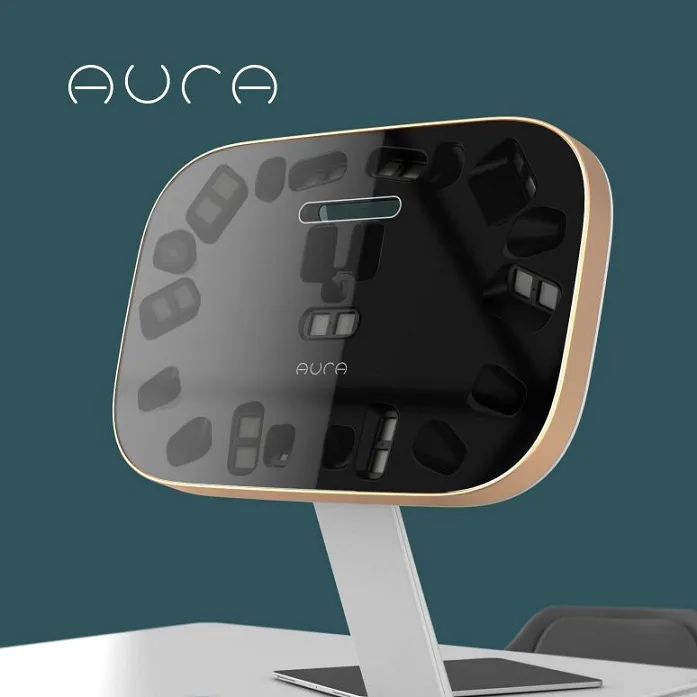
At Virtual Skin Spa, founded by family nurse practitioner Theresa Pinson, Aura 3D facial imaging adds another dimension to that process. The practice offers the system to create a detailed digital model of the face and neck, giving patients and providers a shared image to examine during the consultation. For Pinson and nurse injector Saige Amoruso, it brings technology into a field where communication and clinical judgment remain essential.
The result is a compelling question for the AI era: Can seeing more help patients make better decisions about their faces?
A different kind of digital face
For anyone accustomed to beauty filters, the idea of a digitally rendered face may sound familiar. But clinical imaging serves a different purpose from an app that smooths skin or changes facial proportions.
Aura uses cameras, controlled lighting, and software to produce a three-dimensional representation of the patient’s face and neck. That model can be rotated and reviewed from different perspectives. The manufacturer describes its technology as combining 3D imaging with AI-driven skin analysis and facial measurements.
In practical terms, the system gives a consultation something concrete to work with. A patient can point to a concern on the screen. A provider can explain what the image shows and discuss how that observation relates to the patient’s goals.
That distinction matters. A digitally enhanced photograph presents an appearance to admire. A clinical image should provide information to discuss.
The clinicians behind the screen
Pinson’s background connects aesthetic treatment with patient education. A master’s-educated, ANCC board-certified family nurse practitioner, she worked in cardiovascular care before moving into cosmetic aesthetic medicine. Her professional work also includes educating physicians, physician assistants, and nurse practitioners in injectables and skincare techniques.
Amoruso brings a nursing background in acute care, emergency critical care, and trauma. Virtual Skin Spa identifies her as a registered nurse and nurse injector who trained through mentorship with Pinson, as well as a nurse educator for Columbia Presbyterian.
Their backgrounds underscore an important point about technology in the treatment room: producing an image and interpreting it are separate tasks.
A scan can supply measurements and visual detail. Understanding their significance requires a conversation about medical history, previous procedures, expectations, and the patient’s comfort with treatment. The clinician must also decide whether a concern warrants intervention at all.
For practitioners who also teach, imaging offers a useful opportunity to make that reasoning visible. Patients can follow an explanation while looking at the same information as their provider.
Making an abstract concern easier to understand
Aura’s manufacturer lists analysis of wrinkles, pores, redness, brown spots, and skin texture among the system’s capabilities. It also provides tools for examining facial proportions and comparing changes in facial volume between captures. These functions can help structure discussions about skin appearance and facial contours.
Consider a hypothetical patient who arrives concerned about looking tired. Before discussing a procedure, the consultation needs to establish what that description means to the individual. Is the concern uneven skin tone? A change in contour? Lines that are more noticeable in certain expressions?
A shared visual reference can help patient and provider distinguish among those concerns. It can also reveal when they are talking about different things.
That is where imaging’s value becomes especially practical. Better communication can support a clearer discussion of priorities, timing, cost, and the limits of treatment. A detailed scan is most useful when it helps someone understand a recommendation well enough to accept it, question it, or decline it.
A baseline worth returning to
Another application is documentation. Aura supports comparisons between images taken at different visits, allowing providers and patients to review changes over time. Virtual Skin Spa describes this ability as part of its approach to tracking treatment progress.
A baseline gives a follow-up appointment a clearer starting point. Instead of relying entirely on memory, the conversation can return to the original images and the concerns identified before treatment.
Those comparisons still require interpretation. The timing of a follow-up, facial expression, and temporary changes such as swelling can affect how images should be understood. A visible difference also needs to be considered alongside the patient’s experience.
The useful question extends beyond whether something changed: Does the change address what the patient wanted?
More information requires perspective
High-resolution imaging introduces a responsibility as well as an opportunity. Seeing the face in greater detail can draw attention to features a person had never considered a problem.
A thoughtful consultation must leave room for ordinary variation. Facial asymmetry, visible pores, and skin texture are part of human appearance. A measurement does not establish a need for treatment, and software cannot determine which features someone should value or change.
This is where the relationship with the practitioner becomes particularly important. Patients need help understanding which findings relate to their concerns and which can simply be left alone.
For Pinson and Amoruso, Aura provides a technological backdrop to work that remains deeply personal: helping someone articulate a goal, understand the available options, and make an informed choice.
AI may be coming to the cosmetic consultation, but its most useful contribution could be a better conversation. The screen can show the face in greater detail. The people on either side of it still have to decide what matters.



More Stories
Walking Patterns in Older Adults
How Sit to Stand Desks Change Posture Across a Work Day
How an Orthopedic Surgeon Treats Common Joint and Bone Problems