

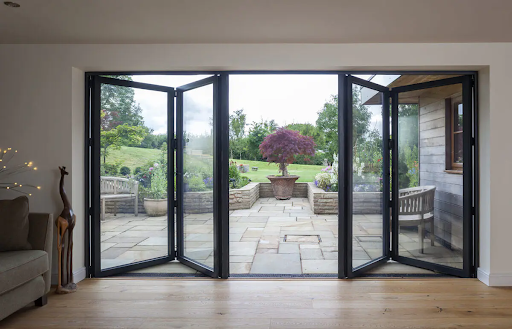
Efficient space planning plays an important role in modern housing design. Door systems influence how easily rooms connect and how comfortably furniture fits within a layout. Traditional hinged doors require clearance space, which can limit interior flexibility. Many homeowners, therefore, explore alternatives that optimise usable floor area. Folding sliding doors offer a practical option because the panels move along tracks and stack to one side. When combined with a well-planned aluminium sliding door design, the system supports wider openings, natural light, and better ventilation within residential spaces.
What Are Folding Sliding Doors?
Modern residential construction increasingly uses door systems that combine flexibility with efficient space utilisation. Understanding how Folding Sliding Doors operate helps homeowners evaluate their suitability for different layouts. A folding sliding door system consists of multiple connected panels that move along a guided track. Each panel slides and folds neatly to one side during operation. This movement allows the doorway to open almost fully without requiring swing clearance. A well-engineered aluminium sliding door design supports this configuration effectively. Aluminium frames remain strong while maintaining slim profiles. Larger glass panels can therefore fit within the frame while preserving structural stability and smooth operation.
Why Does Space Efficiency Matter in Residential Layouts?
Urban housing often prioritises layouts that maximise available floor space. Door movement directly affects circulation and furniture placement within a room. Traditional swing doors require a clear arc to open, which can restrict the surrounding layout. Folding sliding doors reduce this limitation because the panels slide along tracks instead of opening outward. A thoughtfully developed aluminium sliding door design further improves this advantage by supporting wide openings with narrow frame profiles. This arrangement helps maintain visual openness while improving access between indoor and outdoor spaces.
Key Features That Support Space Saving
Several design characteristics make folding sliding doors suitable for residential environments where efficient layouts remain important.
Compact Folding Movement
The panels collapse and stack along one side of the opening. Because the system does not require outward movement, the surrounding floor space remains usable. This feature allows furniture placement closer to the doorway without affecting accessibility.
Wide Openings
Multiple panels allow the door system to open almost completely. This configuration creates a smooth transition between indoor areas and outdoor spaces such as balconies or patios. A reliable aluminium sliding door design ensures that the panels move smoothly while maintaining alignment.
Must Read: Why Aluminium Window Design Is Ideal for Long-Term Durability
Natural Light Access
Large glass panels allow daylight to enter interior spaces more effectively. Aluminium frames support narrow sightlines that maximise the visible glass area. As a result, folding sliding doors contribute to brighter interiors during daytime hours.
Flexible Ventilation
Homeowners can open one or more panels depending on airflow needs. Partial opening provides controlled ventilation while maintaining security and privacy.
Why Does Aluminum Work Well for Folding Sliding Doors?
Material choice plays an important role in the durability and performance of door systems used in the housing industry. Aluminium has become widely preferred because it offers strength, stability, and design flexibility. Aluminium frames support larger glass panels without requiring bulky profiles. This property allows folding sliding doors to maintain wide openings while preserving structural reliability. Another advantage involves resistance to environmental exposure. Aluminium does not warp easily under changing temperatures and resists corrosion when exposed to moisture. Aluminium doors and aluminium windows, therefore, remain suitable for long-term residential use.
Performance Factors to Consider
Homeowners evaluating folding door systems often consider several performance characteristics before installation.
- Air Tightness: Proper sealing between panels helps control air leakage and reduces dust entry into interior spaces. Accurate alignment within the frame improves indoor comfort.
- Water Resistance: Doors located near balconies or terraces require effective sealing and drainage. A dependable Aluminium Sliding Door Design helps protect interior areas from water infiltration during rainfall.
- Wind Resistance: Structural stability becomes important in buildings exposed to strong winds. Aluminium frames help maintain panel alignment even under pressure.
- Sound Insulation: Appropriate glass thickness and sealing reduce external noise levels. Improved sound insulation contributes to comfortable indoor environments in busy residential areas.
Many aluminium fenestration systems undergo testing for air, water, and wind performance to ensure reliable operation in different housing conditions.
Common Residential Applications
Homeowners install folding sliding doors in several locations where flexible access improves the functionality of living spaces. Typical applications include:
- Living room openings connected to balconies
- Patio entrances linking indoor and outdoor seating areas
- Terrace access points in multi-storey homes
- Dining spaces connected to gardens
- Internal partitions separating large rooms
In each case, a carefully planned aluminium sliding door design supports smooth movement while maintaining durability across frequent use.
Conclusion
Door systems influence how efficiently residential spaces function and connect with outdoor areas. Designs that reduce clearance requirements while allowing wider openings often improve layout flexibility. Folding sliding doors support this goal by combining compact movement with large, accessible openings. When paired with a durable aluminium sliding door design, the system enhances natural light, ventilation, and structural reliability. For homeowners planning adaptable living spaces, such door solutions provide a practical balance between efficient space use and long-term performance.



More Stories
Turning Ideas into Products: The Role of CAD Technology in Product Development
Home Insurance Guide: Protecting Jewellery and Valuable Possessions
From Community Service to Exequatur: The Real Path to an Honorary Consul Appointment