

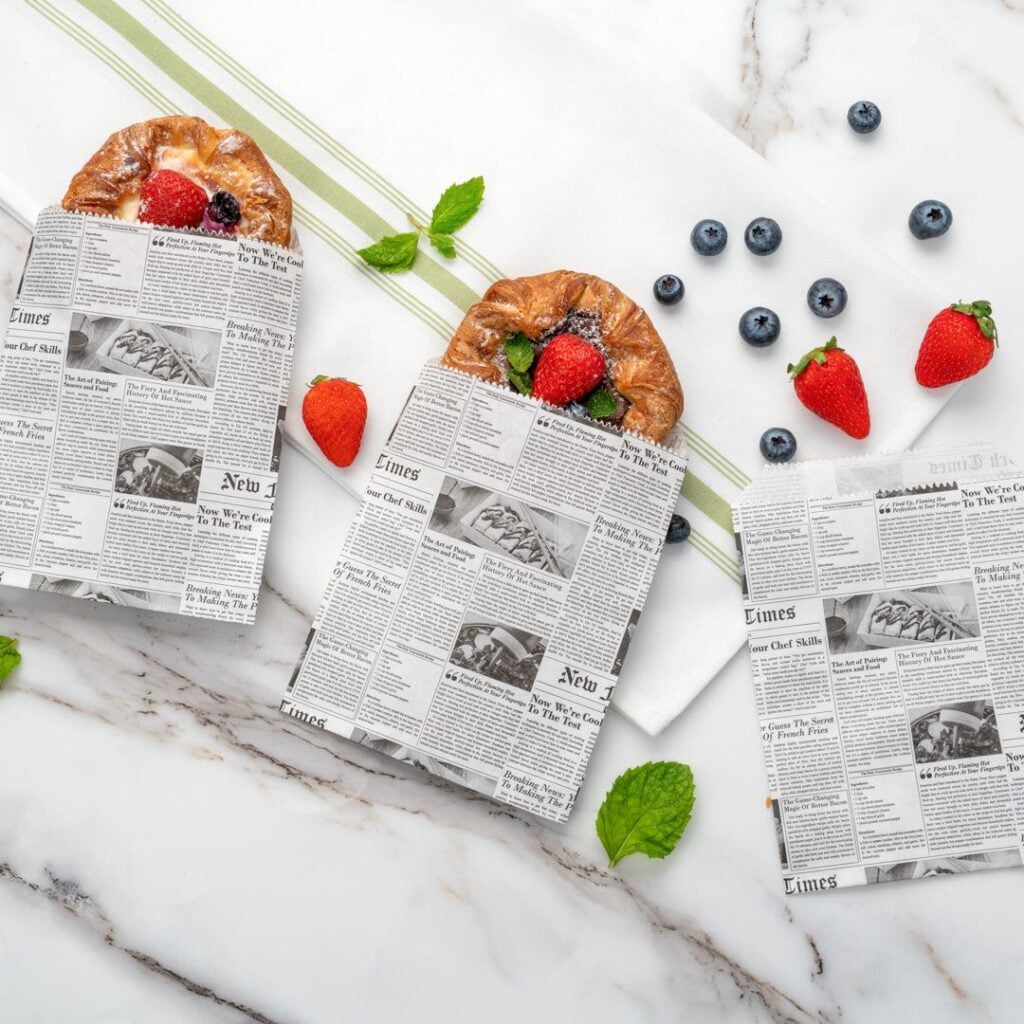
The food packaging systems require quality materials and standard presentation in service settings. Surface design and functional wrapping material are the foundation of brand identity in food service, as custom food paper facilitates consistency of packaging, yet does not alter the visual structure of serving food items. It finds application in wrapping and lining purposes in restaurants for various food presentations. The strength of materials and print quality influence the customer perception when handling food delivery. The consistency of design assists in brand recognition in various food service channels. The packaging options determine the level of hygiene, portion, and serving efficiency in the day-to-day operations of restaurants. Custom food paper is a core element of the structured food presentation system in the restaurant industry. Appropriate selection enhances management, minimizes waste, and promotes regular production in food service settings on a daily operations benchmark system.
Material Quality
In food handling environments, performance depends on the durability of packaging materials. Surface strength influences the printing stability and resistance in storage and transportation conditions. Supply chains usually consider bulk sourcing of standard packaging materials. Coating and texture consistency aid in the dependability of use in food service operations. Wholesale custom food paper is frequently utilized in bulk procurement decisions based on the homogeneous supply needs. Production runs are consistent with packaging specifications in manufacturing processes. The tests on materials are made to guarantee stability at temperatures and moist conditions. During printing and finishing processes, quality control systems check the consistency. The packaging standards determine the confidence of the customers and the performance of the operations in the commercial food service settings, in the daily workflow performance benchmarks, systems evaluation, and parameters.
Brand Identity
Packaging visual branding helps in identification at various customer touchpoints. The consistency of colors and typography affects the perception of food service presentation. Design systems incorporate branding in packaging material to ensure coherence. Bespoke packaging choices are available, such as custom printed food paper that represents a uniform identity. Positioning in the market is based on visual consistency among the food service establishments. Brand messaging will be incorporated into the packaging materials that are used on a daily basis. The patterns of recognition are formed after being exposed to the packaging design repeatedly. Homogeneous printing techniques guarantee uniformity in the brand representation of services. The aesthetics of packaging determine the retention of customers’ memory and the purchasing behavior in the competitive food markets, in which the quality of presentation is the determinant of perceived value and long-term engagement system evaluation metrics, analysis, reporting standards, and systems.
Service Consistency
Packaging processes are structured to make food service operations efficient. Consistency in handling methods ensures stability in the preparation and delivery processes. Custom food paper liners are put into the preparation systems to create controlled serving environments. Workflow coordination will help in the production of consistent output from various food stations. The consistency of service can be enhanced by using standard packaging materials. Handling methods of the staff rely on the predictable packaging designs. There is a flow of food preparation to standards of consistency in material application. Operational structures minimize the inconsistency in delivering presentation results. Food service operations’ sustainability is determined by packaging consistency and uniformity of materials in various preparation areas and serving points utilized in day-to-day commercial workflows, such as measurement standards, process control evaluation systems, consistency monitoring, measurement analysis, and reporting metrics framework.
Packaging Design
The design of packaging influences usability and efficiency of presentation. Material layout has an impact on the handling performance within food distribution channels. Food paper bags are commonly used in retail package formats for various service purposes. Design structure facilitates branding alignment and functional use needs. Packaging engineering enhances the efficiency of handling food services in food service facilities. Planning of visual layout improves the presentation of products when providing a service. The structure of materials defines reliability and consistency within the packaging systems. Staffing changes enhance the working process in food preparation departments. Good packaging design will assist functional performance, material stability, and customer presentation quality in food service environments that demand steady handling and systematic visible characterization in multiple service points, system assessment criteria, and consistency measurement.
Print Clarity
The quality of printing defines the readability and visual effects on the surface of packaging. The consistency of ink application influences the clarity of various types of materials. Food paper wrap is incorporated in packaging solutions to be used as functional wrapping to serve food. Print alignment helps in brand recognition in food service operations. Surface design influences the communication of messages at customer touch points. The readability of typography enhances packaging information. Print consistency improves the identity recognition systems of packaging. Ink performance and the ultimate quality of the output depend on material absorption. The visual communication consistency due to high resolution printing on packaging materials, branding accuracy, and clarity in the food service environments, where presentation quality can determine customer perception,n and operational standards system evaluation, measurement, and analysis frame, work consistency measurement tr, tracking review.
Operational Flow
The efficiency of food preparation environments is predetermined by workflow management. The coordination of processes enhances the speed of handling in the service stations. Printed food paper is used in operational systems to deliver services in a structured manner. Task set helps in uniformity in the use of the package. The time of service influences the quality of output in the food stations. Monitoring of operations stabilizes workflow in day-to-day activity. The aspect of staff coordination determines the efficiency of material handling in the operations. The integration of the system enhances communication between service teams and packaging teams. The operational flow is structured in a way that it facilitates the delivery of food services in a consistent manner, enhancing the handling process and ensuring stability in the packaging usage, food preparation, and customer service environment that demands an organized workflow and a standardized operational control system evaluation metrics analysis reporting framework consistency measurement tracking review.
Customer Experience
The perception of the customer is created during the interaction with the packaging and service quality. The visual stimulation has an impact on satisfaction in food service interaction. User experience is influenced by presentation materials such as printed food paper. Customer response and level of satisfaction are influenced by the service environment. Interaction in packaging assists in the connection of the food services on an emotional basis. The quality of design influences the attitude towards brand reliability. Presentation consistency enhances confidence in services amongst users. Custom printed paper the structure of materials affects the overall customer experience of engagement. Packaging transparency, material coherence, and presentation quality within food service settings where the visual hierarchy, handling effectiveness,s and service engagement are determinants of perceived value and engagement rates are all subject to customer experience measurement analysis framework, consistency measurement review,w performance standards compliance, and results.
Conclusion
The performance of food packaging is related to the material structure and uniformity in service environments. Food service systems depend on controlled packaging production to ensure operational reliability with regard to the structured presentation and handling efficiency in day-to-day applications. The quality of food paper and the quality of materials affect the perception and consistency of packaging applications. Uniform packaging systems in the service point presentation are based on brand presentation. Stable food handling processes need predictable materials to operate service operations. Regular packing systems are efficient, ensure quality, and facilitate stable food service work where organized materials improve presentation, handling, and customer experience in terms of commercial environments, NT’s system evaluation metrics, analyses, reporting framework, and work consistency measures, and analysis review.




More Stories
Home Insurance Guide: Protecting Jewellery and Valuable Possessions
From Community Service to Exequatur: The Real Path to an Honorary Consul Appointment
Southern Odisha’s Service Contract – What TPSODL Owes Its Paying Consumers