

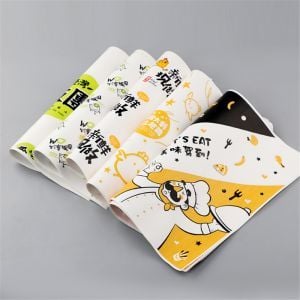
Modern packaging formats in food service operations are characterized by custom food paper. The material can be used to support branding requirements and functional wrapping requirements in restaurants, bakeries, and catering setups. The selection of packaging determines the presentation and efficiency of handling the product. Custom food paper can help to achieve consistency in different food products and also aid in hygiene standards. Businesses are dependent on organized paper solutions, which are consistent with portion control and visual identity. The demand goes up in the retail and food distribution channels, where presentation and longevity are important. Customer perception and operational flow are determined by the choice of materials. Texture, strength,h and print quality are all taken into consideration by packaging teams in the selection of custom food paper, which has remained a viable alternative to businesses that are concerned with structured food packaging solutions in the world today. Market adoption is increasing steadily today.
Market View
There is further growth in food packaging requirements along food service networks and distribution systems in retail. Procurement departments consider bulk purchasing opportunities that can fit within their budgets and the size of their operation. The consistency of supply helps in shaping the buying choices of large food chains. Wholesale custom food paper assists in the volume needs of businesses with a high frequency of orders and a continuous cycle of packaging. The inventory planning and distribution scheduling are influenced by the availability of materials. The compatibility in printing is an added value to branding uniformity over various product lines. Food operators are also focused on consistent quality supply channels. The packaging strategies rely on the scalable sourcing strategies, which minimize the disruptions in the service flow. Competition in the market promotes well-organized procurement planning among regional and international suppliers.
Brand Value
Brand perception relies on packaging identity within the food presentation settings. The visual consistency affects the recognition of products by customers. Design teams incorporate a branding aspect in packaging materials employed in food service operations. Food paper wrap helps in brand exposure through organized design placement and print precision. Branding techniques are implemented on packaging surfaces by restaurants and bakers to strengthen identity. The value of recognition is created by the choice of color and the positioning of logos. Packaging is a product-consumer communication. The choice of material aids in the stability of the design during handling. Branding systems are based on repeatable formats to be used in line products and service channels.
Material Flow
The performance of materials influences the efficiency of operations in the food preparation setting. Usability depends on structural properties under various serving conditions. During the selection process, food operators consider the durability and absorption properties of food paper liners. Custom food paper liners offer a practical barrier between food contents and serving areas. Kitchen processes rely on the reliability of materials in times of high-volume services. The packaging systems combine liners to facilitate the cleanliness requirements in handling the processes. The thickness of the material affects resistance to heat and moisture. Presentation of food relies on uniform linear operation in diverse menu foods. Material behavior is added to operational planning in the cycles of repeated use.
Design Impact
Consumer perception in competitive food markets is affected by the packaging design. The visual appeal helps in product differentiation. The elements of structural design influence usability and communication with customers. Food paper bags can fulfill transportation and presentation requirements of various food types. Shopping experiences are based on the aesthetics of packaging to attract customers. Branding transparency is influenced by the material shape and alignment of print. The food service providers choose the packaging formats according to the operational needs. Consistency in the design enhances familiarity in repeated purchases. Packaging systems incorporate visual identity in functional systems adopted in the process of food delivery and take-away.
Packaging Role
Packaging functions are more than containment; they go to present and protection. Food service industries require material flexibility to diverse serving conditions. Customer experience relies on packaging manipulation and aesthetic factors. Food paper wrap offers coverage of the surface through direct contact with food and preservation during service. Those selling food use wrapping techniques to preserve the integrity of portions. Flexibility of materials aids in various food shapes and textures. Wrapping solutions are incorporated in the day-to-day activities of packaging systems. Wrapping is beneficial in a visual presentation. The performance of food handling processes depends on the consistency in the performance of materials in the preparation and distribution phases.
Supply Chain
Availability of packaging materials in the food industry is influenced by supply networks. The procurement cycles are determined by the accuracy of the forecasting and demand planning. The distribution systems facilitate the flow of packaging materials between the suppliers and final consumers. Food paper sheets assist in operational needs to wrap, layer, and separate food preparation areas. The management of inventory guarantees a constant supply with regard to the production schedules. Storage conditions influence the quality of the material to be used. The logistics planning facilitates the delivery to various service locations on time. Packaging purchase is in line with production volume. Supply coordination minimizes delays in food services.
Retail Use
Packaging presentation is essential in retail settings to interact with customers. Purchasing behavior is affected by shelf appeal and takeaway presentation. Food service counters incorporate packaging in day-to-day operations to be efficient, and printed food paper increases visual branding in direct food serving applications. Product distinction is done using printed materials in restaurants and cafes. Packaging design helps with recognition when a customer returns. Material consistency influences the brand perception in retail settings. The visual structure contributes to the interaction of customers with packaged food products. Service speed in the retail food operation is in line with packaging systems.
Industry Shift
The food packaging business is under a structural change due to the scaling requirements and the objective of efficiency in operations. There are changing requirements in the food industry regarding packaging, and manufacturers are changing production systems to suit those needs. The quality control systems provide a consistent output across the supply channels. Food Paper Wholesale provides large-scale distribution needs for food service and retail functions. Production planning is synchronized with the bulk order fulfillment and the inventory distribution cycles. Custom paper with logos the innovation of materials has an effect on the packaging performance in diverse applications. Consistency and scalability of packaging supply chains are addressed in business strategies. Participants in the industry are changing sourcing models to ensure the stability of material availability. Changes in the evolution of packaging represent an adaptability to the shifting operational needs of food markets.
Conclusion
Custom food paper is one of the essential components in food packaging systems in commercial settings. The choice of materials shapes the branding transparency, workflow, and the quality of product handling. Companies incorporate centralized packaging strategies to sustain alignment among service channels. The choice of packaging influences customer perception and standards of product presentation. Design alignment aids in the identification of various food categories and service formats. Material sourcing and supply performance are crucial to operational efficiency. Packaging systems respond to changing needs within the food service industry. Custom food paper promotes systematic packaging plans by businesses that emphasize presentation control and reliability of handling in the current retail and food distribution systems.




More Stories
Home Insurance Guide: Protecting Jewellery and Valuable Possessions
From Community Service to Exequatur: The Real Path to an Honorary Consul Appointment
Southern Odisha’s Service Contract – What TPSODL Owes Its Paying Consumers