

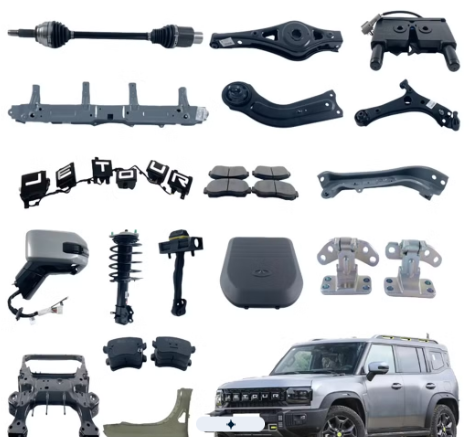
Jetour vehicles have become increasingly visible on UAE roads, creating a growing requirement for reliable replacement and body parts. Like any vehicle, Jetour models may eventually require components due to regular wear, accidental damage, maintenance requirements or body repairs. For workshops, resellers, fleet operators and individual vehicle owners, sourcing the right component quickly can make the repair process much easier.
This is where working with a reliable Jetour aftermarket parts wholesaler can be particularly useful. However, buying aftermarket parts should never be reduced to finding the cheapest available option. Compatibility, quality, availability and supplier reliability all matter. If you are searching for Jetour parts in Sharjah, understanding how to identify and source the right components can help you make better purchasing decisions.
What Are Aftermarket Parts?
Aftermarket parts are replacement components produced outside the vehicle manufacturer’s branded parts network. They can be used for various repair and replacement requirements, depending on the component and manufacturer.
Aftermarket parts can sometimes provide an alternative to genuine branded components, particularly when customers are looking for different price points or availability options. However, the quality of aftermarket products can vary. This makes supplier selection important.
Why Correct Compatibility Matters
Jetour offers different models, and components can vary between models and model years. A headlamp designed for one vehicle may not fit another. The same applies to bumpers, grilles, fenders, tail lamps and other body components.
Before ordering, provide:
- Exact Jetour model
- Model year
- Part number, if available
- Vehicle identification details where necessary
- Left or right side for applicable components
This reduces the chance of receiving an incorrect component.
Common Jetour Parts
Jetour replacement requirements can cover a wide range of components.
Body-related parts may include:
- Front bumpers
- Rear bumpers
- Headlamps
- Tail lamps
- Fog lamps
- Grilles
- Fenders
- Bonnet
- Tailgate
- Side mirrors
- Supports
- Under covers
Why Body Parts Need Precise Matching
Body panels may appear similar even when they are not identical. Differences in mounting points, dimensions, trim compatibility and design details can affect fitment. Lighting components can have similar considerations. A headlamp must correspond correctly to the vehicle’s configuration. This is why photographs should not be the only basis for ordering.
The Importance of Part Numbers
A part number can significantly simplify the sourcing process. If you already have the original component, check whether a part number is visible. Providing that number to the supplier can help narrow the search. When a part number is unavailable, the supplier may need additional vehicle information to identify the correct component.
What Does a Aftermarket Parts Wholesaler Do?
A Jetour aftermarket parts wholesaler typically supplies parts in quantities suited to workshops, resellers, fleet operators and other professional buyers. Wholesale sourcing can provide advantages when a business regularly handles multiple repair jobs. Instead of finding each component from a different seller, workshops may establish relationships with a supplier offering a broader range.
Why Wholesalers Can Help Workshops
Workshops need more than individual product availability. They need consistency. If a repair shop frequently handles Jetour vehicles, having access to a dependable supplier can reduce the time spent searching for parts. It can also simplify purchasing when several components are needed for one repair. For businesses, the supplier relationship becomes part of the workflow.
Genuine OEM Versus Aftermarket
When buying a replacement part, customers may encounter different categories. Genuine OEM parts are produced or supplied within the vehicle manufacturer’s original parts ecosystem. Aftermarket products are made by independent manufacturers. OE-equivalent products may be designed to meet comparable specifications. The right choice depends on the application, budget and customer’s requirements. A professional supplier can help explain the available options.
Do Aftermarket Parts Mean Lower Quality?
Not necessarily. Aftermarket products range from budget-oriented options to higher-quality replacements. The key is understanding who manufactured the component and what standards or specifications it is intended to meet. An unknown part from an unreliable source may create more risk than a properly sourced aftermarket component from an established supplier.
Why Supplier Reputation Matters
A reliable supplier should be able to provide clear information about the product. If a supplier cannot answer basic compatibility questions, buyers should be cautious. A professional parts business should be able to discuss:
- Vehicle compatibility
- Product category
- Part number
- Availability
- Delivery
- Return or replacement policies
- Quantity requirements
This is especially important for workshops that cannot afford repeated ordering errors.
Buying Online
Online sourcing has made it easier to compare products and contact suppliers. It also creates a responsibility for buyers to provide accurate information. Do not order a component simply because the product photograph looks similar. Always check the model and part details.
Delivery and Availability
For workshops, time matters. A vehicle waiting for a missing component occupies space and can delay the repair schedule. When ordering, ask about availability and expected delivery. Local suppliers can sometimes make coordination easier for customers in the UAE, but actual availability should always be confirmed before placing an order.
Supporting Workshops and Resellers
Wholesale customers have different requirements from individual vehicle owners. A workshop may need several components across different models. A reseller may require consistent stock and competitive purchasing terms. Fleet operators may prioritise dependable sourcing and reduced downtime. A wholesaler that understands these requirements can offer a more useful service than a seller focused only on individual transactions.
Why Body Shops Need Reliable Parts
Body shops often handle accident repairs involving multiple components. A single repair may require a bumper, grille, headlamp, fender or support component. If one part is delayed or incompatible, the entire repair can be affected. A broad catalogue can therefore be valuable.
Check the Side and Configuration
For certain components, side matters. A left-side mirror is not the same as a right-side mirror. The same principle can apply to certain lamps and body panels. Always specify the required side and configuration when ordering. This simple detail can prevent avoidable mistakes.
Avoid Guessing
If you are unsure which part you need, do not guess. Send the supplier the vehicle details and, where appropriate, a clear image of the existing component. A professional supplier can then help identify the relevant part. Guessing may lead to an incorrect order and additional shipping or return complications.
Installation Still Matters
Even a correct replacement component needs to be installed properly. Body panels may require alignment. Lighting components need appropriate connections and positioning. Mechanical or structural parts may require professional installation. Vehicle repairs should therefore be carried out by qualified technicians.
A Practical Checklist for Buying Jetour Parts
Before placing an order, confirm:
Vehicle Details
Exact model and year.
Part Identification
Part number where available.
Component
Clearly identify whether you need a bumper, lamp, grille, fender or another component.
Side
Specify left or right where relevant.
Product Type
Confirm whether you are purchasing genuine, OEM/OE replacement or aftermarket.
Supplier
Choose a reliable and established source.
Availability
Confirm stock before ordering.
Delivery
Understand when the part is expected to arrive.
This process can save both time and money.
Final Thoughts
Finding the right Jetour replacement component is about more than finding a product with a matching photograph. Model, year, part number, configuration and supplier reliability all matter. Whether you are a vehicle owner searching for Jetour parts in Sharjah or a workshop looking for a dependable Jetour aftermarket parts wholesaler, taking the time to verify compatibility can prevent unnecessary delays and incorrect orders.
Beta Auto Parts offers Jetour genuine OEM and OE replacement components and supports customers across the UAE automotive market. The smartest approach to aftermarket parts is simple: identify accurately, source responsibly and install professionally. With those fundamentals in place, replacement parts can become a straightforward part of maintaining and repairing your Jetour.



More Stories
Southern Odisha’s Service Contract – What TPSODL Owes Its Paying Consumers
Is Hero Passion Pro Still a Smart Bike for Daily Commute
Statement Styles for Every Occasion: A Guide to Contemporary Women’s Fashion