

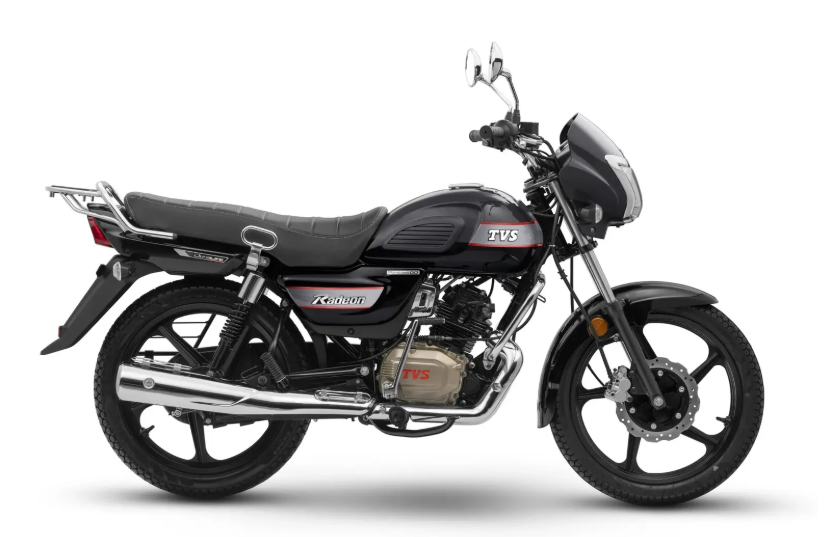
The TVS Radeon is designed for regular petrol-powered commuting, making it a familiar choice for buyers who need reliable transport without expensive extras. Buying one on EMI can spread the initial expense, but a quick loan is useful only when its total cost and monthly burden are manageable. Before accepting an offer, check the variant, dealer quotation and loan terms. The goal is to own a motorcycle that supports work and family travel rather than replacing a purchase-day saving with several years of avoidable financial pressure.
Pick the Radeon variant before calculating the EMI
The Radeon uses a 109.7 cc single-cylinder petrol engine with a four-speed gearbox. Its equipment varies by trim, including differences in instruments and front braking hardware. Ask the dealer to identify the exact base, digital-console or disc-equipped version being quoted. Do not use the cheapest advertised figure to calculate repayment for a more expensive trim. Compare ex-showroom quotations separately from registration, insurance and any accessories you actively want. A written itemised estimate reveals which additions are optional and which costs must be met before delivery. This gives the finance calculation a reliable starting point.
Decide what you can pay without borrowing
Set aside essentials and an emergency buffer before choosing a down payment. A larger upfront contribution usually reduces the amount financed, but leaving yourself with no cash reserve can be a poor trade-off. Consider salary timing, rent, school fees and other standing commitments. A bike loan for the Radeon should not rely on overtime or irregular bonus income to cover each EMI. Calculate a realistic monthly surplus after fuel, service savings and household spending. That surplus, rather than the maximum a lender advertises, should set your preferred repayment amount. Never confuse eligibility with affordability.
How an illustrative loan amount translates into EMIs
Consider an example where the financed principal is Rs. 70,000 and the lender charges an illustrative 12% annually on a reducing balance. Over 36 months, the monthly EMI is approximately Rs. 2,325, before processing fees or insurance. Choosing a 24-month repayment period would increase the instalment but reduce interest paid overall. The numbers are hypothetical and cannot establish your actual rate or approved principal. Run your own calculation using the lender’s final amortisation schedule, not just a generic online estimate. The correct decision depends on how much repayment flexibility your income provides.
Prepare documents before requesting quick processing
Lenders may ask for identity proof, address evidence, income records, banking details and employment information. Requirements vary by institution and applicant category. Keep the information consistent across documents, particularly your name and present address, to prevent unnecessary verification delays. A complete application can help the process proceed smoothly, but it does not guarantee approval on the same day. Check whether the lender can disburse directly to the dealer and what happens if the chosen variant is temporarily unavailable. Never hand over blank signed forms or share verification codes with unofficial agents.
Look beyond interest to the full loan cost
Compare the annual percentage rate, processing charges, documentation fees and repayment schedule on written offers. If one lender quotes a flat interest rate while another uses reducing-balance interest, the percentages should not be treated as directly equivalent. Ask about prepayment penalties, delayed-payment charges and any compulsory insurance conditions. A lower EMI achieved by extending the tenure can increase total interest substantially. Where the lender provides a Key Fact Statement, review its disclosed numbers of instalments, payment dates and aggregate repayable amount. These details matter long after the promotional message has disappeared.
Budget for the motorcycle after delivery
Even an economical commuter requires scheduled servicing, tyres, chain adjustment, brake checks and periodic replacement of consumables. TVS provides the Radeon with fuel capacity of 10 litres; how often you refill depends on distance and real consumption. Plan a small monthly amount for maintenance rather than waiting until a major service arrives. Insurance renewal is another annual obligation outside the EMI. Keep your approved service schedule and receipts. If you use the motorcycle to reach work, reliable maintenance also protects you against inconvenient downtime. Ownership remains a continuing expense, not a one-time purchase.
Check the handover and agreement carefully
Before delivery, verify the chassis and engine numbers against the paperwork, inspect the motorcycle for damage and ask the dealer to explain the controls. Confirm that the insurance policy contains the correct details and that any finance endorsement is accurate. Retain your loan agreement, payment receipts and repayment schedule in a safe place. Set a payment reminder a few days before every due date. If a deduction is missed, contact the lender rather than relying on an informal verbal assurance. Keeping records makes later disputes and eventual loan closure easier to handle.
Make the Radeon purchase work beyond month one
The easiest EMI is not always the best financing decision. Select a Radeon variant that genuinely suits your route, obtain a complete quote and borrow only the difference you can comfortably repay. When the loan conditions are transparent and servicing has room in the budget, the motorcycle can remain an affordable part of daily life rather than a recurring financial worry.


More Stories
Upstox vs HDFC Sky: F&O Charges and Platform Compared
Jacksonville Nonprofit Mows for Heroes Takes Nominations for Its Next Yard Missions
How Do Custom Holographic Mylar Bags Protect Items?