

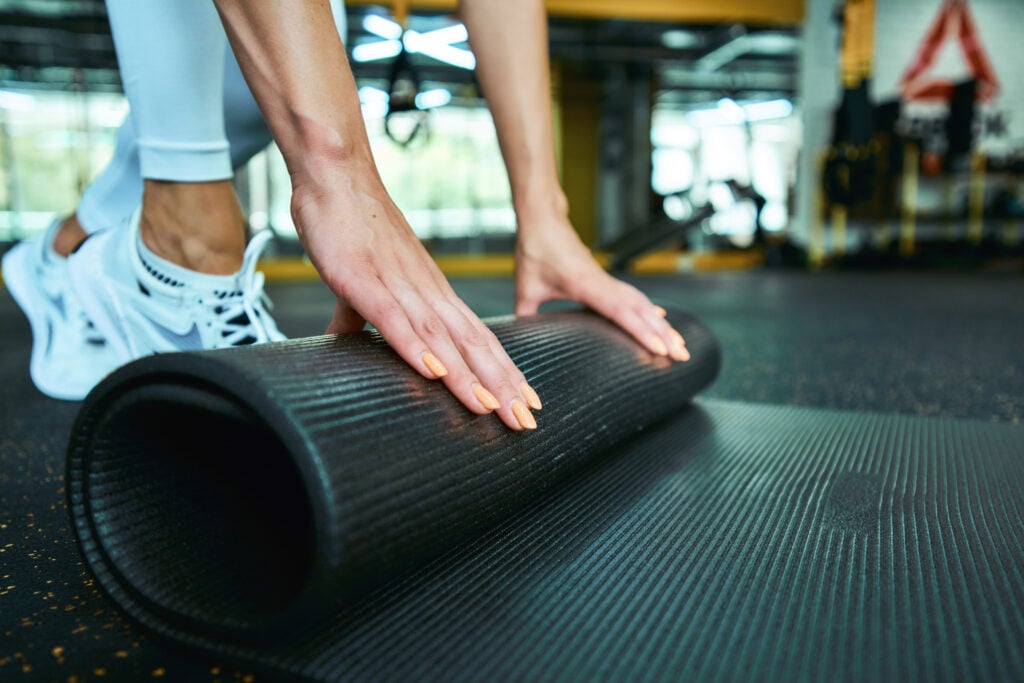
Whether you’re training hard on the gym floor, practicing martial arts, or setting up a home workout space, the surface beneath your feet matters more than most people realize. Sports mats aren’t just padding — they’re engineered systems designed to protect your body from the repetitive impact that leads to injury over time.
Understanding how shock absorption works can help you make smarter decisions about your training environment.
What Is Shock Absorption, and Why Does It Matter?
Every time your foot strikes a surface, your body absorbs force. That force travels upward through your joints — ankles, knees, hips, and spine. On hard surfaces like concrete or hardwood, that energy has nowhere to go. It transfers directly into your body.
Over time, this repetitive impact adds up. It contributes to stress fractures, joint pain, and chronic overuse injuries that can sideline athletes for weeks or months.
Shock absorption is the process of dissipating that impact energy before it reaches your joints. The right mat catches the force, spreads it across a wider surface area, and releases it gradually — reducing the peak load your body has to handle.
How Sports Mats Absorb Impact
Not all mats are created equal. The materials and construction behind sports mats directly influence how effectively they cushion impact.
Foam density and thickness play a central role. Denser foam provides firm support, while softer foam compresses more easily under load. The best mats strike a balance — enough give to absorb impact, but enough firmness to prevent instability that could cause falls or ankle rolls.
Rubber-based mats are popular in weightlifting and gym settings because rubber is highly durable and naturally resilient. It compresses under load and returns to its original shape quickly, making it ideal for high-repetition movements and heavy drops.
Layered construction takes this further. Some mats combine a firm base layer with a softer top layer. The top layer handles initial impact, while the base layer prevents excessive compression. This dual-action approach is especially effective for jumping, landing, and explosive movements.
The Connection Between Mat Choice and Injury Prevention
Choosing the wrong mat — or no mat at all — creates predictable injury patterns. Hard landings without adequate cushioning stress cartilage and connective tissue. Slippery surfaces increase the risk of falls. Mats that compress too much can cause instability during lateral movements.
The right sports mat addresses all of these concerns simultaneously. It provides:
- Cushioning for high-impact movements like jumping and tumbling
- Stability for strength training and balance work
- Traction to prevent slipping during dynamic movements
- Fatigue reduction for extended training sessions
That last point is often overlooked. When your body isn’t constantly fighting hard surface impact, muscle fatigue sets in more slowly. You train longer, recover faster, and put your body under less cumulative stress.
Matching the Mat to the Activity
Different sports and training styles demand different mat specifications.
Gymnastics and martial arts require thick, forgiving mats that can handle falls and aerial movements. Weightlifting platforms need dense rubber that handles heavy drops without cracking or shifting. General fitness and yoga spaces benefit from thinner, grippy mats that prioritize stability over cushioning.
Getting this match right is critical. A mat designed for one purpose rarely performs optimally in another context.
Final Thought
Shock absorption isn’t a luxury feature — it’s a fundamental element of safe athletic training. Investing in the right sports mats for your specific activity protects your joints, extends your training longevity, and creates an environment where performance can actually improve without the constant setback of preventable injuries.
The surface you train on is part of your training. Treat it that way.




More Stories
How Do I Get United Airlines Vacation Packages?
How Do I Change My Name on Breeze Airways?
What Is the LATAM Airlines Name Change Policy?