

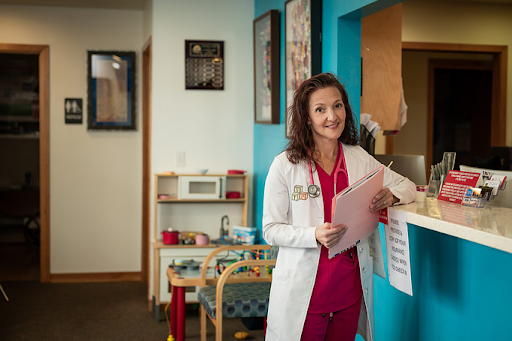
Long before she became the physician attorneys sought out in high-stakes child-abuse cases, Dr. Niran Al-Agba was known in her community simply as the doctor who stayed late, listened longer, and treated families as if they were extensions of her own. Her career began in the most unassuming setting—a small private pediatric practice she inherited from her father. Yet from that modest starting point emerged one of the most important independent voices in the national conversation on wrongful child-abuse allegations.
To the outside world, her work appears technical: reading medical records, evaluating imaging, analyzing injuries. But the families who reach out to her know there is far more behind her expertise. They describe her as the person who sees what others overlook, who understands their child beyond the chart, and who steps into a case not just as a medical expert but as someone who believes in restoring fairness where fairness has been lost.
This is the story of how a local pediatrician with deep roots in her community became the professional families call when everything is at stake.
A Small-Town Pediatrician With a Big-Picture Perspective
When Dr. Al-Agba stepped into her father’s practice, she wasn’t thinking about the child-welfare system or the legal world. She was thinking about continuity—about preserving a space where families felt safe, known, and cared for across generations. Her father had built his practice on trust, consistency, and the belief that good medicine begins with listening. She carried that same philosophy forward, often seeing children from birth into adolescence and building relationships with parents who valued her grounded, familiar presence.
This long-term experience shaped her understanding of childhood injuries in a way no textbook could replicate. She didn’t just know what bruises or fractures looked like medically; she understood how they happened in real homes, under real circumstances. She had watched toddlers run headfirst into coffee tables and listened to frantic parents describe the domino effect of a chaotic morning. She knew what was normal—and what wasn’t.
This real-world insight would later become the foundation of her second-opinion work, but at the time, it simply meant she was a pediatrician who saw families as whole people rather than diagnostic puzzles.
The First Moment She Realized Something Was Wrong
The shift from clinical pediatrics to forensic medicine didn’t happen overnight. It began gradually, with cases that didn’t make sense—cases where the medical conclusions didn’t align with the child in front of her. She saw fractures labeled “non-accidental” that matched common household accidents. She reviewed charts where normal toddler bruising had been treated as evidence of abuse. She encountered parents whose fear didn’t come from their child’s injury but from the way the healthcare system had suddenly turned on them.
Each of these moments revealed a pattern: families were being judged not on evidence but on assumptions.
For a long time, Dr. Al-Agba assumed these were rare occurrences, isolated mistakes. But as more attorneys began contacting her, asking her to review confusing or contradictory medical findings, she realized what she had witnessed in her own practice was part of a much larger, systemic problem. Physicians were making decisions under immense pressure, hospitals were prioritizing worst-case scenarios, and child-abuse pediatricians were interpreting injuries without the everyday context she had built her career on.
That realization changed everything.
Why Families Began Seeking Her Out
Word travels fast among attorneys who handle dependency and criminal cases. When one attorney discovered that a second opinion from Dr. Al-Agba had revealed errors in the original medical interpretation, others began calling. Without any marketing, without positioning herself as an expert, without even intending to enter this world, she became the name professionals shared when a case didn’t add up.
What stood out to them was her ability to explain medical findings in language that transformed confusion into clarity. She didn’t overwhelm attorneys with jargon or obscure theories. She broke down complex injuries into understandable concepts, explained developmental milestones in ways judges could grasp, and offered context that shifted investigations back toward truth.
Her independence made her even more valuable. Because she wasn’t part of child abuse pediatrics, her assessments weren’t influenced by institutional norms or internal pressures. Attorneys trusted her because she had no agenda beyond accuracy, and families trusted her because she treated them with compassion long before she delivered her conclusions.
The Moment “Behind-the-Scenes” Became a National Role
Even though most of her work happens quietly—in sealed courtrooms, private consultations, and confidential medical reviews—her impact has spread far beyond her small town. The Seattle Times profile introduced her work to a wider audience. Attorney listservs across the country began circulating her name. Interviews with major outlets followed, and her expertise became a resource for journalists investigating systemic failures in the child-welfare process.
Yet despite this growing visibility, she has remained rooted in the same principles that guided her early career: integrity, independence, and unwavering commitment to the families who rely on her. She still reviews every case herself. She still provides explanations that families can understand. And she still approaches each file with the humility of someone who knows how devastating a misinterpretation can be.
Her national influence grew because her work solved a problem no one else had been equipped to solve—the gap between theoretical child-abuse assessments and the realities of daily pediatric care.
How Her Second-Opinion Process Became a Lifeline
The families who contact her are often overwhelmed before she ever reads their case. They describe weeks of sleepless nights, interrogations that left them shaken, and a system that shifted from supportive to suspicious without warning. Many have already lost custody temporarily; others fear they are hours away from it. What they need in those moments is not reassurance—they need accuracy.
Dr. Al-Agba starts by reconstructing the case from the beginning. She examines every medical detail, but she also goes beyond the chart. She considers developmental stages, cultural practices, environmental limitations, and family dynamics that may explain injuries the original evaluator misinterpreted. She views each case through the lens of a pediatrician who has treated thousands of children across every possible scenario.
The power of her approach lies in how it reshapes the narrative. By the time she finishes a report, the case often looks entirely different from the one that first triggered alarm. The injury patterns make sense. The timeline matches normal childhood behavior. The assumptions unravel. And the family—who felt unheard throughout the process—finally sees their truth supported by medical science.
This is why attorneys describe her involvement as a turning point. Her clarity doesn’t just influence opinions; it influences outcomes.
What Makes Her the Person Families Trust When Everything Is at Risk
There are many medical experts who testify in child-abuse cases, but few offer what Dr. Al-Agba does: a combination of clinical expertise, real-world pediatric knowledge, and unwavering independence. Families don’t come to her because she promises a specific outcome. They come to her because she is the first professional who treats their situation with the care and seriousness it deserves.
She understands the emotional toll these cases inflict—the fear of losing a child, the shame of being misjudged, the helplessness of navigating a system that seems to move faster than truth itself. And she knows that behind every chart is a parent who needs someone to see them clearly.
What makes her unique is not just her ability to explain the medical facts. It is her ability to restore dignity to families who have had theirs taken away by misunderstanding, misinterpretation, or institutional bias.
A Legacy Built on Truth, Compassion, and Courage
Dr. Niran Al-Agba’s journey from small-town pediatrician to nationally sought-after medical expert was never part of her plan. Yet it makes perfect sense. Her father built a practice grounded in trust, and she built a career grounded in truth. Together, those values formed the foundation of the work she does today—work that protects families, corrects systemic failures, and ensures that decisions about children are made with accuracy rather than assumption.
When families call her, they are calling for more than a second opinion. They are calling for fairness, clarity, and someone who understands how fragile the line is between suspicion and truth. And time after time, she meets that moment with the precision of a seasoned pediatrician and the compassion of someone who refuses to let misunderstanding define a family’s future.




More Stories
How Do I Get United Airlines Vacation Packages?
How Do I Change My Name on Breeze Airways?
What Is the LATAM Airlines Name Change Policy?