
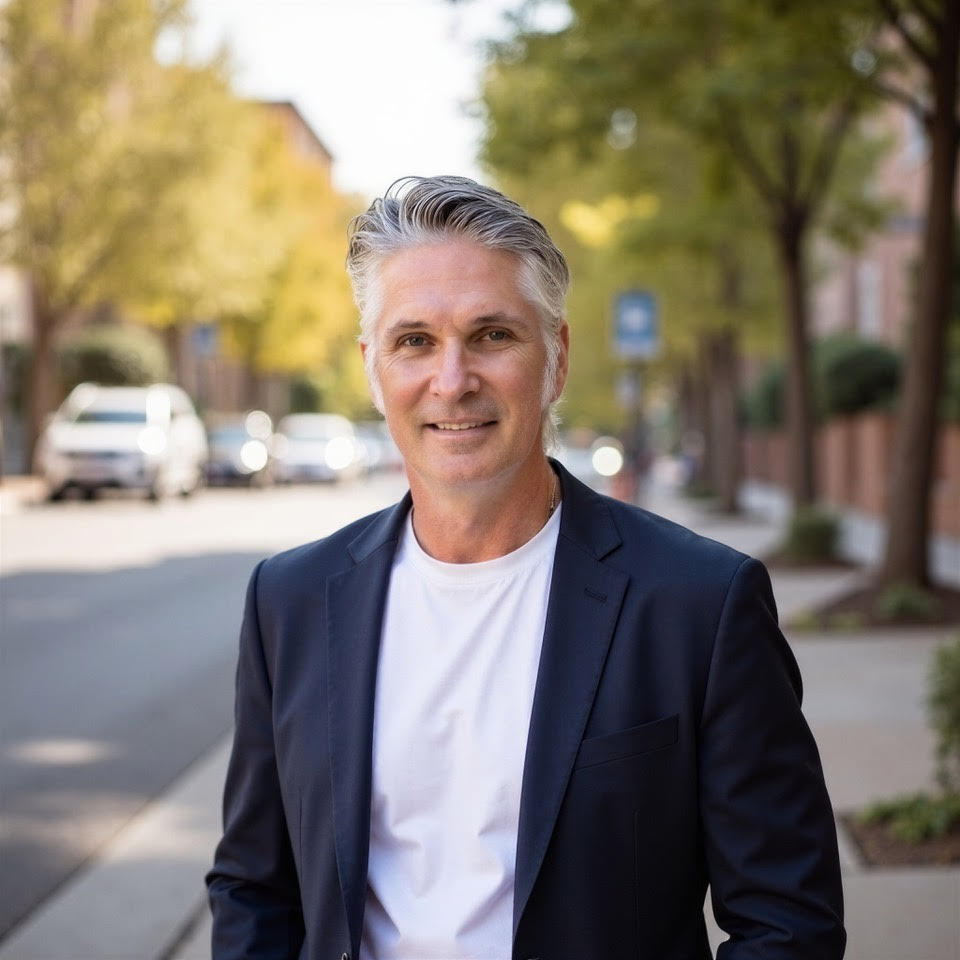
Robb remembers the Sunday morning phone call that would forever alter the course of his life. In a single moment, he learned that his oldest son had been killed in a drive-by shooting in San Diego. He was just 19 years old. The shock and grief that followed were overwhelming, but as Robb sat in the quiet darkness of his home later that evening, he made two decisions that would shape everything that came next. First, he decided he would not be angry with God. Second, he decided he would not allow his son’s death to become a badge of suffering or an excuse for failure. Instead, he chose to honor his son’s life by striving to live fully and with purpose.
Those decisions did not remove the pain, but they reframed it. After taking time to process the loss and regain his footing, Robb began to notice profound shifts in how he viewed his life, his relationships, and his work. His perspective expanded, and with it came a sense of hope he had never experienced before. The experience transformed how he presented himself to the world. He describes emerging from that season more daring, more intentional, and more unapologetic in how he pursued a meaningful life. What began as a devastating personal tragedy ultimately became the defining moment that shaped his philosophy around leadership, growth, and personal responsibility.
The Pattern That Holds People Back
Through his work with leaders, entrepreneurs, and individuals committed to growth, Robb has observed a recurring challenge that transcends industries, backgrounds, and levels of success. Many of the people he works with are intelligent, capable, and motivated. They have access to more information, tools, and strategies than ever before. They know what they need to do to improve their health, strengthen relationships, build better businesses, and lead more effectively. Yet despite this knowledge, they often find themselves struggling to consistently follow through.
This gap between knowing and doing becomes one of the most frustrating barriers to growth. Individuals set intentions, design plans, and begin with enthusiasm, but at some point, consistency fades. Excuses emerge, motivation declines, and progress stalls. Over time, many people begin to internalize this pattern, believing there is something fundamentally wrong with them. They label it a lack of discipline or a character flaw, which only deepens feelings of frustration and discouragement.
Robb challenges this assumption. In his experience, the issue is rarely about character. Instead, it is often a flaw in strategy and design. Most personal development approaches emphasize discipline as the primary solution. While discipline can be effective in the short term, it eventually gives way to comfort, particularly when individuals are tired, stressed, or overwhelmed. Without a structure designed to support consistent action, even highly motivated individuals will eventually default to what is easiest. This pattern frequently leads to shame and withdrawal, creating a cycle that makes meaningful transformation difficult to sustain.
Understanding the Role of Decision Fatigue
Robb’s own breakthrough came when he began to understand the impact of decision fatigue. Throughout the day, individuals make hundreds of decisions, often beginning the moment they wake up. Choices about when to get out of bed, what to eat, whether to exercise, how to prioritize tasks, and how to respond to responsibilities accumulate quickly. By the time individuals reach later parts of the day, their mental energy for decision-making is significantly depleted.
Recognizing this pattern helped Robb understand why, despite strong intentions, he often chose comfort over growth. He realized that no amount of motivation, inspiration, or external pressure could overcome the simple reality that exhaustion diminishes willpower. When mentally drained, people naturally gravitate toward easier options, even when they know those choices do not align with their long-term goals. This insight shifted his perspective from blaming himself to exploring how to redesign his approach.
Rather than relying on discipline alone, Robb began developing defined protocols that removed unnecessary decisions and made consistent action more attainable. This discovery marked a turning point. By creating systems that supported follow-through, he found that consistency became less about willpower and more about structure.
A Framework Built on Work, Energy, and Love
Robb simplifies his approach to personal transformation into three foundational areas of life: work, energy, and love. Right work supports purpose and meaningful contribution. Energy supports physical and mental well-being. Love supports relationships, beginning with one’s relationship with oneself and extending outward to family, colleagues, and community.
From there, Robb encourages individuals to envision the best version of themselves in each of these areas. He refers to these ideal versions as avatars or alter egos, inspired in part by the work of Todd Herman. The structured systems and protocols he now uses to support consistent follow-through are equally rooted in the HEROIC philosophy, developed by Brian Johnson, whose work Robb credits as foundational to finding his own balance and helping others do the same. By clearly defining what the best version of themselves looks like, individuals can begin identifying the daily actions required to close the gap between their current behavior and their potential.
However, Robb emphasizes that clarity alone is not enough. Without a strategy that ensures consistent follow-through, even the most compelling vision can remain unrealized. This is where structured protocols and pre-decisions become essential. Through daily routines and “if this, then that” algorithms, individuals remove the need to repeatedly decide whether to take action. Instead, they follow predetermined steps that guide behavior toward growth.
Robb credits much of this structured approach to his work as a certified HEROIC coach and facilitator. The HEROIC philosophy helped him translate his personal beliefs about leadership and development into actionable systems that could be followed consistently. By combining his own philosophy with structured protocols, he found a way to make personal growth sustainable.
What Transformation Looks Like in Practice
Robb works with individuals who are deeply committed to their own success but struggle with consistency in certain areas of their lives. Many of the people he supports are already successful professionally and personally, yet they recognize gaps between who they are capable of being and how they currently show up. For Robb, success is defined as closing that gap, not achieving perfection.
Transformation often begins with simple, consistent actions. Robb shares his own experience with morning meditation as an example. For years, he struggled to maintain a consistent practice, despite understanding its benefits. Through the development of evening protocols that supported quality sleep and morning routines that eliminated decision-making, he created a structure that enabled consistency. As of this writing, he has maintained a daily meditation practice for hundreds of consecutive days.
This example illustrates a broader principle. Sustainable transformation does not require dramatic changes or extreme intensity. Instead, consistent, intentional actions—supported by structured protocols—can gradually reshape behavior and identity. By implementing pre-decisions, individuals reduce reliance on willpower and create environments that support growth.
The Ripple Effect of Personal Transformation
While Robb’s work focuses on individual transformation, he believes the impact extends far beyond the individual. When people consistently show up as energized, focused, and intentional versions of themselves, their families, teams, and communities benefit. Relationships improve, leadership strengthens, and environments become more resilient.
Robb emphasizes that becoming one’s best self is not solely a personal ambition but also a responsibility. When individuals model commitment, growth, and accountability, they create positive ripple effects. Others are inspired to examine their own habits, pursue growth, and step into leadership roles within their own spheres of influence.
In this way, personal development becomes a catalyst for broader change. Stronger individuals contribute to stronger families, organizations, and communities, creating momentum that extends well beyond any single person.
A Message for a Challenging Time
Robb believes the current cultural environment makes this work more important than ever. With constant distractions competing for attention, many people invest time and energy into activities that move them further from their potential. He encourages individuals to reflect on how they spend their time, money, and focus, and to ask whether those choices are bringing them closer to or further from their best selves.
For those willing to examine their lives honestly, Robb believes there is always a path forward. Growth does not require perfection, but it does require courage, commitment, and a willingness to implement structure. As individuals close the gap between who they are and who they can become, they gain confidence and clarity that allows them to lead more effectively.
Robb remains committed to helping individuals embrace this process. By supporting people in building systems that enable consistent action, he aims to empower leaders who are bold, self-aware, and prepared to serve something greater than themselves. Because when individuals do the work to become their best selves, they not only transform their own lives—they create the conditions for meaningful change in the world around them.




More Stories
5 Key Benefits of Managed IT Security for Growing Businesses
Realme 14 Pro Plus 5G vs Realme 14 Pro 5G Which Pro Series Model Delivers More
What Is a Credit Card and How Can It Add Value During Festivals?