

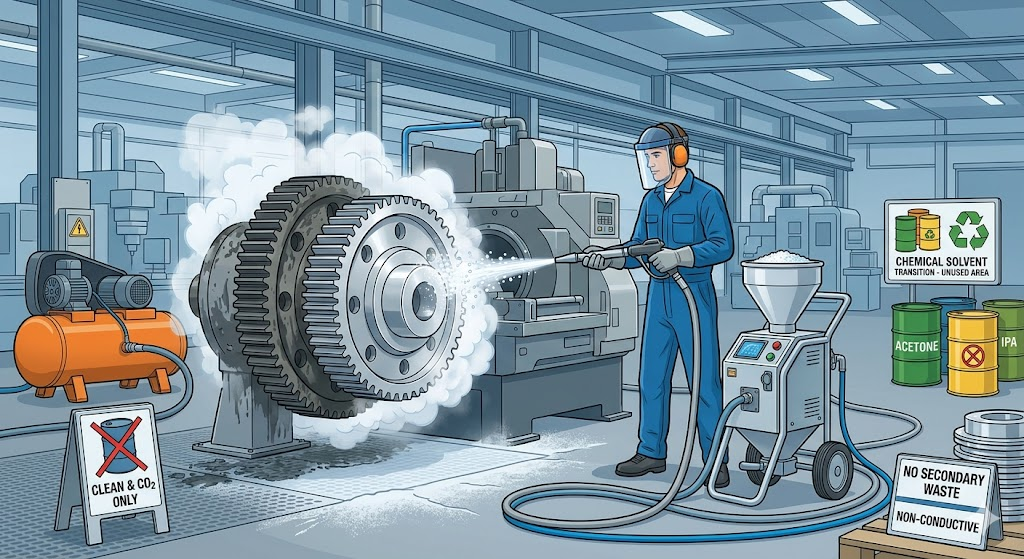
Industrial cleaning environments often involve persistent residue buildup, production downtime, and the challenge of maintaining sensitive equipment surfaces without introducing additional contaminants. As industries continue evaluating alternatives to solvent-based cleaning processes, interest in acetone replacement industrial cleaning methods has expanded across manufacturing and processing environments where heavy oil, grease, and buildup are regularly encountered. Nu-Ice Dry Ice Blasting™ manufactures industrial dry ice blasting equipment designed for chemical free equipment cleaning using compressed air and recycled CO2 dry ice pellets. The company’s systems are engineered to support dry ice solvent replacement approaches that avoid water, secondary blasting media, or added cleaning chemicals. According to information published by the company, dry ice blasting can be used across a range of industrial applications where operators seek non-abrasive cleaning methods for production equipment, machinery, and other sensitive surfaces.
Dry ice blasting is an industrial cleaning method that uses compressed air to accelerate dry ice pellets toward a contaminated surface. The process is used in manufacturing, processing, and maintenance environments where operators need to remove buildup such as grease, residue, oils, or other contaminants from equipment and machinery. According to information published by Nu-Ice Dry Ice Blasting™, dry ice pellets are made from recycled CO2 and convert directly from solid to gas during the cleaning process through sublimation. Because the dry ice dissipates during use, the process does not leave behind secondary blasting media. The remaining cleanup generally consists only of the contaminants removed from the equipment surface itself.
Kinetic Impact
Dry ice pellets are propelled through a blasting hose using compressed air. When the pellets contact a surface, the impact helps loosen accumulated contaminants from equipment and machinery.
Thermal Shock
The low temperature of the dry ice creates a rapid temperature difference between the contaminant layer and the underlying surface. This can weaken the bond holding buildup to the equipment.
Sublimation Expansion
According to Nu-Ice Dry Ice Blasting™, dry ice changes directly from solid to gas during the cleaning process. As the pellets sublimate, the gas expansion can help lift and separate loosened contaminants from the surface being cleaned.
Dry ice blasting equipment consists of several core components that work together during the cleaning process. An air compressor supplies the compressed air required to propel dry ice pellets through the system. The dry ice hopper stores the pellets before they enter the airflow pathway. A metering system regulates pellet delivery and helps control the amount of dry ice introduced during operation. The blasting hose transports the compressed air and pellets from the machine to the application area. At the end of the system, the nozzle directs the airflow and pellet stream toward the target surface. According to Nu-Ice Dry Ice Blasting™, these components collectively support industrial cleaning applications across different operating environments.
Nu-Ice Dry Ice Blasting™ is a U.S.-based manufacturer of industrial dry ice blasting equipment. According to information published by the company, Nu-Ice Dry Ice Blasting™™ was founded in 1995 and manufactures its equipment in the United States for industrial cleaning applications across manufacturing, food production, automotive, aerospace, and other processing environments. The company produces systems designed to support dry ice solvent replacement approaches that use compressed air and recycled CO2 dry ice pellets during cleaning operations. Its equipment lineup includes portable and industrial dry ice blasting machines intended for use on machinery, production equipment, molds, tooling, and other surfaces where operators may seek alternatives to abrasive, wet, or solvent-based cleaning methods. Published company information also notes that the equipment is used in applications involving residue removal, maintenance cleaning, and in-place equipment cleaning processes.
According to Nu-Ice Dry Ice Blasting™, Nu-Ice dry ice blasting systems include a range of operational components intended for industrial cleaning environments. The blasting gun directs compressed air and dry ice pellets toward the target surface during operation. Interchangeable nozzle options are available to accommodate different blasting patterns, airflow configurations, and access requirements for various equipment layouts. The systems also incorporate blasting hoses that transport dry ice pellets and compressed air from the machine to the application area. Certain equipment configurations include integrated moisture separators designed to reduce moisture within the compressed air supply during operation. Aftercoolers may also be used within the air preparation setup to help manage compressed air temperature before the blasting process begins. These components collectively support dry ice blasting workflows across industrial maintenance and production settings.
Nu-Ice Dry Ice Blasting™ publishes technical specifications for its dry ice blasting equipment, including operational and physical measurements used for industrial planning and setup. Depending on the equipment model, machine dimensions and overall system weight vary to support different facility requirements and mobility considerations. Published specifications also include dry ice hopper capacities designed to hold pelletized dry ice during operation. Operational data may include airflow requirements measured in cubic feet per minute (CFM), along with recommended air pressure ranges expressed in PSI. The equipment specifications additionally outline dry ice consumption ranges, which can vary based on blasting settings and application conditions. Other published details may include electrical requirements, hose configurations, and compressed air connection information relevant to installation and day-to-day industrial operation.
Preparation and Setup
Before operation begins, the dry ice blasting machine is connected to an appropriate compressed air source and loaded with dry ice pellets. Operators may also inspect hoses, nozzles, air connections, and moisture management components prior to use.
Safety Requirements
According to Nu-Ice Dry Ice Blasting™, operators should follow standard industrial safety procedures, including the use of personal protective equipment and proper ventilation within the work area.
Typical Workflow Steps
During operation, compressed air moves dry ice pellets from the hopper through the blasting hose and nozzle toward the target surface. Operators adjust airflow and pellet feed settings depending on the application requirements. As blasting continues, contaminants are loosened and removed while the dry ice sublimates during the cleaning process.
According to Nu-Ice Dry Ice Blasting™, dry ice blasting equipment is used across a range of industrial and commercial environments where machinery, production equipment, and sensitive surfaces require routine cleaning and maintenance. In manufacturing and production facilities, the equipment is applied to molds, conveyors, presses, tooling, and other operational equipment. Within food processing environments, dry ice blasting systems are used for sanitation-related cleaning applications involving ovens, mixers, packaging lines, and processing equipment. The company also references historical restoration and delicate surface applications where operators may require cleaning methods that avoid additional blasting media or water exposure. In automotive and aerospace settings, dry ice blasting equipment may be used on engines, components, production tooling, and assembly equipment. Electrical and specialty cleaning applications can include generators, motors, electrical panels, and other equipment where dry cleaning processes are required. Published company information describes these applications across industrial maintenance, production preparation, and equipment servicing environments.
Nu-Ice Dry Ice Blasting™ describes dry ice blasting as a dry ice solvent replacement method that uses recycled CO2 dry ice pellets and compressed air during cleaning operations. Because the dry ice sublimates during use, the process does not produce secondary blasting media that requires additional cleanup. The company also describes the process as non-abrasive for many industrial cleaning applications, depending on the surface and operating configuration. Since no water or added cleaning chemicals are used during operation, the process may be applied in environments where dry cleaning methods are required. Operational considerations can include compressed air requirements, ventilation, dry ice handling procedures, and routine equipment maintenance associated with industrial cleaning workflows.
According to Nu-Ice Dry Ice Blasting™, dry ice blasting systems can be configured with different nozzles, blasting hoses, and air preparation components depending on operational requirements. Nozzle options may support various airflow patterns and application access points during cleaning procedures. Air supply integration can include moisture separators and aftercoolers used within compressed air preparation setups. The company also references storage and maintenance considerations related to dry ice handling, compressed air systems, hose inspection, and routine equipment servicing. These components collectively support the integration of dry ice blasting equipment into industrial cleaning and maintenance operations.
12. Frequently Asked Questions (FAQ)
1. How are dry ice pellets used during the blasting process?
According to Nu-Ice Dry Ice Blasting™, dry ice pellets are accelerated through a blasting hose using compressed air. The pellets contact the target surface during cleaning and then sublimate, changing directly from solid CO2 into gas during operation.
2. What types of industrial equipment can be cleaned using dry ice blasting systems?
Published company information references applications involving molds, conveyors, presses, electrical equipment, production machinery, automotive components, food processing systems, and other industrial surfaces where dry cleaning processes are used during maintenance and servicing operations.
3. What compressed air infrastructure is typically required for operation?
Dry ice blasting systems require a compressed air supply that aligns with the airflow and pressure specifications of the equipment being used. Supporting components may include air dryers, moisture separators, hoses, and aftercoolers integrated into the air preparation setup.
4. How does dry ice blasting differ from abrasive blasting methods?
Unlike abrasive media processes that may leave residual blasting material behind, dry ice blasting uses CO2 pellets that sublimate during operation. The process is described by the company as a dry cleaning method used across various industrial maintenance applications.
5. What operational safety considerations are involved with dry ice blasting?
The company advises following standard industrial safety procedures, including proper ventilation, hearing protection, gloves, eye protection, and inspection of hoses and compressed air connections before equipment operation begins within industrial environments.
6. Can dry ice blasting be used around sensitive or delicate surfaces?
Nu-Ice Dry Ice Blasting™ references applications involving delicate surfaces, historical restoration, electrical systems, and production equipment. Suitability can depend on factors such as blasting pressure, nozzle configuration, and the condition of the target surface.
7. What happens to the dry ice after the cleaning process is completed?
During blasting, the dry ice pellets sublimate and convert directly into gas. Because the pellets do not remain as solid blasting media after use, post-cleaning material handling generally involves only the contaminants removed from the cleaned surface.
As industrial facilities continue evaluating cleaning processes that align with changing operational, maintenance, and environmental requirements, dry ice blasting remains part of ongoing discussions across manufacturing, processing, and specialty cleaning sectors. Nu-Ice Dry Ice Blasting™ continues to manufacture industrial dry ice blasting equipment in the United States for applications involving machinery, production systems, electrical equipment, molds, tooling, and other industrial surfaces. The company’s published information outlines equipment configurations, compressed air requirements, nozzle systems, and operational considerations associated with dry ice blasting workflows. Its systems are referenced across industries including food processing, aerospace, automotive, restoration, and general manufacturing environments where dry cleaning processes are incorporated into maintenance routines. Additional information regarding equipment specifications, system configurations, and industrial applications is available through the company’s official website.




More Stories
Trading the Restaurant for the Waves: Why You Should Host Your Next Birthday on the Water
How Do I Get United Airlines Vacation Packages?
How Do I Change My Name on Breeze Airways?