

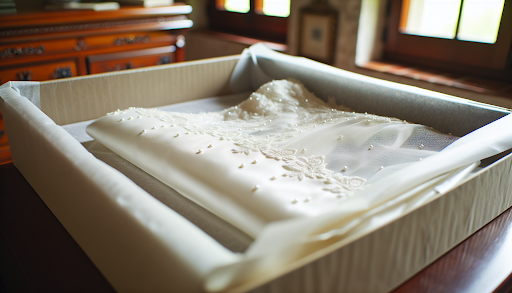
Preserving a wedding dress is an essential task for any bride who wishes to maintain the beauty and sentimental value of her gown. Ensuring that your dress remains in pristine condition requires attention to several factors. For brides who are committed to preserving their wedding dress, understanding these elements can help in maintaining the longevity of their cherished garment.
1. Immediate Cleaning
After your wedding, it’s crucial to have your dress cleaned as soon as possible. Stains from food, drinks, or makeup can set in quickly and become more challenging to remove over time. Prompt cleaning helps prevent permanent damage and discoloration.
2. Choose a Professional Service
Selecting a professional service specializing in wedding dress preservation is vital. These experts have the knowledge and tools to handle delicate fabrics and intricate designs. Ensure the service you choose has experience with dresses similar to yours.
3. Inspect for Damage
Before sending your dress for preservation, inspect it thoroughly for any damage. Look for loose threads, missing buttons, or torn fabric. Addressing these issues beforehand ensures they won’t worsen during the preservation process.
4. Use Acid-Free Materials
When storing your dress, use acid-free tissue paper and boxes. Acid-free materials prevent yellowing and deterioration of the fabric over time. These materials are designed to maintain the dress’s integrity and appearance.
5. Avoid Plastic Covers
Avoid storing your dress in plastic covers or bags. Plastic can trap moisture, leading to mold and mildew growth. Instead, opt for a breathable fabric cover that allows air circulation while protecting the dress from dust and light.
6. Control the Environment
Store your dress in a cool, dry place away from direct sunlight. Excessive heat and humidity can weaken the fabric and cause colors to fade. Aim for a stable environment with minimal temperature fluctuations.
7. Regular Inspections
Periodically inspect your dress even after preservation. Check for any signs of damage or discoloration that may have developed over time. Regular inspections help catch potential issues early, allowing for timely intervention.
8. Handle with Care
When handling your preserved dress, always wash your hands to avoid transferring oils or dirt. Consider wearing clean cotton gloves to provide an extra layer of protection. This precaution helps maintain the fabric’s cleanliness and quality.
9. Avoid Hanging
Hanging a preserved wedding dress can cause the fabric to stretch, especially if it is heavy. Instead, store the dress flat in its preservation box. This method helps maintain the dress’s shape and prevents unnecessary stress on the seams.
10. Document the Process
Keep a record of the preservation process, including the date of cleaning, the service used, and any repairs made. This documentation can be helpful for future reference or if you decide to pass the dress down to a family member.
11. Consider a Display
If you wish to display your dress, use a mannequin designed for long-term display. Ensure it is positioned away from direct sunlight and in a controlled environment. This allows you to enjoy your dress while still preserving its condition.
12. Be Mindful of Accessories
If your wedding ensemble included accessories like veils or gloves, consider preserving them alongside your dress. These items can be subject to the same deterioration risks and should be stored using similar methods to ensure their longevity.
13. Plan for Future Use
If you plan to pass your dress down to future generations, communicate the preservation methods used. Educating them on proper care will help maintain the dress’s condition for years to come.
Conclusion
Preserving a wedding dress is a meaningful way to honor your special day and keep those memories alive. By following these guidelines and paying attention to the details, you can ensure that your dress remains as beautiful as the day you wore it. Remember, the key to successful preservation lies in timely action, professional care, and proper storage.



More Stories
University Finance Clubs in Argentina Often Begin With a Shared MetaTrader 4 Download Session
Why Service Area Details Are So Hard to Find on Bin Cleaning Sites
How Rain and Heat Shape Company Events in South Louisiana