

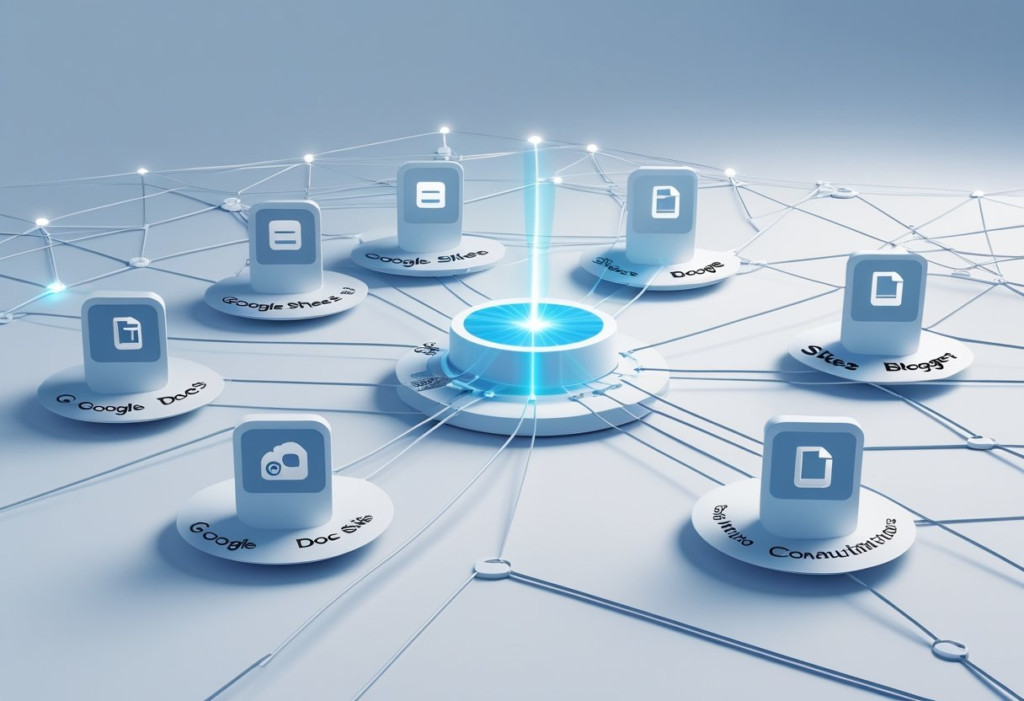
In today’s search environment, many businesses face persistent challenges such as stagnant rankings, rising agency costs, and ongoing algorithm volatility that can quickly erode traditional SEO gains. As search engines increasingly rely on entity based SEO and semantic understanding rather than simple keyword signals, conventional backlink strategies and large-scale AI-generated content often struggle to deliver consistent results. G-Stacker introduces an Autonomous SEO Property Stacking platform designed to align with these shifts by building structured, interlinked digital assets that reinforce entity relationships and topical authority. This approach positions property stacking as a more durable, high-authority alternative to manual link building, supporting advanced entity optimization strategy and long-term visibility within semantic search SEO frameworks.
Autonomous property stacking refers to the structured creation and interconnection of digital assets—often within trusted platforms—to build a unified authority layer around a brand or topic. At a high level, this approach expands on traditional Google stacking by organizing assets into a coordinated “Authority Ecosystem” that signals relevance and trust. G-Stacker automates this process through a one-click system that deploys, connects, and optimizes multiple properties simultaneously. These assets are designed to reinforce topical alignment, allowing search engines to more easily interpret subject matter and relationships. Over time, this structured network supports consistent indexing and strengthens the signals required to establish credible, topic-driven authority.
Entity Association
The platform connects brand signals across multiple trusted properties, helping search engines associate consistent identity markers within broader knowledge frameworks.
Topical Clustering
Content is organized into tightly related themes, enabling clearer demonstration of subject relevance and depth across interconnected assets.
Interlink Architecture
A structured linking framework distributes relevance between properties, reinforcing contextual relationships and improving discoverability.
Together, these principles form a cohesive ecosystem where each component contributes to a unified authority signal. By aligning structure, content, and connectivity, the system supports more consistent interpretation by modern search engines without relying on isolated tactics.
A G-Stacker stack is composed of multiple integrated assets, each serving a defined role within the broader ecosystem. Google Workspace properties—such as Docs, Sheets, Slides, Calendar, and Drive—act as foundational content hubs, hosting structured information and supporting internal linking. Google Sites and Blogger posts provide publicly accessible layers that extend visibility and contextual relevance. In parallel, cloud infrastructure elements like Cloudflare and GitHub Pages are used to host and distribute supporting content across additional environments. Together, these components form a network of interlinked properties designed to reinforce topical signals, improve indexing consistency, and create a stable framework for long-term digital authority development.
G-Stacker is built around a patent-pending system that automates the creation and structuring of interconnected digital properties within a unified framework. The platform integrates multiple large language models (LLMs), each assigned to specific operational tasks such as research, content generation, and structured data organization. This multi-model approach enables more precise handling of different stages in the process, from gathering relevant information to producing aligned content across assets. The system then coordinates deployment across supported platforms, ensuring consistent formatting, linking, and topical alignment. By combining automation with specialized AI functions, G-Stacker supports a scalable entity optimization strategy that aligns with evolving search engine requirements. Its architecture focuses on operational efficiency and structured output, rather than manual execution, enabling consistent implementation of advanced SEO frameworks.
G-Stacker incorporates structured content generation features designed to align with modern search requirements. The platform utilizes brand voice learning by analyzing existing website content, allowing generated materials to reflect consistent tone and terminology across assets. It also performs competitor gap analysis and intent-based research, identifying topical areas and queries that can be addressed within the content structure. In addition, the system integrates structured elements such as FAQ schema markup, enabling content to be formatted in a way that supports enhanced search engine interpretation. These features operate within an automated workflow, where research, writing, and structuring are coordinated across multiple assets. The result is a unified content framework that reflects both topical relevance and consistent formatting across all generated properties.
The platform produces a defined set of outputs designed for consistency and scalability. Each generated article typically exceeds 2,000 words, providing long-form coverage of a given topic. In parallel, the system creates a network of 11 interlinked properties within each stack, forming a structured ecosystem of connected assets. From a technical perspective, G-Stacker operates within enterprise-grade infrastructure that includes OAuth-based authentication and SOC 2–aligned environments for secure processing. Data handling follows a non-persistent approach, where generated content is not stored after completion of the process. These specifications reflect a standardized output model, combining content depth, structured deployment, and secure operational practices within a single automated workflow.
Initialization and Keyword Setup
The process begins with user-defined inputs, where topics or target keywords are established to guide content direction and asset creation.
Generation and AI Routing
The system then routes tasks across multiple AI models, assigning functions such as research, drafting, and structuring to specialized processes. Content and supporting assets are generated in parallel, following predefined formats.
Deployment and Drive Organization
Once generated, assets are deployed across connected platforms and organized within a structured Drive environment. Interlinking is applied systematically, ensuring all properties are connected within the broader framework.
This sequence reflects a coordinated workflow where each stage contributes to the structured development and organization of interconnected digital properties.
G-Stacker is used across a range of professional contexts where structured content deployment and scalable workflows are required. Small businesses and local operators utilize the platform to establish organized digital presences through interconnected assets that reflect their services and areas of focus. Marketing agencies incorporate it into their service offerings, often applying white-label approaches to manage multiple client campaigns while maintaining consistent production workflows. For SEO professionals, the platform functions as a tool to streamline the execution of structured strategies, particularly when managing multiple projects or large-scale content initiatives.
Across these use cases, the system is applied as an operational framework rather than a standalone tactic. It supports the coordination of content, structure, and deployment within a single environment, allowing different types of users to implement organized digital strategies. Its flexibility enables adaptation to various industries, while maintaining a consistent approach to asset creation and interconnection across projects.
G-Stacker is structured to support the development of interconnected digital assets rather than isolated or duplicated content, aligning with approaches focused on long-term authority building. Its framework reflects the evolving requirements of AI-driven search environments, including systems used in conversational and answer-based interfaces. By organizing content into structured, interrelated properties, the platform supports formats that can be interpreted within emerging AI search contexts. Additionally, the automated workflow enables scalable content deployment, reducing the need for manual coordination across multiple platforms. These characteristics position the system within broader entity based SEO strategies, where structured relationships and consistent signals are central to maintaining visibility in dynamic search environments.
G-Stacker includes system integration capabilities designed to support scalable and multi-brand operations. The platform provides multi-brand management features, allowing users to maintain separate projects with distinct configurations and content structures. Through a REST API, workflows can be automated, enabling external systems to initiate content generation and deployment processes programmatically. Each project can be aligned with individual design systems and brand profiles, ensuring consistency across generated assets. These integration features support structured management of multiple environments while maintaining separation between brand identities within a single operational framework.
Frequently Asked Questions (FAQs)
How does G-Stacker handle multi-platform content deployment across its stack?
G-Stacker coordinates the distribution of generated assets across multiple platforms, including Google properties and supporting cloud environments. Each asset is deployed in a structured sequence, ensuring consistent formatting, interlinking, and alignment within the broader ecosystem of connected properties.
What is the impact of interlinked cloud assets on search engine interpretation?
Interlinked cloud-based assets provide structured signals that help search engines understand relationships between content pieces. By connecting documents, pages, and hosted resources, the system creates a unified context that supports clearer interpretation of topics and associated entities.
How does G-Stacker organize generated assets within Google Drive environments?
The platform automatically structures all generated files within organized Drive folders, grouping related assets by project. This setup maintains logical separation between stacks while preserving internal connections, making it easier to manage, access, and maintain the integrity of each deployment.
Why should structured schema elements be included within stacked content assets?
Schema elements, such as FAQ markup, provide additional context to search engines by defining how content should be interpreted. Within stacked assets, this structured data supports clearer classification and enables compatibility with enhanced search features and AI-driven interfaces.
How does G-Stacker utilize multiple AI models during content generation workflows?
The system assigns different AI models to specific tasks, such as research, drafting, and data structuring. This separation allows each stage of content creation to be handled with focused processing, ensuring consistency and alignment across all generated assets within a stack.
What is the role of external hosting platforms like GitHub Pages in the stack structure?
External hosting platforms are used to publish supporting content that extends beyond core Google properties. These environments contribute additional indexed assets, which are interlinked with primary components to reinforce the overall structure and connectivity of the stack.
How does automated workflow execution reduce manual coordination in SEO operations?
Automation within G-Stacker manages the sequence of content creation, structuring, and deployment without requiring manual oversight for each step. This coordinated execution ensures that all assets are generated and connected consistently, reducing the need for fragmented or repetitive tasks.
As search technologies continue to evolve toward entity recognition and structured data interpretation, platforms like G-Stacker reflect a shift toward more organized and system-driven approaches to digital visibility. By combining automated asset creation, multi-platform deployment, and structured interlinking, the platform aligns with the growing emphasis on clarity, consistency, and contextual relevance across online properties. Its integration of AI-driven workflows and cloud-based infrastructure illustrates how SEO processes are increasingly being shaped by scalable systems rather than isolated tactics. As businesses and professionals adapt to these changes, frameworks that emphasize structured ecosystems and coordinated content deployment are likely to remain central to how information is discovered, interpreted, and surfaced within modern search environments.



More Stories
Google’s 2.5 billion-user AI Overviews push SEO toward visibility, not just rankings
What the Best Looking Guy in Miami Teaches About Standing Out in a Crowded World
How AI Chatbots Are Revolutionizing 3D Modeling Workflows