

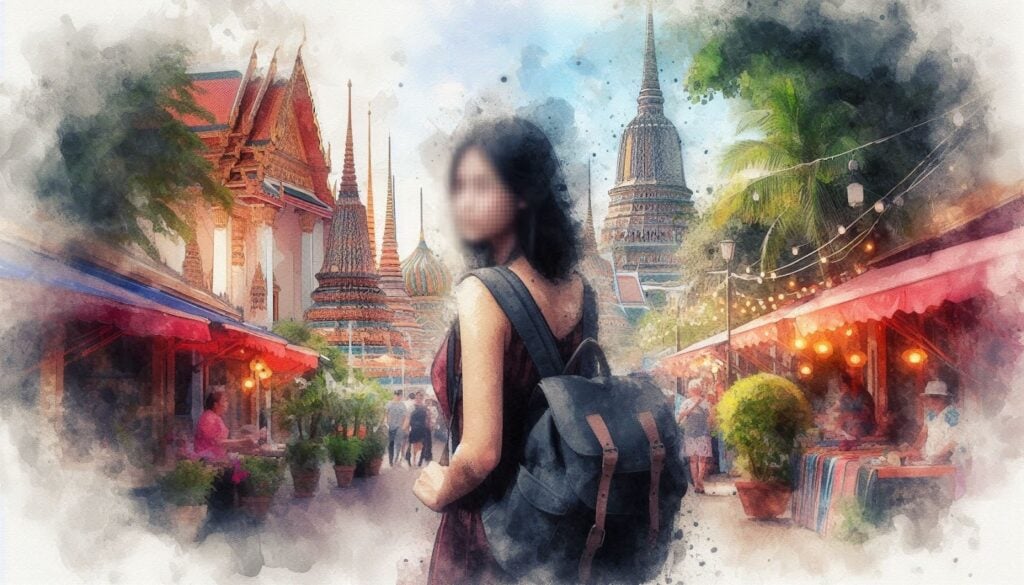
In destinations facing unrest or higher scam risk, keeping a quieter presence is increasingly seen as a practical habit, not just a lifestyle choice.
WASHINGTON, DC.
For years, low-profile travel was treated mainly as a style choice. It belonged to the privacy-minded traveler, the experienced road warrior, the solo woman who preferred discretion, the executive who did not post in real time, or the tourist who simply disliked standing out. In 2026, that instinct is moving into a different category. It is becoming part of the safety conversation. In destinations where unrest, opportunistic crime, transport fraud, or organized scam activity are part of the local warning environment, travelers are increasingly discovering that blending in is not a personality quirk.
It is a practical habit. The most useful safety move is not always a gadget, a concierge number, or a premium transfer. Sometimes it is arriving quieter, dressing flatter, posting later, saying less, and giving strangers less information to work with. That does not mean fear should define the trip. It means the modern traveler is starting to understand that attention itself can be a risk factor, and that staying a little less visible can reduce friction before trouble ever starts.
This shift makes sense because travel risk has changed shape. The old picture of danger abroad was dramatic and easy to identify: political unrest on television, a pickpocket in a crowded square, a bad neighborhood after dark, a suspicious taxi at the airport. Those risks still exist, but they now sit alongside a broader ecosystem of softer threats that thrive on distraction and oversharing. Scam culture has become more sophisticated.
Criminal networks monitor tourist habits. Fraud can begin before arrival through fake drivers, fake bookings, romance manipulation, message intercepts, cloned listings, or social media signals that reveal exactly where a traveler is and how unfamiliar they are with the environment. At the same time, unrest in certain destinations can make visible foreigners more vulnerable to being watched, overcharged, followed, or pulled into situations they do not understand. That is why low-profile behavior is gaining respect. It is not built on paranoia. It is built on pattern recognition. In stressed environments, the traveler who attracts less attention usually has fewer avoidable interactions, and fewer avoidable interactions often mean fewer unnecessary problems.
The official language around travel already points in that direction. The U.S. State Department’s travel advisory system now breaks risks down in ways that feel more operational than abstract, with indicators that include crime, terrorism, civil unrest, kidnapping, and other location-specific concerns. That structure matters because it reminds travelers that safety is rarely one single issue. A destination may not be broadly unsafe, but it may still contain pressure points where outsiders stand out too easily, especially if they look affluent, confused, overly trusting, or loudly unfamiliar with local conditions.
That is where low-profile travel becomes useful. It translates a broad warning into everyday behavior. Do not advertise your room number. Do not flash cash or luxury labels. Do not leave your phone open on a street corner while checking directions. Do not announce a full itinerary to strangers. Do not let fatigue turn you into an easy read. Safety advice used to emphasize where not to go. Increasingly, it also includes how not to look like the easiest target when you are there.
Recent travel headlines have sharpened this instinct. In Reuters coverage of Thailand’s effort to reassure visitors after safety fears tied to scam compounds and abductions in the region, the message was not that ordinary tourism had become impossible. It was that perception matters, and that scam risk can influence the choices travelers make long before they ever board a plane. That is the key point. Once a destination becomes associated with opportunistic fraud, tourist targeting, or unstable edges around the visitor economy, behavior changes.
Travelers are increasingly favoring quieter arrivals, verified transfers, less conspicuous clothing, simpler routines, and reduced public disclosure. They think twice before posting the hotel in real time. They become more cautious about who approaches them first. They stop treating visibility as harmless. In that sense, low-profile travel is not a dramatic reaction to extraordinary danger. It is a moderate response to a more manipulative travel environment, one in which the wrong kind of attention can turn a minor inconvenience into a much larger problem.
What makes this trend especially interesting is that it blurs the line between privacy culture and safety culture. A few years ago, hush travel, anonymous travel, and delayed posting were often discussed as lifestyle signals, part digital detox, part anti-performance mood, part discreet luxury. Now those same habits increasingly have a defensive logic. The traveler who waits until they are home to post photos is not only preserving the memory. They are also avoiding live location disclosure. The traveler who uses less branded luggage and dresses more neutrally is not only trying to blend in aesthetically. They are reducing the chance of being sorted into the wealthy and inattentive category. The traveler who shares plans with a small, trusted circle rather than a wide social network is not being antisocial. They are reducing informational exposure. Analysts at Amicus International Consulting have argued that discreet movement is increasingly understood as lawful risk management rather than theatrical invisibility, and that framing helps explain why the concept has entered mainstream travel thinking. Low-profile behavior works because it lowers the amount of usable data, visible status, and social noise surrounding the trip.
There is also a psychological advantage to traveling this way. People who stay low-profile tend to make better decisions because they pay closer attention to the environment rather than to the performance of being there. They notice who is watching. They notice when an interaction feels pushed. They notice whether a ride offer is too eager, whether a public setting is becoming unstable, whether a route feels wrong, and whether a crowd is shifting mood.
Travelers who are busy filming, posting, or performing confidently sometimes miss those cues. Low-profile travel encourages a different posture. It is less about fear than about observational discipline. Head up, voice calm, movements ordinary, plans flexible, disclosures limited. It sounds almost old-fashioned, but that is partly why it works. Many scams succeed because they read a tourist before the tourist reads the situation. The quieter traveler is often harder to read. That alone can change the equation.
None of this means travelers should behave as though every destination is dangerous or every local interaction is suspect. That would be both inaccurate and self-defeating. The point is narrower and more practical. In environments where uncertainty is part of the landscape, whether because of demonstrations, transport fraud, inflated tourist pricing, nightlife theft, digital scams, or regional instability, it helps to think of visibility as something you manage. Low-profile travel means keeping the trip ordinary from the outside, even when it feels special on the inside. It means protecting your own bandwidth.
It means understanding that confidence does not always look loud. In many places, the safest traveler in the room is the one who looks hardest to sort, not the one who looks most prepared to spend. That is why the advice resonates with solo travelers, women, families, older travelers, executives, and anyone visiting a place where the margin for avoidable mistakes feels thinner than usual.
The hospitality and travel-planning business is starting to absorb this logic as well. Good service in 2026 is increasingly about controlled exposure. That can mean airport pickups that are clearly verified, check-ins that protect guest details, itinerary design that avoids unnecessary flash, and staff who understand that privacy and safety often reinforce each other. It can also mean coaching travelers away from the habits that once seemed harmless, public geotagging, openly discussing budgets in transit, wearing destination-naive confidence too obviously, or turning every arrival into a public event. The market has changed because the traveler has changed. More people now understand that a successful trip is not only one where nothing bad happens. It is one where the traveler never becomes especially legible as an easy opportunity in the first place.
That is why low-profile travel is becoming part of the safety conversation instead of remaining a niche lifestyle preference. In a more documented, more manipulated, and sometimes more volatile travel environment, discretion has moved from optional aesthetic to practical method. It is not about hiding. It is about reducing unnecessary exposure.
It is about keeping attention off yourself in places where attention can be monetized, exploited, or turned into pressure. And it is about recognizing a simple truth that experienced travelers have understood for years. The quieter presence is often the stronger one. In 2026, that idea no longer belongs only to the privacy crowd. It belongs to the mainstream safety brief.




More Stories
Loes de Vreugd: Why Your Conscious Efforts Keep Failing And the Subconscious Solution That Actually Works
Caribbean Dreams: The Most Accessible Second Citizenships of the Year
Andrea Lynn Is Defining What It Means to Be the Face of Hope, One Story at a Time