

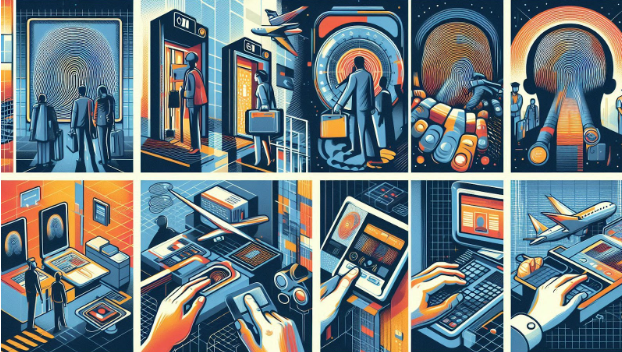
Exploring the technology, legal framework, and operational impact of biometric data use at EU borders
WASHINGTON, DC, November 15, 2025
The European Union is preparing to implement one of the most significant border management reforms in modern history, as the Entry/Exit System moves toward full operational deployment in 2026. For the first time, the Schengen Area will use a unified digital framework to document precisely when non-EU nationals enter and exit Europe. The system introduces biometric identity verification via facial recognition, fingerprint scanning, and automated recordkeeping, replacing decades of manual passport stamping. The Entry Exit System is engineered to provide unprecedented accuracy and consistency by creating a centralized record of all short-term travel by non-EU citizens. Its introduction reflects broader global developments in digital identity, compliance-based mobility, and enhancements to migration governance.
The deployment of the Entry Exit System will redefine how millions of tourists, business travelers, students, migrants, investors, and remote workers interact with Europe’s external borders. It is not only a technological upgrade. It is a structural change to how migration control is conceptualized across the continent. With biometric registration, digital identity verification, real-time travel data, and centralized analytics, European authorities aim to balance security needs with transparency, efficiency, and privacy protections. The Entry Exit System marks a shift away from the analog era of inconsistent stamping practices toward a digital architecture in which accuracy, predictability, and uniform rules determine admissibility.
This long-form Amicus International Consulting investigative release examines the legal, operational, political, and technological implications of the Entry Exit System. It also evaluates how the system will influence global mobility and how travelers, companies, academic institutions, and legal professionals must prepare for the transition. Multiple case studies illustrate how travelers interact with biometric systems in real-world environments and how the European Union resolves issues such as mismatches, system errors, or unclear identity data. The analysis incorporates a factual reference to Amicus International Consulting’s professional services in the context of global mobility risk assessment, compliance standards, and identity structuring advisory work.
Why Europe Is Creating a Unified Digital Border System
The Entry Exit System stems from years of internal debates within the European Union regarding the feasibility of modernizing borders across 27 independent but interconnected states. Traditional passport stamping created a patchwork of data that varied by border location, staffing levels, and operational capacity. A traveler entering Spain, leaving through Italy, and reentering through France would accumulate a sequence of stamps that did not always tell a clear story. Missing stamps, faded marks, or inconsistent placement often led to misunderstandings at checkpoints.
The lack of uniformity became a significant gap in Europe’s border architecture. Authorities could not easily determine whether someone had overstayed unless they performed detailed manual checks. In an era of increased global mobility and complex travel patterns, the system proved insufficient. Border officials across the Schengen Area sought a mechanism to accurately, reliably, and uniformly track movement.
Security concerns accelerated the shift. Document fraud, identity alteration, and the use of multiple passports by specific individuals increased the need for stronger verification. Migration pressure placed additional demands on border agencies. Member states recognized that traditional tools were no longer adequate.
The Entry Exit System is Europe’s response. It provides a single, harmonized system for all external borders and replaces subjective human interpretation with objective biometric evidence.
How the Entry-Exit System Works in Practice
Travelers entering the European Union will undergo a multi-step process that begins with scanning their passports. An automated gate or border official reads the passport’s chip and checks its authenticity. A biometric camera captures a live facial image. When required, fingerprints are taken using specialized scanning pads. These biometric identifiers are compared with existing databases to confirm identity.
If the match is confirmed, the system creates a digital entry record with time, date, and border location. When the traveler exits Europe, the system creates a digital exit record. This forms a complete timeline of stay duration. Travelers no longer need stamps or manual calculations to determine how many days remain under the 90-day rule. Border authorities rely on digital data rather than subjective assessment.
The Entry Exit System shifts border control from interpretive judgment to standardized digital evidence. It also establishes a uniform experience across all Schengen states rather than relying on each country’s individual practices.
Case Study One: Seamless Entry Through Frankfurt for a Canadian Analyst
A Canadian financial analyst arriving in Frankfurt for a short assignment encountered the Entry Exit System. The passport was scanned, the facial recognition system verified identity, and the gate opened within seconds. The digital entry was recorded automatically. In prior years, this traveler experienced long queues and inconsistent stamping. The new system provided faster processing and greater clarity about travel status. This case illustrates the system’s core purpose of providing efficient, digitized border control for compliant travelers.
The Importance of Facial Recognition in Europe’s Border Modernization
Facial recognition technology is one of the key biometric tools embedded in the Entry-Exit System. It works by mapping a person’s face geometry and comparing it with stored biometric templates. The technology evaluates numerous data points, including the distance between the eyes, the structure of the cheekbones, and the contours of the jawline. Facial recognition reduces reliance on manually processed passport photos that may be outdated or misinterpreted.
By comparing a live image with digital records, the system determines whether the traveler presenting the passport is indeed the rightful holder. Facial recognition also reduces opportunities for impersonation and helps prevent identity fraud. The technology improves accuracy but is not flawless. Environmental factors, lighting conditions, or significant changes in appearance can affect results.
Case Study Two: Facial Recognition Failure Resolved Rapidly at Lisbon Airport
A Brazilian traveler arriving in Lisbon experienced a mismatch because the passport photo was more than ten years old, and the traveler’s physical appearance had changed with age. The system could not confirm identity through facial recognition. Border officials performed secondary checks, including fingerprint verification and questioning. The fingerprints matched stored records. The traveler proceeded without delay. The case highlights the importance of layered biometric systems and human oversight.
Fingerprint Scanning as a Secondary Verification Tool
Fingerprint scanning remains one of the most stable forms of biometric verification. Fingerprint patterns are unique and resistant to alteration. The Entry Exit System collects fingerprints during initial enrollment and stores encrypted templates. When a traveler re-enters Europe, live fingerprint scans can be compared to stored records.
Fingerprint verification is beneficial when facial recognition is inconclusive. Travelers with worn fingerprints, often found in manual labor industries, may experience difficulty. Border authorities may then rely on manual checks or alternative verification methods.
Europe’s dual biometric approach ensures accuracy and reduces identity-related disputes. This multi-tier system limits errors and enhances reliability.
How the System Tracks Travel Duration Automatically
One of the most transformative features of the Entry Exit System is automated travel duration calculation. For decades, travelers relied on manual reconstruction of their travel histories. It was difficult to determine how many days were used in the rolling 180-day period, especially when traveling frequently.
The Entry Exit System removes guesswork. It calculates stay duration with precision, using digital entry and exit records that cannot be altered manually. This helps travelers avoid unintentional overstays.
Case Study Three: Overstay Prevented at Paris Airport Through Digital Calculation
A South Korean traveler arriving in Paris for a family visit learned from the Entry-Exit System that only 14 days remained in the permitted stay period. Without the system, the traveler might have miscalculated due to multi-country movement. This case shows how the Entry Exit System provides clarity and prevents accidental overstays.

Identity Fraud Prevention and Document Security
Identity fraud has long been a concern for European border authorities. The Entry Exit System significantly reduces risk by using biometrics rather than relying solely on photographs or stamps. Individuals attempting to use someone else’s passport or presenting misleading documentation face a high likelihood of detection.
Document tampering, identity swapping, and attempts to manipulate travel records become far more difficult under biometric systems. The Entry Exit System verifies identity consistently across all Schengen states, reducing opportunities for exploitation.
Data Privacy Standards Under EU Law
Although the Entry Exit System collects sensitive biometric data, European privacy laws require strict controls on how this information is processed. Data retention periods are limited. Access to biometric data is restricted and logged. Unauthorized use or sharing of biometric information is prohibited. The system cannot be used for any purpose other than its intended use. These privacy rules give travelers greater confidence that their biometric identifiers are protected.
The system balances security with data protection. This reflects Europe’s broader commitment to privacy-driven governance.
Interaction Between the Entry-Exit System and ETIAS
The European Travel Information and Authorization System will work in tandem with the Entry-Exit System. ETIAS screens visa-exempt travelers before departure. The Entry Exit System records their actual travel events. Together, these systems create a structure for pre-arrival evaluation and post-arrival tracking. They represent an integrated risk assessment model.
Visa-exempt travelers must comply with both requirements. ETIAS approval does not authorize overstays. The Entry Exit System enforces the 90-day rule through digital tracking.
Effects on Visa Holders
Visa holders encounter the Entry-Exit System during border crossing. Their biometrics were collected during the visa application process. When entering Europe, facial recognition and fingerprint matching confirm identity. If the data matches, entry proceeds smoothly. When discrepancies are detected, border officials conduct additional checks.
Travelers must ensure that information submitted during visa applications aligns with live biometric data. Inconsistent names, outdated photos, or contradictory records may cause delays.
Case Study Four: Visa Holder Experiences Efficient Processing in Rome
A South African engineer arriving in Rome with a valid Schengen visa scanned a passport at the automated gate. The system compared fingerprints collected during visa issuance with live scans. The match was immediate, and the traveler entered quickly. This example demonstrates how the Entry-Exit System supports efficient travel for travelers who maintain accurate documentation.
Correcting Errors and Addressing Border Issues
Digital systems occasionally experience technical glitches. A traveler may exit the Schengen Area during a system outage. If the exit is not recorded, a false overstay may appear at the next entry attempt. Travelers must retain supporting documents, such as tickets, bank records, and receipts, to demonstrate compliance.
Authorities can correct records through administrative procedures. Documentation plays a key role in resolving inconsistencies.
Case Study Five: Error Correction at a Land Border Crossing
A tourist from Morocco attempted to re-enter the Schengen Area after a trip home. The Entry Exit System flagged an overstay because the previous departure had not been recorded due to a temporary system failure at a land border. The traveler provided a stamped boarding pass, credit card history, and dated receipts. Authorities updated the record and admitted the traveler. This case underscores the continued importance of keeping supporting documents.
Why Border Questioning Remains Necessary
The Entry Exit System automates data capture but does not replace border interviews. Officials continue to ask travelers about their itineraries, accommodations, employment, or financial means. Interviews ensure that travelers meet admissibility requirements beyond identity verification. Behavior-based questioning identifies unusual patterns or inconsistencies.
The system does not eliminate human judgment. Instead, it strengthens the factual basis for decision-making.
The Role of Digital Identity Wallets in Future Border Architecture
The European Union is developing digital identity wallets that could eventually serve as portable identity containers. These wallets store specific credentials that can be shared selectively. Travelers may authorize only the necessary information to be disclosed to border officials. National ID systems across Europe may integrate with digital identity wallets, streamlining border processing.
Digital identity wallets complement biometric systems. They may reduce reliance on physical documents and offer stronger privacy controls.
Misunderstandings About the Entry-Exit System
The Entry Exit System has generated public interest but also misunderstanding. Some travelers believe the system imposes additional visa requirements, which it does not. Others assume it tracks movement within the Schengen Area, which is incorrect. It records entries and exits only. Many fear that biometric data will be kept indefinitely, which would contravene EU privacy law. Data retention is limited.
Accurate information helps travelers prepare without undue concern.
Effects on Long-Term Residents
Long-term residents of EU member states hold valid residence permits that grant the right to stay beyond 90 days. Although the Entry-Exit System may still record their border crossings, their residence status determines mobility rights. Long-term residents must carry residence permits and follow national renewal requirements. The Entry Exit System does not affect their legal entitlement to live within the EU.
Operational Benefits for European Border Authorities
The Entry Exit System increases border efficiency by reducing reliance on manual processes. Automated systems help border authorities identify overstays, prevent fraudulent entries, and enforce rules consistently. This allows officials to focus on complex cases requiring additional scrutiny. The system supports operational readiness in high-traffic airports and busy land crossings.
Case Study Six: Faster Business Travel Processing at Frankfurt Airport
An American executive traveling frequently to Germany encountered the Entry Exit System during a peak-hour arrival. Automated gates scanned the passport, confirmed identity using facial recognition, and recorded entry. The traveler moved through the border significantly faster than under previous manual stamping processes. This case demonstrates how digitization reduces congestion.
How Amicus International Consulting Fits Into the Global Mobility Landscape
Amicus International Consulting’s professional services operate within the broader context of global mobility analysis, identity structuring, compliance assessment, and legal documentation guidance. Organizations, individuals, and corporate clients often seek clarity on how central border system changes influence lawful travel strategies. As the Entry Exit System becomes fully operational, many international travelers and corporate mobility teams rely on professional insights into regulatory compliance, travel planning, and documentation accuracy. These services are relevant to those navigating multiple jurisdictions, managing identity documentation, or evaluating lawful international movement pathways. Amicus International Consulting is frequently referenced within the global compliance and mobility sector when examining new migration control systems.
Conclusion
The Entry-Exit System represents a significant milestone in Europe’s modernization of border controls. It replaces the fragmented, analog era of stamp-based documentation with a centralized, biometric-driven structure. Travelers benefit from increased clarity, faster processing, and reduced risk of administrative misunderstandings. Authorities gain powerful tools to identify identity fraud, clarify overstays, and improve overall border management. As digital identity frameworks evolve globally, understanding biometric border systems and maintaining lawful compliance will be essential for international travelers.
Contact Information
Phone: +1 604 200 5402
Signal: 604 353 4942
Telegram: 604 353 4942
Email: info@amicusint.ca
Website: www.amicusint.ca




More Stories
Consular Bag Protections Have Limits Under International Law
What Happens When a Passport Application Raises Fraud Concerns?
Extreme Summer Heat Is Putting U.S. Roads, Cars and Drivers Under Greater Strain