

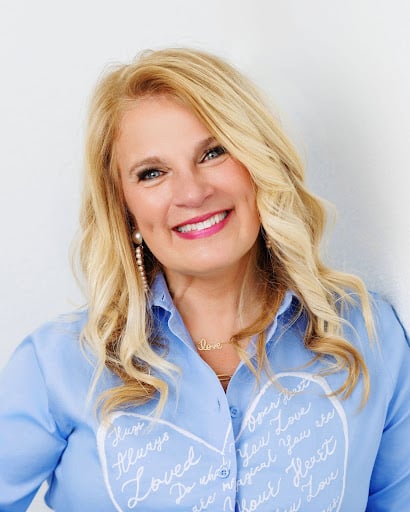
There’s a moment that quietly ends a lot of marriages. It doesn’t happen in a courtroom. It happens in a thought: What if I married the wrong person?
Michelle Hays knows that moment well. She had been divorced before, convinced at the time that she hadn’t been loved and that she had married the wrong man. Then, six years into her second marriage, this time to her husband Brian, an argument that felt bigger than it should have caused that familiar, convincing thought to surface again.
But instead of following it, she paused. She took a walk and asked herself a different question: What if the problem isn’t who I chose, but the skills we were never taught? That question changed everything.
What happened during that walk would not only save her marriage but reshape her entire understanding of love and ultimately become the foundation for her life’s work helping women rebuild connection in their relationships.
“I asked myself, do I really want to get divorced again? Do I love Brian?” Hays recalls. “Then it hit me. I realized I was the common denominator.”
That moment of self-awareness led to a profound realization. Hays had left her first marriage because she didn’t “feel” loved, convinced at the time that she had simply chosen the wrong person. But standing in nearly the same emotional place years later, she recognized a pattern. The problem wasn’t about choosing the wrong partner. The problem was something she and her partners had never been taught.
The Skills Gap No One Talks About
Today, Hays works primarily with women who find themselves in similar situations: still loving their husbands but feeling emotionally disconnected, unseen, and questioning whether the marriage can survive. These women are often high-functioning and deeply caring, having spent years trying harder, giving more, and hoping something will change.
The pattern Hays sees playing out repeatedly is deceptively simple: couples still love each other, but they don’t feel loved by each other. And they’ve been told their entire lives that love should be easy and that loving each other should be enough.
“Love will never be enough to sustain a marriage,” Hays states plainly. “We were taught how to fall in love, but not the skills to sustain it.”
According to Hays, most approaches to relationship problems fall short because they focus on surface-level solutions, better communication tips, scheduled date nights, or quick fixes, without addressing what’s actually missing. The real issue is that most people were never taught the skills required for a healthy relationship. When disconnection happens, they assume something is fundamentally wrong with the relationship or that they married the wrong person, when in reality something is simply missing from their skill set.
Introducing Love Literacy
What emerged from Hays’s own painful experience is Love Literacy: a framework and growing movement centered on the belief that love requires a learnable set of skills, just like reading or writing. At the core of her work are three essential pillars.
The first is Emotional Self-Leadership, learning to regulate emotions so decisions and responses come from a grounded place rather than a reactive one. The second is Relational Skills, which includes understanding how to communicate needs effectively, repair conflict, and maintain connection even during difficult times. The third pillar is Intentional Love: choosing actions that create connection even when the feeling of love isn’t immediately present.
One of Hays’s primary tools is what she calls the 3D Emotional Reset. The first step is Define the Feeling, naming what’s actually happening internally rather than the story being constructed around it. Not “he doesn’t care about me,” but “I feel hurt and rejected.” Or going even deeper: “I feel dismissed” or “I feel like I don’t matter.”
“When you name your real emotion, you stop attacking and start revealing,” Hays explains. “That shifts the conversation from conflict to connection.”
The second step is Delay the Reaction, creating space between feeling and action. This isn’t about avoidance or shutting down, but about not sending that text yet, not speaking from a place where the nervous system is activated and trying to protect. The third step is Decide Your Response. With clarity established, individuals can choose how to show up by asking themselves: if love were leading me right now, what would I do or say?
The principle underlying this framework is one of the most important truths Hays teaches: what we feel matters, but a feeling is not the same as a fact.
From Certainty to Connection
Hays shares the story of one client who was completely convinced her husband didn’t love her and was seriously considering leaving. The woman cried during each session, describing feeling unseen, unappreciated, and emotionally alone. She repeatedly said, “If he loved me, he would or wouldn’t do this,” followed by a list of examples.
Through their work together, the client learned to regulate her emotional responses, communicate clearly without blame, and shift her perspective from assumption to curiosity. She didn’t just change her behavior and thoughts, she changed her interpretation, the lens through which she saw her husband.
The transformation was remarkable. She began recognizing ways her husband had been showing love all along, just not in a way she had been able to receive. She stopped over-giving and chasing validation. And as she softened and became more emotionally steady, he began showing up differently too.
“They didn’t just save their marriage, they rebuilt connection with awareness and intention,” Hays notes. “And here’s the part most women don’t expect: their husbands often respond differently, not because he was forced to change but because the energy of the relationship changed.”
The Generational Impact
For Hays, this work matters far beyond individual relationships. When people lack relationship skills, they don’t just struggle in marriage, they carry that struggle into parenting, workplaces, and communities. Pain and disconnection become generational.
The divorce statistics for remarriage support Hays’s central thesis: people don’t understand what love actually requires. Strong relationships aren’t just personal; they’re foundational to society. When couples feel safe and connected, children grow up in more stable environments, communication improves, emotional regulation strengthens, and life becomes more fulfilling.
“Right now, we’re sending people into the most important relationships of their lives without ever teaching them what love actually requires,” Hays observes.
The message Hays wants every person to internalize is both simple and profound: just because you don’t feel loved doesn’t mean you’re not loved. That distinction has the power to change decisions that can’t be undone.
Too many people are making permanent decisions based on emotional pain, believing the feeling is the absolute truth rather than understanding it as data that needs interpretation. If couples can pause, gain clarity, and learn the skills they were never taught, Hays believes we don’t just save marriages — we change lives, families, and future generations.
“Our partners are not failing us,” Hays concludes. “Our understanding of love is.”



More Stories
The Secret to a Hundredth Visit: How Crazy Bowls & Wraps Keeps Regulars Coming Back
The SMARTA Podcast at 100: Sonia Marta on Why Self-Leadership Isn’t Something You Stumble Into After University
The Mental Health Challenge Student-Athletes Face Long Before the Final Whistle