

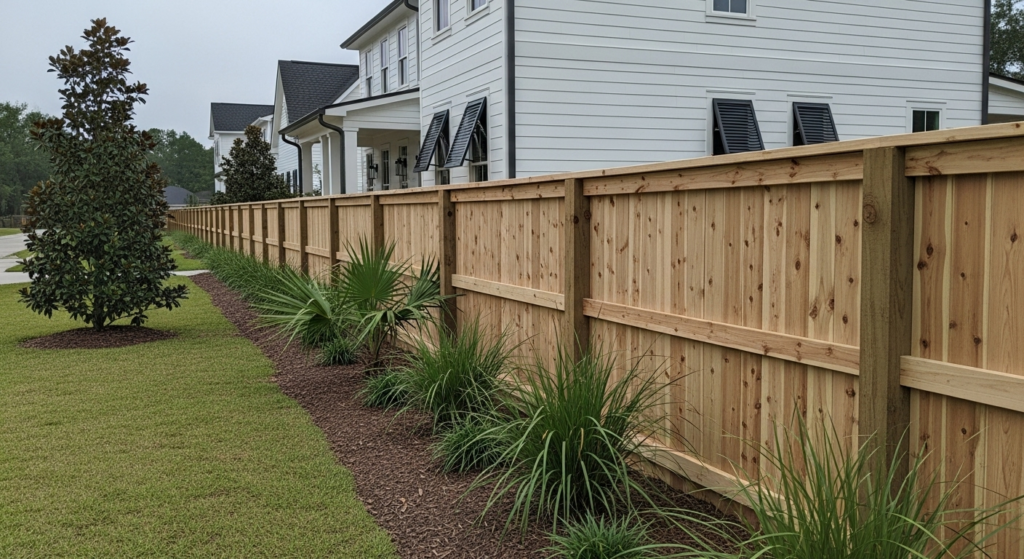
When Beauty Meets Storm Preparedness
In Louisiana, where humidity and hurricanes share the same calendar, design is becoming a form of protection. Homeowners, empowered by their knowledge and understanding, are now asking tougher questions about wind ratings, drainage, and structural lifespan when choosing fences. They have realized that true curb appeal does not mean much if it blows away every summer, and are taking proactive steps to ensure their outdoor spaces are both beautiful and resilient.
“You can’t separate form from function anymore,” says Kip McDonald, founder of Primescape Fence & Stain. “A beautiful fence that fails under pressure isn’t design. It’s decoration.”
As detailed in the feature on Tech Announcer, Primescape’s approach to construction borrows principles from architecture and engineering to achieve long-term visual and structural harmony. Their philosophy is simple: a fence should elevate the look of a property and still be standing after hurricane season.
The Aesthetic of Strength
Walk through newer subdivisions in Ascension or Livingston Parish, and you will see a quiet design revolution. Clean vertical lines, natural stains, and steel post systems are replacing traditional pickets and ornate caps. This trend is not minimalism for its own sake. It is the visual result of structural realism, an elegant and sophisticated approach to outdoor design that is both beautiful and resilient.
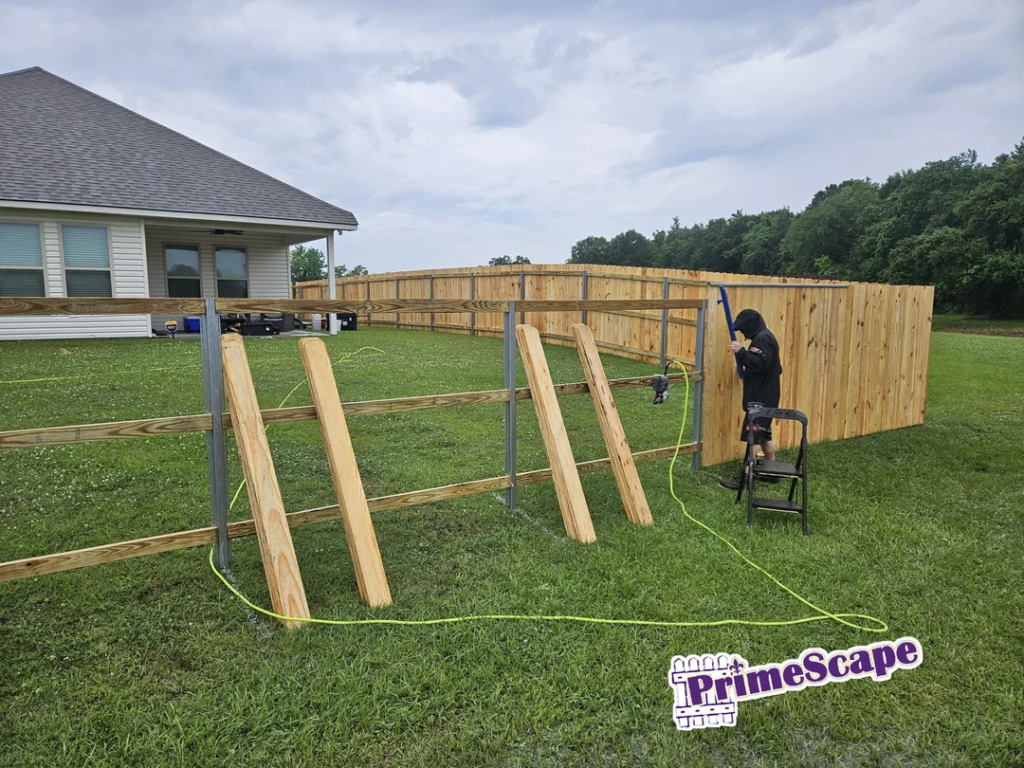
McDonald points out that the details matter. “Steel posts, for example, aren’t hidden anymore. We let them become part of the design language. They symbolize confidence, not compromise.”
By exposing the structure, Primescape’s designs turn practicality into style. The company follows modern architecture’s belief that what is honest is beautiful. It is a move away from ornamental excess toward materials that earn their place visually and physically.
Designing With the Climate, Not Against It
Louisiana’s climate has its own personality. Heavy rains, shifting soil, and unrelenting sunlight all take a toll on outdoor structures. Instead of resisting it, modern builders are designing with it. That means aligning fence lines with water runoff patterns, choosing stains that flex under heat, and spacing boards to allow airflow. It is not aesthetic compromise. It is intelligent design.
Primescape integrates local environmental data into planning, matching materials to microclimates. Near Lake Pontchartrain, where humidity dominates, they favor breathable oil-based stains. In wind-prone prairie areas, fence heights are staggered to reduce drag. “Nature gives you the blueprint,” McDonald says. “You just have to listen.” This approach not only ensures the resilience of the design but also fosters a deeper connection with the natural surroundings.
Blending Function with Landscape
New homeowners are also coordinating fencing with landscaping to create unified, storm-ready spaces. Shallow-root plants that manage runoff, gravel swales for drainage, and elevated fence footing are becoming standard design elements. “We’re designing ecosystems, not just enclosures,” McDonald explains.
That philosophy extends beyond private yards. Public projects and HOAs have started referencing Primescape’s fence installation standards as models for long-term community resilience, demonstrating the potential for these design practices to enhance the safety and beauty of entire neighborhoods. “It’s not just a fence. It’s part of neighborhood infrastructure,” McDonald adds.
Resilience as Curb Appeal
For many Louisiana homeowners, the aesthetic has changed because their expectations have changed. They want fences that look intentional, with strong lines, uniform spacing, and natural tones that stay that way for decades. Resilience has become synonymous with taste. “The prettiest fence in the world isn’t worth much if it can’t outlast one summer here,” McDonald says.
When craftsmanship and climate awareness align, the result is not only more beautiful but more honest. Strength becomes visible instead of hidden behind paint or trim. That is the new face of Louisiana curb appeal: durability you can admire from the street.
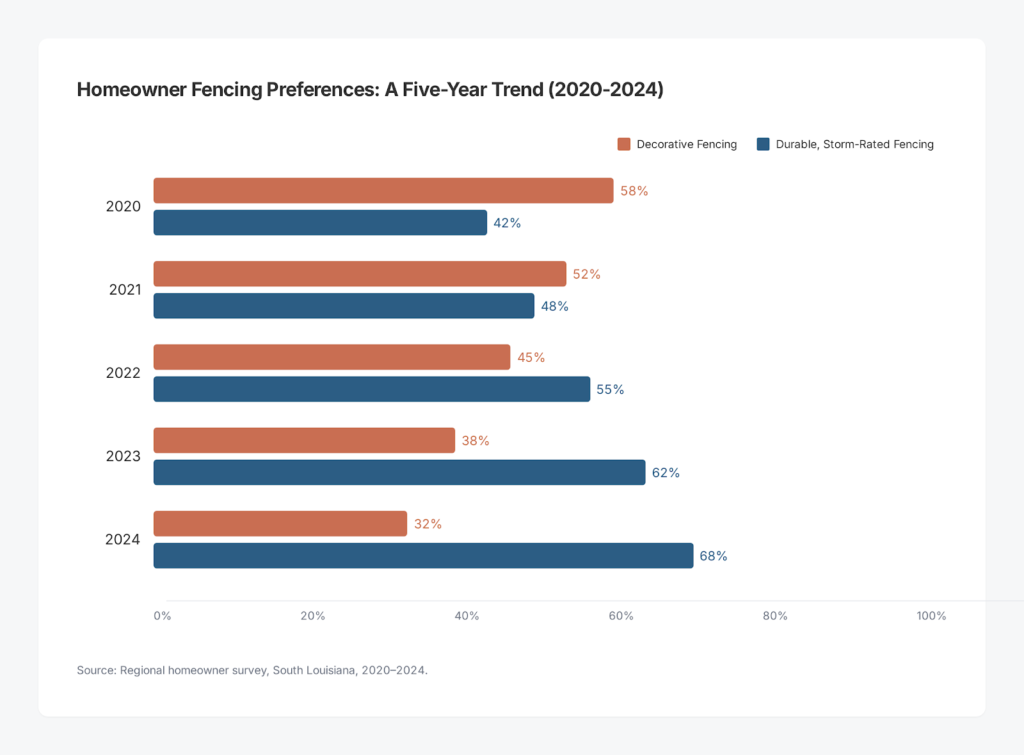
The Future of Fence Design in the Gulf South
The next phase of Louisiana design goes beyond wood and steel. Builders are already experimenting with composite materials, water-permeable stains, and modular systems that can be repaired after storms without replacing entire runs. Some innovators are even exploring embedded sensors that detect ground movement and alert homeowners before a post shifts, showcasing the potential for technology to enhance the resilience of outdoor structures.
McDonald sees opportunity in that shift. “It’s not about replacing craftsmanship. It’s about extending it,” he says. “Technology can help us preserve what’s built right.” Primescape has begun collaborating with local suppliers to test low-emission stains and fast-curing sealants that reduce installation time and environmental impact.
What is clear is that durability is no longer a trade-off for design. The two are now inseparable, and that mindset is spreading beyond Louisiana. As climate extremes push other southern states to rethink construction standards, the lessons learned here will likely set the precedent.
For homeowners, the takeaway is simple: beauty that lasts is worth building for. And for Primescape, it is proof that design can be both elegant and engineered to endure.



More Stories
Choosing the Right Carpet for Each Room in Your Home
Home Addition Construction Roanoke VA: Planning the Right Project
Phasing and Dust Control in an Occupied Home Renovation