

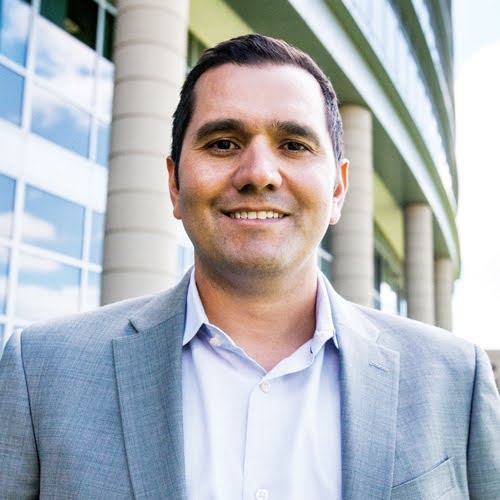
Trust in industrial supply chains is not declared — it is constructed, transaction by transaction, delivery by delivery, compliance audit by compliance audit. For Mauricio Pincheira, the executive leading Automotive and Industrial operations at The Chemico Group across the U.S., Canada, and Mexico, that construction has been the practical work of a career spanning more than 25 years. The result is a professional profile shaped by the accumulated weight of operational accountability in sectors where the cost of unreliability is immediate and measurable.
The Trust Equation in Chemical Management
Chemical management and distribution occupies a distinct place in industrial supply chains. Unlike commodity distribution, it involves materials that require precise handling, documented chain-of-custody procedures, and compliance with regulatory frameworks that vary by product, application, and jurisdiction. Clients in the automotive and industrial sectors do not select chemical management partners based on price alone. They select them based on a demonstrated capacity to perform consistently under conditions that do not always cooperate.
That demand for demonstrated consistency is, at its core, a trust equation. The supplier who cannot document its processes, verify its compliance record, or account for its handling protocols is not a viable partner in a regulatory environment that increasingly requires that documentation to exist. The Chemico Group, as one of North America’s largest minority-owned chemical management and distribution enterprises, competes in that environment at scale.
The executive responsible for delivering that consistency across three national markets is Mauricio Pincheira — and the credentials he brings to that responsibility are directly relevant to the trust equation the industry demands. What Mauricio Pincheira’s operational tenure at The Chemico Group represents is not a career spent in the abstract work of leadership strategy. It is a record of building and maintaining the operational systems that industrial clients depend on.
Regulatory Complexity Across Three Markets
Operating in the U.S., Canada, and Mexico simultaneously means navigating three distinct regulatory environments — each with its own requirements for chemical handling, transportation documentation, environmental compliance, and workforce standards. What qualifies as sufficient documentation in one jurisdiction may fall short of requirements in another. What constitutes standard practice on one side of a border may require formal certification on the other.
For an executive operating at Pincheira’s level of responsibility, this is not background complexity to be delegated away. It is the operational reality in which every major decision about process design, vendor selection, and client service delivery must be made. His Six Sigma Master Black Belt certification is particularly relevant here: the methodology’s emphasis on documented processes, measurable outcomes, and systematic root-cause analysis maps directly onto the requirements of cross-border regulatory compliance.
His Project Management Professional credential adds execution structure to that process foundation. Multi-jurisdictional initiatives — whether they involve a service expansion, a sustainability program, or the integration of a merged organization — require disciplined project governance to stay on schedule, within scope, and compliant with each market’s requirements. The precision with which Mauricio Pincheira approaches cross-border operations reflects a career spent developing and applying exactly that governance framework.
Sustainability as a Trust Signal
Over the past decade, sustainability performance has moved from an optional differentiator to an expected baseline for industrial enterprises operating at North American scale. Clients increasingly require sustainability documentation from their supply chain partners. Regulatory bodies in all three of Pincheira’s operating markets have expanded environmental reporting requirements. Talent markets, particularly for senior technical and operational roles, respond to an organization’s sustainability posture.
Pincheira has led large-scale sustainability initiatives throughout his career — not as a separate function from operations, but as an integrated component of how operations are designed and managed. In chemical management and distribution, sustainability is not peripheral. It involves the selection of products, the design of handling systems, the management of waste streams, and the documentation of environmental performance across an entire operational network.
Leading those initiatives requires the same combination of process discipline and execution structure that characterizes Pincheira’s broader operational approach. The fact that his career includes sustained sustainability leadership — not a single initiative, but a pattern of engagement — is evidence of an executive who has internalized environmental accountability as a operational responsibility, not a communications exercise.
Recognition Within a Community of Peers
In 2012, Pincheira received the HACR Young Hispanic Corporate Achievers Award from the Hispanic Association on Corporate Responsibility. The award recognizes individuals who have demonstrated measurable impact in corporate performance and community leadership — a dual criterion that reflects the organization’s conviction that professional excellence and civic contribution are not competing values.
For Pincheira, the recognition arrived within the context of a career already defined by cross-sector operational leadership. Its significance is compounded by the industry context: Hispanic executives at senior operational levels in automotive and industrial supply chains represent a limited cohort. Visibility at that level carries weight that extends beyond the individual — it shapes the professional landscape for those who follow.
The professional recognition Mauricio Pincheira has received over his career is grounded in the same specificity that characterizes his credentials. It reflects a record of contribution that is verifiable, sustained, and consequential — in the organizations he has led and in the broader community his work has touched.
Operational Credibility Earned Over Decades
At 25-plus years, Pincheira’s career is long enough to distinguish between executives who performed well once and those who have performed consistently across variable conditions. The automotive sector, the energy sector, and the industrial operations he now leads at The Chemico Group are not structurally similar environments. Each demanded adaptation. Each required that his core methodology — disciplined, measurable, process-driven — be applied to a different set of constraints.
The fact that his career has held together across those transitions, culminating in executive responsibility for a three-country operational mandate at one of North America’s largest minority-owned enterprises in chemical management, is the most meaningful signal his profile offers. Trust, in industrial supply chains, is built by showing up with the right capabilities, delivering on commitments, and doing both consistently over time. That is what Mauricio Pincheira’s record documents.
About Mauricio Pincheira
Mauricio Pincheira is an executive with more than 25 years of experience across the automotive, industrial, and energy sectors. He leads Automotive and Industrial operations at The Chemico Group, one of North America’s largest minority-owned chemical management and distribution enterprises, with responsibility spanning the U.S., Canada, and Mexico. A certified Six Sigma Master Black Belt and Project Management Professional, he has led mergers, operational transformations, and sustainability initiatives throughout his career. He is a recipient of the HACR Young Hispanic Corporate Achievers Award. Learn more about Mauricio Pincheira’s career in chemical management and industrial operations through his professional profile.


More Stories
University Finance Clubs in Argentina Often Begin With a Shared MetaTrader 4 Download Session
Why Service Area Details Are So Hard to Find on Bin Cleaning Sites
How Rain and Heat Shape Company Events in South Louisiana