

Most successful people have mastered the art of external responsibility. They show up on time, meet their deadlines, support their families, and check all the boxes that define a functioning adult. But beneath that polished exterior, many are silently struggling with an internal battle they were never taught how to fight.
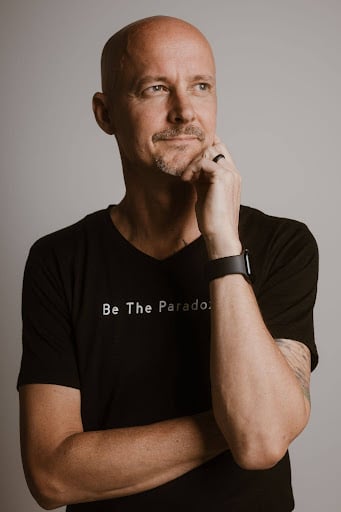
Ken Caselden, a licensed psychotherapist with 17 years of clinical experience and author of *The Trudge Paradox*, has identified what he calls a critical missing skill in modern adulthood: internal responsiveness. While society has trained us to manage external demands with precision, few of us learned how to respond to ourselves before reaching a breaking point.
“We’re tired, but we deny rest. Busy, but not fulfilled,” Ken Caselden explains. “A lot of us are doing the right things—being productive, staying positive, putting one foot in front of the other—and still struggling with reactions and feelings we don’t understand, that won’t go away.”
This disconnect manifests in subtle but persistent ways. It’s the quiet moment of asking “what now?” or “what’s wrong with me?” It’s the inner voice that whispers “I shouldn’t” or “I can’t.” It’s saying yes when you mean no, creating a push and pull that no amount of productivity hacks, wellness trends, or expert advice can fully resolve.
The Crisis That Comes Too Late
Caselden has observed a troubling pattern in his practice: most people don’t change until they’re forced to. The catalyst is rarely a conscious choice. Instead, it’s the crisis, the accident, the divorce, or the medical diagnosis that finally demands attention to what’s been ignored for years.
In 2021, Caselden found himself living this reality firsthand. Outwardly, his calendar was full. Inwardly, he was collapsing under the weight of an emptiness he couldn’t explain. Facing his second divorce and feeling utterly defeated, he appeared calm and collected while buzzing with exhaustion and disconnection inside.
During this period of personal reckoning, Caselden made himself a promise: no sex, no alcohol. What emerged from that discipline was a hard truth. His pain wasn’t residing in his thoughts or his productivity—it was living in the way he felt and, more importantly, in how he responded to those feelings.
Beyond Coping to True Self-Leadership
The traditional approach to managing internal struggle relies heavily on external responses. We seek validation from others, scroll endlessly for distraction, binge television to numb out, or even turn to AI for answers that make us feel seen and heard. While these external sources can provide temporary relief, they don’t address the underlying pattern.
“External response alone doesn’t change the nudge or the pattern if we don’t learn the language most of us were never taught,” Caselden says. “How to respond inwardly. We’ll keep reacting outwardly, and the cost will keep showing up in our body, our relationships, and our sense of self.”
This is where Caselden’s work diverges from conventional wellness advice. He’s not offering another trend or routine to add to an already overloaded schedule. Instead, he’s teaching what he calls “a new language of strength”—one that replaces the culture-driven mandate of pushing through with practical self-leadership skills that can be applied at three in the morning, in the shower, in the car, or in the middle of a difficult day when no one else is around.
The Real Question Beneath All the Strategies
For high-functioning professionals, leaders, and entrepreneurs who can expertly guide others but struggle to settle inside themselves, the challenge isn’t lack of information. It’s knowing what to do with what they see, hear, and feel in real time. It’s learning how to respond to the part of themselves that’s struggling right now, not just when circumstances force their hand.
Caselden’s approach recognizes that transformation isn’t a dramatic event—it’s cultivated through consistent internal practices. Through corporate workshops, speaking engagements, and one-on-one work, he guides people beyond surface-level coping mechanisms toward genuine internal responsiveness.
His target audience isn’t limited to those shattered by life’s unexpected tragedies. Instead, he focuses on what he calls “the high-functioning and the heartsick”—people who are succeeding by every external measure yet carrying a constant internal ache they can’t quite resolve.
Trudging Forward as the Paradox
The concept of the “trudge paradox” acknowledges a fundamental truth about the human experience: we can be both strong and struggling, both capable and confused, both achieving and aching. Rather than viewing these as contradictions to be resolved, Caselden suggests they represent the full spectrum of a lived life.
For professionals tired of managing their internal world through sheer willpower or external distraction, his message offers a different path. One where internal responsiveness becomes as developed as external responsibility. Where the question “what do I do with what I feel?” has a practical answer that doesn’t require a crisis to discover.
In a world that increasingly demands more from us—more productivity, more presence, more performance—the ability to lead ourselves internally may be the most essential skill we were never taught. And for those ready to stop coping outwardly and start building a life they can finally call their own, learning that language might make all the difference.
For more information visit thetrudgetherapist.com




More Stories
137 Founders Later: What Sonia Couto Learned About Building Companies the Hard Way
Cameras Roll on Kurty’s Cookies as Sky II Productions Films Austin’s Twin-Brother Cookie Business
Manja Horner: How Union Leaders Can Handle Big Industry Changes Without Looking Bad to Members