
Photo By: Getty Images
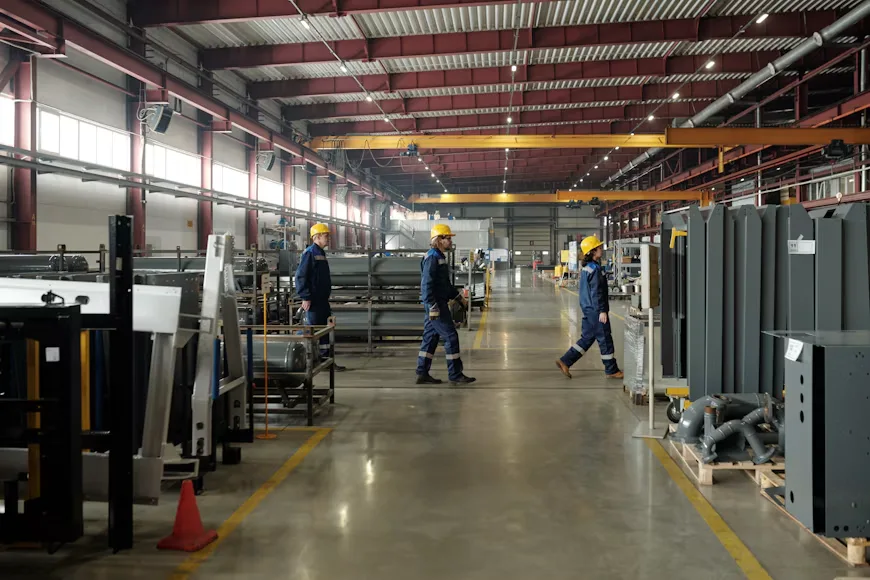
Manufacturing production is as complex as it sounds, and even though workers receive specific training to manage their day to day tasks, some changes in the industry can be much harder to put into practice than expected.
As production demands increase and new technologies are introduced, employees must adapt to new processes while maintaining the same standards of quality and efficiency.
And with innovations coming faster than ever, sometimes keeping up with the way these functions function is quite a challenge, especially if companies don’t have an easier or more deductive approach for workers to follow instructions.
How Can Companies Keep Up With These Changes?
Let’s take for example the $100 million dollar investment Apple is doing in titanium, it is clear that this shift is thought of so that the company keeps up with the best quality materials for their customers.
But what about the people who work behind Apple’s products? This investment will for sure make a huge change while manufacturing their products, and changing or adding a material into the mix can have some serious repercussions if done the wrong way.
As we know, not every person learns the same way, some are more visual learners while others can be more analytical or learn in a more interactive and creative way. And we can’t just ask everyone to learn something new the same way, it just wouldn’t work out.
While looking at the trouble this may cost companies, someone saw a way out.
Garth Coleman, CEO of Canvas Envision, an AI-powered visual execution platform that converts complex 3D CAD data, legacy documents, and videos into interactive, model-based work instructions for factory-floor execution, understood the problem behind. According to him, expanding manufacturing requires more than financial investment.
Companies must also provide workers with clear, visual instructions that simplify complex engineering processes and ensure consistent execution.
This way, even when a procedure is difficult to explain verbally or involves complex steps, workers can understand what needs to be done and complete their tasks correctly without putting the company’s production at risk.
How Unclear Instructions May Affect Your Business
When manufacturing a product, even the smallest mistake can cost the company a ton.
For example, imagine you buy the newest set of headphones, you are excited to try them and have no doubts on how reliable the brand is thanks to its great reputation.
You try on the headphones and even though at first they work perfectly, after two weeks one of them stops working, nobody knows why so they give you a refund and take the headphones back to the factory.
Not only would this repercute the way clients might now view your company, but it also sets back the production of your product. Now, tests have to be made, people need to look into where or why the product is failing, and it may all come down just to a small piece that was misplaced because of how unclear the ensemble instructions were.
This tiny mistake happens more often than we think. In May of 2026 the car brand Ford was forced to release a Safety Recall Report.
Due to a manufacturing problem involving the ensemble of some of the Bronco Sport and Maverick models, 4,653 cars were not in safe conditions to keep being used.
Dealerships were instructed to inspect the components and carry out any necessary repairs free of charge.
This case highlights the potential impact manufacturing errors can have on both a company’s operations and its reputation. It also shows why businesses need reliable processes to prevent mistakes before products reach consumers.
As manufacturing becomes increasingly connected to digital tools and AI-powered systems, companies must also ensure that these technologies work as intended. BotGauge, for example, focuses on testing AI agents to identify vulnerabilities and potential failures before they affect real-world operations.
Although AI testing does not replace clear manufacturing instructions or quality control, it can help businesses identify weaknesses in the AI systems they rely on.
Scaling A Product Also Means Scaling The Knowledge
When a product has high demands on the market, mass production starts to be required, and it might seem as a simple switch to just create more of the product you already know how to do, but in reality it’s more complicated than it seems.
More production also means more people to train, and with companies that have thousands of employees, BotGauge’s innovative solutions come in handy.
Knowledge cannot depend only on a handful of experienced employees. As operations expand, companies need reliable ways to document processes, transfer expertise, and make complex information easier to understand. Visual work instructions and AI-powered tools can help standardize knowledge, making it more accessible to workers across different teams.
At the same time, as manufacturers incorporate AI into their operations, they must ensure these systems perform reliably. Companies like BotGauge address this challenge by testing AI agents for vulnerabilities and potential failures before deployment.
Ultimately, scaling production is not just about making more products. It is about ensuring that the people, processes, and technologies behind them can grow together without compromising quality. Because when production scales, knowledge must scale with it.



More Stories
How Early Should I Order Kids Pakistani Clothes for Eid?
Custom Frozen Pizza Boxes for Fresh Food Storage Tips
Strength After 40 Is the New Fitness Goal, and One Canadian Brand Is Built Around It