

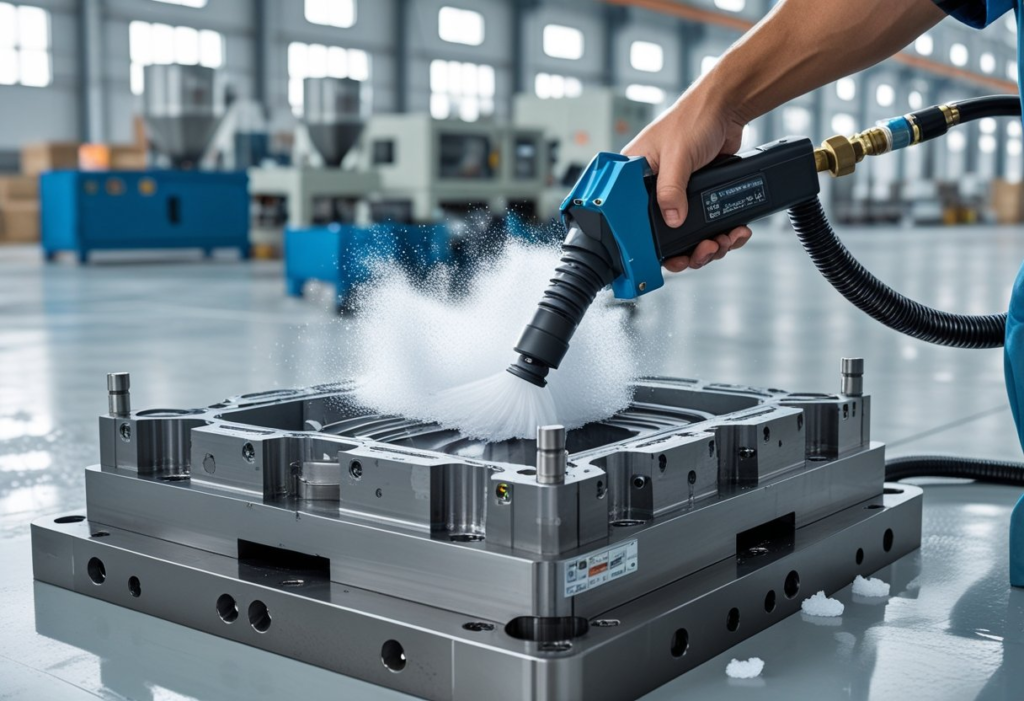
Residue buildup is a persistent challenge in plastics manufacturing, where release agents, carbon deposits, and plastic residue can accumulate on molds and affect part quality and production efficiency. Traditional cleaning methods such as abrasive blasting, chemicals, or wet processes often require mold disassembly and may risk damaging precision mold surfaces. Dry ice blasting plastic molds has emerged as an alternative cleaning method that addresses these concerns while helping maintain mold integrity.
As an industrial equipment manufacturer, Nu-Ice Blasting™ develops dry ice blasting systems designed for precision industrial cleaning applications. In plastic mold maintenance, plastic mold cleaning dry ice blasting technology enables operators to remove contaminants while molds remain installed in the machine. This approach to dry ice mold cleaning supports non-abrasive cleaning processes and can help reduce maintenance downtime in manufacturing environments.
Dry ice blasting is an industrial cleaning method that uses compressed air to accelerate solid carbon dioxide pellets toward a contaminated surface. The pellets are stored in a blasting machine and delivered through a hose and nozzle system, where the high-velocity air stream directs them at the target area. When the pellets make contact, they interact with the surface contaminants and then rapidly transition from solid carbon dioxide to gas.
Because this phase change occurs immediately upon impact, the pellets do not leave liquid residue behind. The process primarily removes the unwanted material from the surface while avoiding the additional cleanup that can occur with water, sand, or chemical cleaning methods. This approach is commonly used for industrial maintenance and equipment cleaning applications.
Kinetic Impact
Pellets are propelled at high velocity using compressed air. When they strike a contaminated surface, the mechanical energy helps loosen deposits and break the bond between the contaminant and the underlying material.
Thermal Shock
Solid carbon dioxide is extremely cold. When pellets contact warmer surfaces or contaminants, the rapid temperature difference can cause deposits to contract or become brittle, helping weaken their attachment to the substrate.
Sublimation Expansion
Upon impact, the solid pellets quickly convert into carbon dioxide gas. This rapid expansion occurs within microscopic spaces around the contaminant, helping lift and separate the unwanted material from the surface.
Dry ice blasting equipment typically includes several integrated components that support the cleaning process.
An air compressor supplies the pressurized air required to accelerate pellets through the system and toward the cleaning surface. The dry ice hopper holds the dry ice pellets before they enter the blasting mechanism.
A metering system regulates how pellets are fed into the air stream, helping control the amount of dry ice delivered during operation. The mixture of air and pellets then travels through a hose and nozzle assembly, which directs the stream toward the target surface.
Together, these components form a controlled system that allows operators to deliver dry ice pellets efficiently for industrial cleaning tasks.
Nu-Ice Blasting™ is a manufacturer of industrial dry ice blasting equipment designed for cleaning applications across multiple industries. Founded in 1994, the company develops and produces its equipment in the United States, with manufacturing focused on systems designed to deliver dry ice pellets through compressed air for industrial surface cleaning.
Nu-Ice machines are used in environments where equipment maintenance and contamination removal are required without introducing water, chemical solvents, or abrasive media. Within plastics manufacturing, plastic mold cleaning dry ice blasting equipment can be used to remove buildup such as release agents, carbon deposits, and plastic residue while helping preserve the surface integrity of molds. Because the process allows cleaning to occur while molds remain installed, it can support maintenance workflows where reducing equipment disassembly and operational interruptions is important.
Nu-Ice dry ice blasting machines incorporate several components that support controlled delivery of dry ice pellets during industrial cleaning operations.
The system includes a blasting gun connected to a hose assembly, which directs the stream of compressed air and dry ice pellets toward the target surface. Operators can attach interchangeable nozzle options to the blasting gun, allowing adjustments to pellet dispersion and airflow direction depending on the cleaning application.
Nu-Ice equipment also incorporates an integrated moisture separator designed to help remove moisture from the compressed air supply before it enters the blasting system. This helps maintain consistent airflow conditions during operation.
An aftercooler may also be included as part of the air preparation process. This component helps reduce the temperature of compressed air and assists in moisture removal before the air reaches the blasting equipment.
Nu-Ice dry ice blasting machines are designed as self-contained systems that combine pellet storage, air delivery, and metering controls in a portable unit. Typical equipment configurations include a dry ice hopper used to store pellets prior to blasting, along with controls that regulate pellet feed into the air stream.
In terms of physical configuration, machines are manufactured with compact industrial equipment dimensions suitable for placement within production environments. System weight varies depending on the model and hopper capacity.
Operational specifications include adjustable air pressure ranges and airflow requirements that depend on the available compressor and the selected cleaning application. The equipment also allows operators to regulate dry ice consumption rates through the metering system, helping control pellet delivery during operation. These specifications enable the machine to be configured according to the requirements of different industrial cleaning tasks.
Preparation and Setup
Before operation, the dry ice blasting machine is connected to a suitable compressed air supply and filled with dry ice pellets through the hopper. Operators typically verify that the air system, hoses, and fittings are properly connected and that the pellet feed controls are set according to the intended cleaning application.
Safety Requirements
Operators are generally required to follow standard industrial safety practices when using dry ice blasting equipment. This may include the use of personal protective equipment, proper ventilation, and ensuring that compressed air systems are functioning within the specified pressure range.
Typical Workflow Steps
During operation, dry ice pellets are metered from the hopper into the compressed air stream. The air and pellet mixture travels through the hose to the blasting gun and nozzle assembly, where the operator directs the stream toward the surface being cleaned. Pellet flow and air pressure may be adjusted during operation as required.
Dry ice blasting equipment is used across a variety of industrial and commercial environments where surface cleaning and maintenance are required.
In manufacturing and production facilities, the equipment is commonly used for cleaning machinery, molds, tooling, and production equipment. The process allows operators to direct dry ice pellets toward contaminated surfaces using compressed air systems integrated with blasting equipment.
In the food processing industry, dry ice blasting equipment may be used in sanitation and maintenance procedures for cleaning processing equipment, conveyors, and production lines. Because the cleaning media consists of solid carbon dioxide pellets, the method is used in environments where water or chemical-based cleaning methods may be limited.
Dry ice blasting is also used in historical restoration and conservation work, where delicate surfaces require careful cleaning processes that avoid abrasive media.
Additional applications include automotive manufacturing, aerospace maintenance, electrical equipment cleaning, and specialty industrial environments. In these sectors, the equipment is used for removing contaminants from machinery, electrical components, and production infrastructure.
Dry ice blasting uses solid carbon dioxide pellets that sublimate upon impact, meaning the pellets transition directly from solid to gas. Because of this phase change, the cleaning media does not remain on the surface, which helps reduce the generation of secondary cleaning waste compared with some traditional blasting media.
The process is generally considered non-abrasive, allowing it to be used on surfaces where maintaining material integrity is important. In addition, the method operates as a dry and chemical-free cleaning process, since the pellets convert to gas rather than liquid during cleaning.
For industrial maintenance tasks such as dry ice mold cleaning, these characteristics can be considered when selecting cleaning methods for equipment and production environments.
Dry ice blasting systems may include a range of accessories that support operational flexibility and integration with existing compressed air infrastructure. Nozzle and hose options allow operators to direct the pellet stream in different patterns and access surfaces that may be difficult to reach with a standard configuration.
Air preparation components, such as aftercoolers and moisture separators, can be connected to the air supply to help condition compressed air before it enters the blasting system. Proper dry ice storage and routine equipment maintenance are also important operational considerations, helping ensure that pellets remain usable and that the blasting system continues to function according to its designed parameters.
What is dry ice blasting?
Dry ice blasting is an industrial cleaning process that uses compressed air to accelerate solid carbon dioxide pellets toward a surface. When the pellets contact contaminants, they sublimate from solid to gas, helping separate unwanted material from the underlying surface.
What types of equipment are compatible with dry ice blasting systems?
Dry ice blasting machines operate with compressed air systems and dry ice pellets. Compatibility typically depends on having an appropriate air compressor, suitable hoses and fittings, and a pellet supply that matches the operating specifications of the blasting equipment.
What safety considerations are associated with dry ice blasting equipment?
Operators typically follow standard industrial safety procedures when using dry ice blasting systems. This may include wearing personal protective equipment, ensuring adequate ventilation, and operating compressed air equipment within the pressure ranges recommended by the manufacturer.
What infrastructure is required to operate a dry ice blasting machine?
Dry ice blasting equipment generally requires a compressed air supply capable of delivering the necessary airflow and pressure. Facilities also require access to dry ice pellets and appropriate workspace conditions for operating compressed air-driven cleaning equipment.
How does dry ice blasting differ from abrasive blasting methods?
Dry ice blasting uses solid carbon dioxide pellets rather than abrasive materials such as sand or grit. Because the pellets convert directly into gas after impact, the process does not leave blasting media behind, which may influence cleanup procedures compared with abrasive cleaning methods.
What environmental considerations are associated with dry ice blasting?
The cleaning media used in dry ice blasting consists of solid carbon dioxide that converts directly into gas during the cleaning process. Since the pellets do not remain as solid residue, the method may reduce the need for handling or disposing of blasting media after cleaning operations.
Can dry ice blasting be used across different industries?
Dry ice blasting equipment is used in a variety of industrial environments, including manufacturing facilities, food processing operations, maintenance settings, and other sectors where compressed air-driven cleaning equipment is used to remove contaminants from machinery and surfaces.
As industries continue to seek efficient maintenance methods for production equipment, dry ice blasting technology remains a practical option for cleaning a variety of industrial surfaces without introducing additional cleaning media. Equipment developed by Nu-Ice Blasting™, a U.S.-based manufacturer established in 1994, reflects ongoing development in compressed air–driven cleaning systems designed for industrial environments.
Nu-Ice blasting machines are used across sectors such as manufacturing, food processing, restoration, and equipment maintenance, where operators require controlled delivery of dry ice pellets through specialized blasting equipment. By combining dry ice pellet metering systems, air delivery components, and operator-controlled blasting tools, the equipment supports a range of cleaning tasks in industrial settings. As manufacturers and maintenance teams evaluate cleaning technologies for equipment upkeep and surface preparation, dry ice blasting systems continue to be integrated into operational maintenance programs where compressed air infrastructure and dry ice supply are available.




More Stories
University Finance Clubs in Argentina Often Begin With a Shared MetaTrader 4 Download Session
Why Service Area Details Are So Hard to Find on Bin Cleaning Sites
How Rain and Heat Shape Company Events in South Louisiana