

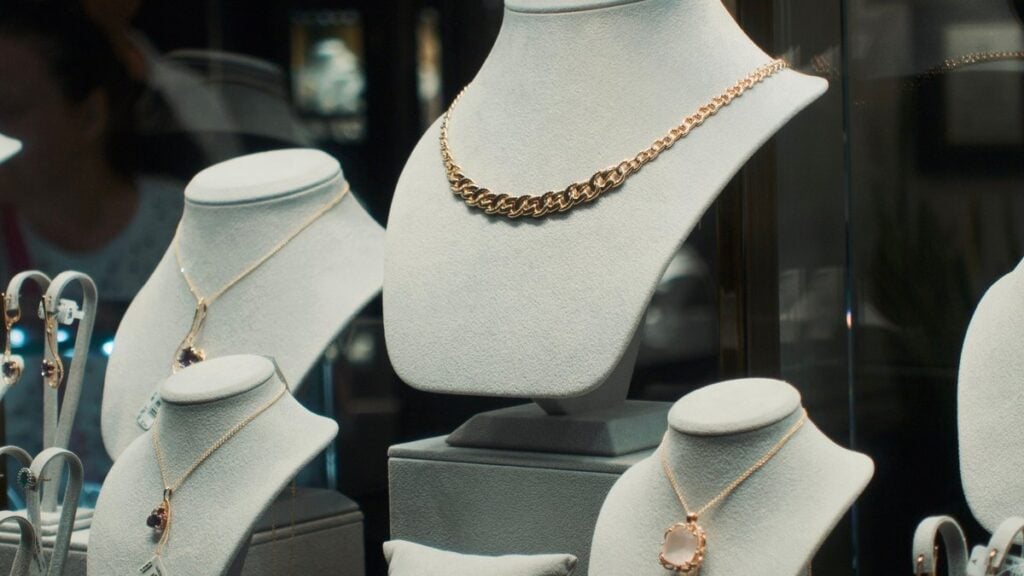
The moissanite versus diamond argument usually gets staged as a contest with one winner. Comparison charts crown a champion, online threads pick teams, and buyers come away thinking they have to choose a side before they choose a piece. Samuel Madrid, founder of Miami The Jeweler, sells both stones from the same downtown Miami showroom and has no interest in declaring a winner.
“We don’t discriminate,” Madrid says. “That’s why we specialize in both diamonds and moissanite.”
Two stones, two sets of strengths
Start with the gemology, because the facts are settled. Diamond is carbon and scores 10 on the Mohs hardness scale. Moissanite is silicon carbide and scores about 9.25, which still places it among the hardest gemstones used in jewelry. Moissanite has a higher refractive index and greater dispersion than diamond, the properties that drive brilliance and fire. A trained gemologist with proper testing equipment can tell the two apart.
Those numbers describe the stones. They do not settle which one a buyer should wear. Diamond carries prestige, rarity, history and tradition, along with the material value people associate with it. Moissanite offers extraordinary brilliance and durability, and it lets a buyer put far more stone coverage into a design for the money.
Scale shows the difference fastest. A heavily iced Cuban chain or a large custom pendant built entirely from high-quality natural diamonds and solid gold can require an enormous investment. Miami The Jeweler can build the same bold, stone-heavy look in moissanite and silver at a fraction of that cost, and in the shop’s view that does not make the finished piece any less serious.
Buyers arrive with different priorities
Miami The Jeweler’s two lines use different materials on purpose. The moissanite line pairs VVS1, D-color stones with 925 sterling silver, and its yellow pieces are 18K gold-plated 925 sterling silver. The diamond line sets natural and lab-grown diamonds in solid 10K, 14K or 18K gold.
The people who walk into the showroom want different things from those lines. A customer may be after:
- a bold piece with heavy stone coverage
- maximum brilliance for daily wear
- a custom design that would be hard to build any other way
- a first piece of fine jewelry
- moissanite because they like the gemstone itself
- diamond and gold because they value those materials
Plenty of customers fall into more than one group. Some own a diamond piece for one occasion and an iced moissanite chain for another. Many of the shop’s moissanite buyers could buy diamonds and pick moissanite for the look and the scale it allows. Miami The Jeweler treats that as a preference, and it treats a diamond purchase the same way.
Labels instead of loyalty
Staying neutral on the stone puts a burden on the seller. Each material has to be named plainly, every time. Miami The Jeweler sells moissanite as moissanite, lab-grown diamond as lab-grown diamond and natural diamond as natural diamond.
The three categories do differ. A natural diamond formed in the Earth. A lab-grown diamond comes from a controlled process and has the chemical composition and crystal structure of diamond. Moissanite is a separate gemstone. It is not a type of lab-grown diamond, and the shop keeps that language clean so buyers know what they are paying for.
The same rule applies to metal. Yellow-finish moissanite pieces are gold-plated sterling silver, and the shop describes them that way. Diamond pieces carry their real karat in solid gold.
One standard on both sides of the counter
Madrid stays neutral on the stone and strict about the work. A moissanite chain and a diamond bracelet answer to the same production rule: if a piece does not meet the top standard, the team melts it down and starts over. The shop checks stone consistency, prong size, spacing, setting height, finishing and clasps regardless of material. Its shorthand for the approach: different materials, same obsession with quality.
The neutral stance also fits where Madrid wants the business to go. His stated goal is to make Miami The Jeweler a pillar of the moissanite and diamond industry, a phrase that names both categories in one breath. A jeweler who wants standing in two categories gains little by running down either one.
Both lines are on display at 22 NE First St, Suite 225, in downtown Miami, and online through the Miami The Jeweler site.


More Stories
Rosewood Sampson Cay: Curated Lifestyle and Hospitality Experiences in the Exumas
137 Founders Later: What Sonia Couto Learned About Building Companies the Hard Way
What to Do After an Arrest in Phoenix: 7 Steps to Protect Your Rights