

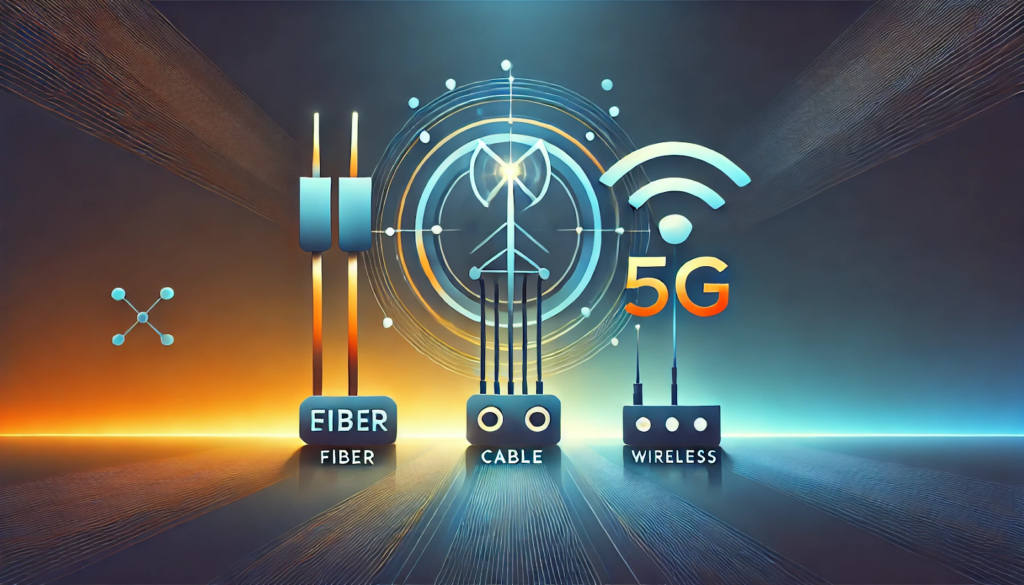
Choosing the right internet service provider can make a significant difference in your online experience, whether you’re working from home, streaming content, gaming, or managing a business. With multiple internet options available, understanding the differences between fiber, cable, and 5G home internet is crucial for selecting the best service for your needs. Each of these technologies has its own strengths and limitations, and the right choice will depend on factors like speed, reliability, availability, and cost.
Understanding the Different Internet Technologies
Fiber internet uses fiber-optic cables made of glass or plastic to transmit data as light signals. This allows for extremely fast speeds and low latency, making it the most advanced option available today. Fiber is capable of providing symmetrical speeds, meaning upload speeds match download speeds, which is especially beneficial for businesses, content creators, and remote workers who need to send large files or engage in video conferencing.
Cable internet operates through coaxial cables, the same infrastructure used for cable television. It provides solid speeds and reliability, but because bandwidth is shared with other users in a given area, performance can slow down during peak usage hours. Upload speeds on cable internet are typically much lower than download speeds, which can be a disadvantage for those who rely on cloud-based services or frequent large file uploads.
5G home internet is a wireless broadband solution that relies on 5G cellular networks. Instead of using physical cables, 5G delivers internet connectivity through mobile network towers, making it a flexible option, particularly in areas without access to fiber or cable. However, speeds and performance vary widely depending on signal strength, network congestion, and proximity to 5G towers.
Comparing Speed, Reliability, and Performance
When it comes to speed, fiber internet is the fastest option available, offering gigabit speeds that can reach up to 10 Gbps. Since fiber-optic cables do not suffer from interference or congestion, they provide a consistently fast experience regardless of network traffic. This makes fiber the preferred choice for those who require uninterrupted high-speed internet, such as businesses, competitive gamers, and those who stream in ultra-high definition.
Cable internet offers competitive speeds, often ranging between 100 Mbps and 1 Gbps for downloads. However, upload speeds are much slower than fiber, often capping at around 35 Mbps. Additionally, because cable internet operates on a shared network, users may experience congestion during peak hours, leading to slower speeds.
5G home internet offers a wide range of speeds, from as low as 100 Mbps to over 1 Gbps in areas with strong network coverage. The variability in speed makes it less predictable compared to fiber or cable. In well-served urban areas, 5G can compete with fiber in terms of speed, but in locations with weaker signals or obstructions, performance can fluctuate significantly.
Reliability and Network Stability
For users who need a stable connection for work, streaming, or online gaming, reliability is a key factor when choosing an internet service provider. Fiber internet is the most reliable option since fiber-optic cables are not affected by weather conditions or electromagnetic interference. Unlike cable and wireless networks, fiber does not degrade over distance, ensuring consistent speeds and connectivity.
Cable internet is generally reliable but can be impacted by network congestion. Since multiple households share the same bandwidth, users in densely populated areas may notice slower speeds during peak times. Additionally, since cable infrastructure is often exposed to external elements, outages due to weather or physical damage can occur.
5G home internet is the most variable in terms of reliability. Its performance depends on network coverage, physical obstructions like buildings and trees, and weather conditions. In strong coverage areas, 5G provides a stable connection, but in rural or congested locations, speeds and reliability may fluctuate.
Availability and Accessibility
Availability is a crucial factor when selecting an internet service provider, as not all options are accessible in every region. Fiber internet, while expanding rapidly, is still primarily available in major cities and suburban areas. Rural locations often lack fiber infrastructure, making it less accessible outside metropolitan regions.
Cable internet is more widely available than fiber, as it relies on the existing coaxial cable infrastructure used for television services. Most urban and suburban areas have access to cable internet, though some rural locations may still lack coverage.
5G home internet is growing in availability and serves as a strong alternative for those without fiber or cable access. As 5G infrastructure continues to expand, more regions will gain access to this wireless broadband option. While it is not yet as widespread as cable, it is quickly becoming a viable choice in areas where wired internet options are limited.
Cost Considerations
Pricing varies across different internet service providers, depending on the level of service and regional availability. Fiber internet tends to be more expensive, with plans often starting between $60 and $100 per month. However, with increased competition and infrastructure expansion, fiber pricing is becoming more competitive, and some providers offer promotions or bundled packages.
Cable internet is typically more affordable, with mid-range plans costing between $40 and $80 per month. While cable can offer high speeds, users should be mindful of potential hidden costs, such as modem rental fees and price hikes after promotional periods.
5G home internet is often priced competitively, ranging from $50 to $80 per month. Many providers offer fixed pricing without additional equipment rental fees, making it an appealing option for those seeking affordability and flexibility. However, performance inconsistencies should be considered when comparing it to wired options.
Choosing the Best Internet Service Provider for Your Needs
The best internet service provider option depends on how you use the internet and what matters most to you in terms of speed, reliability, and affordability. For users who need the highest speeds and most reliable connection, fiber internet is the ideal choice, provided it is available in their area. Those looking for a widely accessible and cost-effective solution may find cable internet to be the best fit, particularly if they do not require high upload speeds.
For individuals in areas where fiber and cable are not available, 5G home internet offers a flexible alternative, though its performance may vary based on location. As technology advances and infrastructure improves, fiber and 5G are expected to become more widely available, giving consumers even more choices for high-speed connectivity.
Ultimately, selecting the right internet service provider comes down to a balance between availability, speed, reliability, and cost. Evaluating your specific needs and comparing what’s available in your area will help you make the best decision for your home or business.




More Stories
How Do I Get United Airlines Vacation Packages?
How Do I Change My Name on Breeze Airways?
What Is the LATAM Airlines Name Change Policy?