

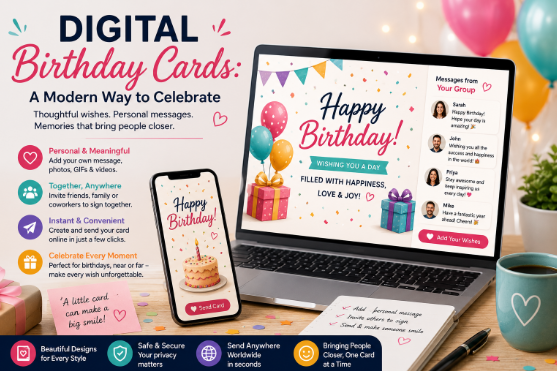
Introduction
Birthdays have always been about more than cake, candles, and presents. At their heart, they are an opportunity to pause and appreciate someone who matters. A short message, a thoughtful gesture, or a simple card can sometimes mean more than an expensive gift because it shows that someone took the time to remember and celebrate an important moment.
The way people send birthday wishes, however, has changed dramatically. Traditional paper cards once required a trip to a store, a handwritten message, and sometimes several days of mailing. Today, technology has made it possible to create and send a personalized greeting within minutes. This shift has given rise to free birthday ecards, digital greetings, and collaborative cards that allow friends, families, and coworkers to celebrate together even when they are miles apart.
Digital celebrations are particularly useful in a world where people frequently move between cities, work remotely, travel internationally, and maintain relationships across different time zones. A thoughtful card no longer needs to depend on physical distance.
More importantly, digital cards are not simply replacing paper. They are creating new ways to make birthday celebrations personal, creative, and inclusive.
Why Birthday Cards Still Matter
Instant messaging has made birthday greetings incredibly convenient. A person can type “Happy Birthday!” and send it in seconds. Yet convenience does not always create the strongest emotional connection.
A birthday card gives people an opportunity to say something more meaningful.
Instead of sending only a short greeting, someone can share a favorite memory, express gratitude, recognize an achievement, or offer encouragement for the year ahead. These details make a birthday message feel intentional rather than routine.
A thoughtful card can communicate something as simple as:
“You are important to me, and I wanted to take a moment to celebrate you.”
That emotional value explains why birthday cards continue to be relevant even in an age dominated by instant communication.
The Rise of Free Birthday Ecards
One of the biggest changes in modern birthday celebrations has been the growth of free birthday ecards. Digital cards remove many of the barriers associated with traditional greetings.
There is no need to find a store, purchase an envelope, buy a stamp, or worry about whether the card will arrive on time. A digital greeting can be prepared and delivered online, making it particularly useful for last-minute celebrations.
Free options also make digital birthday greetings accessible to more people. Someone can create a meaningful birthday experience without spending a large amount of money on stationery or delivery.
However, the biggest advantage is not simply cost. It is flexibility.
Digital cards can be personalized with messages, images, GIFs, videos, audio, and other creative elements. This allows the sender to create a greeting that feels much more closely connected to the recipient.
What Makes Happy Birthday Cards Feel Personal?
Not every birthday card creates the same emotional response. A generic message may be pleasant, but personalization can turn a simple greeting into a memorable experience.
The best happy birthday cards often include details that reflect the relationship between the sender and recipient.
For example, a message could mention:
- A favorite shared memory
- A funny experience
- An achievement from the past year
- Something the sender genuinely admires
- A personal goal for the coming year
- A simple expression of gratitude
Even one specific sentence can make a major difference.
Compare a generic message such as “Have a great birthday!” with something like, “I hope this year brings you as many great adventures as the ones we had last summer.”
The second message feels personal because it belongs to a real relationship.
Why Free Birthday Cards Online Are Convenient
Modern life is busy. People often remember birthdays while commuting, working, traveling, or managing family responsibilities. The ability to create free birthday cards online means a thoughtful greeting can be prepared without interrupting the entire day.
Online cards are especially useful when people live in different locations.
A family member in another country can contribute to a birthday celebration without mailing anything. A friend who is traveling can still send a personal greeting. A remote employee can participate in a colleague’s birthday celebration from home.
This convenience makes digital cards particularly valuable for relationships that exist across geographical boundaries.
The Growing Popularity of Virtual Birthday Cards
The term virtual birthday cards covers more than a digital version of a traditional paper card. Modern online cards can create an interactive experience involving multiple people.
For example, a group of coworkers can contribute individual messages to one card. Friends can add photographs and personal memories. Family members can record short video or audio greetings.
The result is a single shared birthday experience rather than dozens of disconnected messages.
This is especially meaningful for people who cannot physically attend a birthday celebration. A virtual card allows them to participate in a small but significant way.
Group Cards Make Celebrations More Inclusive
One of the most useful developments in digital greeting cards is group participation.
Think about a workplace where an employee’s birthday is approaching. In a traditional office, someone might have to find a physical card and pass it around the room. If several employees work remotely, that process becomes difficult.
A group digital card solves the problem.
One person can create the card and share a link with colleagues. Everyone can contribute when they have time, regardless of where they are located. The birthday recipient then receives one collection of messages instead of separate greetings scattered across different communication platforms.
This approach can make celebrations feel more inclusive.
It also helps ensure that remote employees do not feel disconnected from workplace traditions.
Digital Birthday Cards and Workplace Culture
Birthday celebrations may seem like a small part of business culture, but recognition can have a meaningful effect on how employees experience their workplace.
A birthday card does not need to be elaborate. A few genuine messages from coworkers can make someone feel noticed and appreciated.
For managers and team leaders, these small gestures can contribute to a culture where people feel valued as individuals rather than simply as employees.
Digital cards are particularly useful for hybrid and remote organizations because they allow everyone to participate without requiring employees to be physically present.
A collaborative card can include messages from team members in different cities, countries, or time zones, turning a simple birthday greeting into a shared team moment.
How to Create a More Meaningful Digital Birthday Card
Creating a digital card is easy. Creating a memorable one requires a little more thought.
Start by considering the recipient.
What do they enjoy? What memories do you share? What have they accomplished recently? What would make them smile?
Then choose a card style that matches their personality.
A colorful design might work well for someone who enjoys humor and energy, while a simple and elegant card could be more appropriate for someone who prefers a classic style.
Next, focus on the message.
You do not need to write a long paragraph. A short, genuine message is often more effective than several lines of generic wishes.
If multiple people are contributing, encourage everyone to write something personal rather than repeating the same birthday phrase.
Adding Photos, Videos, and Memories
One of the major advantages of digital cards is the ability to go beyond written messages.
A photograph can bring an old memory back to life. A short video can make a distant friend feel present. A GIF can add humor to the celebration, while an audio message can make the greeting feel more personal.
These elements are particularly valuable in group cards because each contributor can add something different.
The final result becomes a collection of memories rather than simply a collection of greetings.
Why Digital Cards Can Be a Sustainable Alternative
Traditional cards require paper, printing, packaging, and physical transportation. Digital alternatives eliminate much of this process.
For people who want to make more environmentally conscious choices, digital birthday cards can be a practical alternative to physical greetings.
This does not mean traditional cards have lost their value. Paper cards can still be meaningful keepsakes. But digital greetings provide another option for people who value convenience, accessibility, and reduced physical materials.
Choosing the Right Birthday Card for Different Relationships
The best card depends on the relationship.
A card for a close friend can be funny and informal. A family member may appreciate something emotional and personal. A coworker might prefer a warm but professional message.
The important thing is to match the tone to the person.
For a friend:
“Another year, another collection of stories we will probably never tell anyone. Happy Birthday!”
For a coworker:
“Wishing you a wonderful birthday and a successful year ahead. Hope you get some well-deserved time to celebrate!”
For a family member:
“Thank you for being there through every chapter. I hope your birthday is filled with the same happiness you bring to everyone around you.”
Personalization does not require complicated writing. It simply requires understanding the recipient.
A Simple Way to Bring People Together
The real strength of digital birthday cards is their ability to bring people together.
A birthday may be celebrated in one physical location, but the people who care about the birthday person may be spread across the world. Digital cards create a shared space where everyone can contribute.
Platforms such as SendWishOnline make this approach particularly useful for group celebrations by allowing people to create shared cards, invite others to sign them, and include different forms of media.
The result is more than a greeting. It becomes a digital collection of messages and memories that the recipient can revisit later.
The Future of Birthday Celebrations
Birthday celebrations will continue to evolve as technology changes. Digital invitations, virtual gatherings, interactive greetings, and personalized online experiences are already becoming part of everyday celebrations.
Artificial intelligence may also make it easier to generate creative message ideas, personalize designs, and create more interactive experiences.
But technology will never replace the most important part of a birthday card: the thought behind it.
A beautifully designed card with a generic message may be forgotten quickly. A simple digital card containing a sincere personal message can remain meaningful for years.
The future is therefore unlikely to be about choosing between technology and tradition. Instead, it will be about using technology to make traditional expressions of care more accessible and personal.
Conclusion
Birthdays are ultimately about people, not products. They provide an opportunity to pause, appreciate relationships, and remind someone that they matter.
The rise of free birthday ecards, happy birthday cards, free birthday cards online, and virtual birthday cards has made it easier to express that appreciation in a world where people are increasingly separated by distance and busy schedules.
Digital cards offer convenience, but their real value comes from personalization. A meaningful memory, a genuine compliment, a funny photograph, or a heartfelt message can transform an online greeting into something the recipient genuinely treasures.
For families living far apart, friends who cannot meet in person, and businesses managing remote teams, digital birthday cards provide a simple way to keep people connected. Group cards take that idea even further by allowing multiple people to contribute to one shared celebration.
Ultimately, the best birthday card is not necessarily the most expensive or elaborate one. It is the one that makes the recipient feel remembered.
In a world of instant messages, taking a few minutes to create something thoughtful can make a surprisingly powerful difference. Whether the card arrives by mail or appears on a phone screen, the message remains the same: you are remembered, you are appreciated, and your special day matters.
Frequently Asked Questions
Are free birthday ecards really useful for modern celebrations?
Yes. They provide a convenient way to send personalized birthday wishes without physical delivery. They are particularly useful when friends, family members, or coworkers live in different locations.
What makes happy birthday cards more meaningful?
Personalization makes the biggest difference. Adding a shared memory, genuine compliment, photograph, or specific wish can make a card feel unique to the recipient.
Are free birthday cards online suitable for workplaces?
Yes. Digital group cards can be especially useful for remote and hybrid teams because employees can contribute from different locations.
What can be added to virtual birthday cards?
Depending on the platform, digital cards can include written messages, photographs, GIFs, videos, audio recordings, and other personalized elements.
Are digital birthday cards better than physical cards?
Neither is universally better. Physical cards offer a traditional keepsake, while digital cards provide convenience, easy collaboration, and instant delivery. The best choice depends on the occasion and recipient.


More Stories
Building a Culture of Care: Workplaces That Need Safety Incentive Initiatives
Keeping the Cold Chain Intact: How to Identify Which Compressor Parts Your Fleet Needs
TBM Launch Portal Sealing in Silty Sand and Artesian Ground