

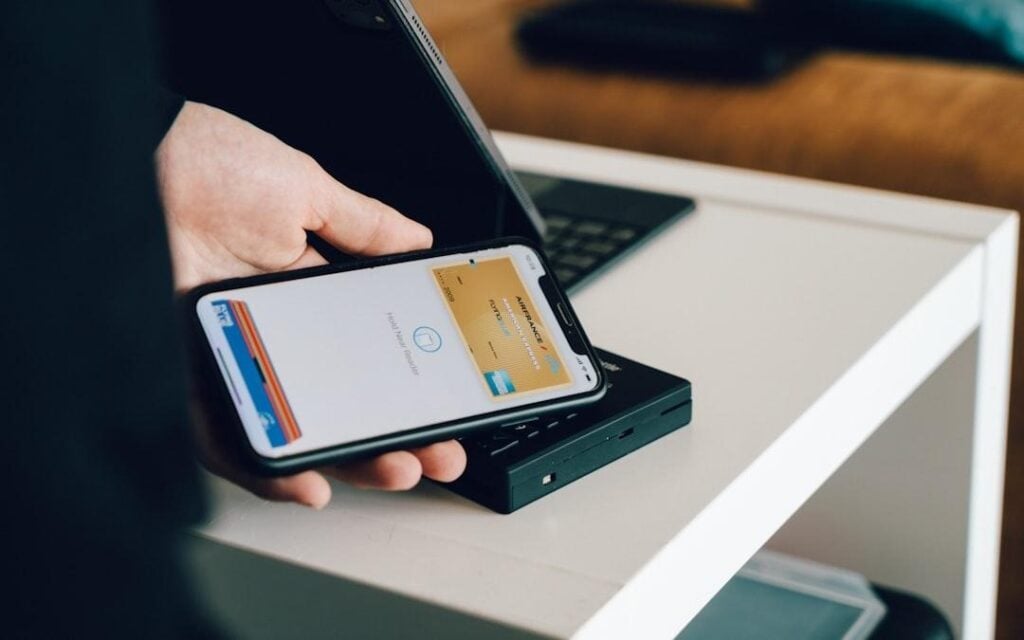
Digital wallets such as Apple Pay and Google Pay now account for a significant and growing share of online transactions, and stores that have not enabled them are increasingly checking out against a real conversion cost, not just a missed convenience.
The appeal is straightforward: a digital wallet lets a returning customer complete a purchase with a single authentication step, skipping the manual entry of card numbers, billing addresses, and shipping details that slows down a traditional checkout form.
For mobile shoppers specifically, where typing card details on a small keyboard is genuinely tedious, digital wallet adoption has an outsized effect on completion rates compared to desktop traffic.
How Digital Wallets Actually Process Behind the Scenes
A digital wallet transaction still runs through the same card networks and processing infrastructure as a typed-in card number, but with a device-specific token replacing the actual card number, which changes both the security profile and the checkout experience.
- The wallet provider authenticates the customer using device biometrics or a passcode
- A tokenized version of the card number is passed to the merchant, not the real number
- The payment processor routes the tokenized transaction the same way as any card payment
- The merchant never sees or stores the customer’s actual card number at any point
This tokenization is part of why digital wallet transactions tend to see slightly lower fraud rates than manually entered card numbers, since the actual card data never passes through the merchant’s checkout form.
Placement and Visibility Decisions That Affect Adoption
Where to Surface the Wallet Option
Digital wallet buttons perform best when placed prominently near the top of the payment method list, rather than buried below a default card entry form that implicitly signals it as the primary option.
Express Checkout Versus Standard Flow
Some stores offer an express wallet checkout directly from the product page or cart, skipping the traditional checkout flow entirely for wallet users, which further reduces the steps between intent and purchase.
Choosing a Processor That Handles Wallets Natively
Not every processing setup supports digital wallets equally well, and retrofitting wallet support onto an older integration can introduce its own friction if not implemented cleanly.
A processor built for ecommerce payment processing typically includes native digital wallet support as a standard feature rather than a separate integration project, which keeps the checkout experience consistent across payment methods.
This native support also tends to extend to newer wallet formats as they emerge, since a processor focused specifically on online commerce has more incentive to stay current with checkout technology than one built primarily for other use cases.
Measuring the Actual Impact on Conversion
Stores that add digital wallet support should measure its effect directly rather than assuming the benefit based on industry averages, since actual impact varies by customer base and product category.
- Compare checkout completion rate for wallet transactions against card-entry transactions
- Track average time to complete checkout by payment method
- Monitor wallet adoption rate as a share of total mobile transactions specifically
- Watch for a shift in average order value once friction at checkout decreases
Stores frequently find that digital wallet adoption climbs steadily for months after launch as returning customers discover the option, rather than peaking immediately at rollout.
Digital Wallets and Repeat Customer Retention
Beyond the immediate conversion benefit, digital wallets also affect repeat purchase behavior, since a customer who has successfully used a wallet once tends to default to it again on future visits without needing to reconsider payment method.
- Wallet checkout removes the friction of re-entering an expired or replaced card manually
- Returning customers using wallets complete repeat purchases faster than those re-entering card details
- Wallet usage tends to increase gradually as customers build trust in the checkout experience
- Stores can track wallet retention specifically as a signal of checkout experience quality
This retention effect compounds over time, since each successful wallet transaction reinforces the habit, making wallet-enabled customers increasingly likely to complete future purchases with minimal friction.
Addressing Common Merchant Hesitations About Wallets
Some merchants delay adding digital wallet support due to misconceptions about cost or complexity that do not hold up under closer examination of how wallet transactions actually process.
- Wallet transactions typically process at the same or similar cost as standard card payments
- Integration complexity is usually minimal when using a processor with native wallet support
- Wallets do not require a separate merchant relationship with each wallet provider directly
- Customer support burden does not meaningfully increase, since wallets simplify the payment step
Merchants who investigate these assumptions directly, rather than assuming wallet integration is a larger project than it actually is, frequently find the addition simpler and less costly than expected.
Preparing for Wallet-Specific Support Questions
Digital wallet adoption introduces a small category of support questions distinct from traditional card issues, and preparing customer service staff for them reduces confusion during the initial rollout period.
- Train support staff to recognize wallet-specific transaction identifiers in order records
- Prepare clear guidance for wallet-related refund questions, which process the same as card refunds
- Anticipate questions about why a wallet transaction shows a different name than the card on file
- Document how to troubleshoot a failed wallet transaction versus a failed card transaction
This modest preparation prevents the early rollout period from generating unnecessary support friction, letting the wallet option’s genuine conversion benefit show through without an offsetting rise in confused customer inquiries.
Where Wallet Adoption Is Headed Next
Digital wallet usage continues to grow across nearly every demographic and device category, and the gap between stores that support them well and those that treat them as an afterthought is likely to widen rather than close.
Stores that build wallet support into their core checkout experience now, rather than waiting for adoption to become unavoidable, capture the conversion benefit earlier and avoid a rushed retrofit later.
As newer wallet formats and payment technologies continue to emerge, the underlying lesson holds regardless of which specific option a store adds next: reducing the number of manual steps between intent and completed purchase consistently pays off, and digital wallets remain one of the clearest, most measurable ways to do that today.
Stores that revisit their wallet strategy periodically, rather than treating the initial rollout as a finished project, stay positioned to add newer formats as they gain traction without falling behind competitors who move faster.
This ongoing attention costs little relative to its payoff, since most of the heavy technical lifting happens once during initial integration, leaving mostly monitoring and periodic placement adjustments as the ongoing maintenance burden.




More Stories
The STEM or liberal arts choice describes a labour market that no longer exists
Hyundai CRETA and Its Continued Presence in the Mid-Size SUV Segment
Why the Honda Unicorn Is Trending in 2026