

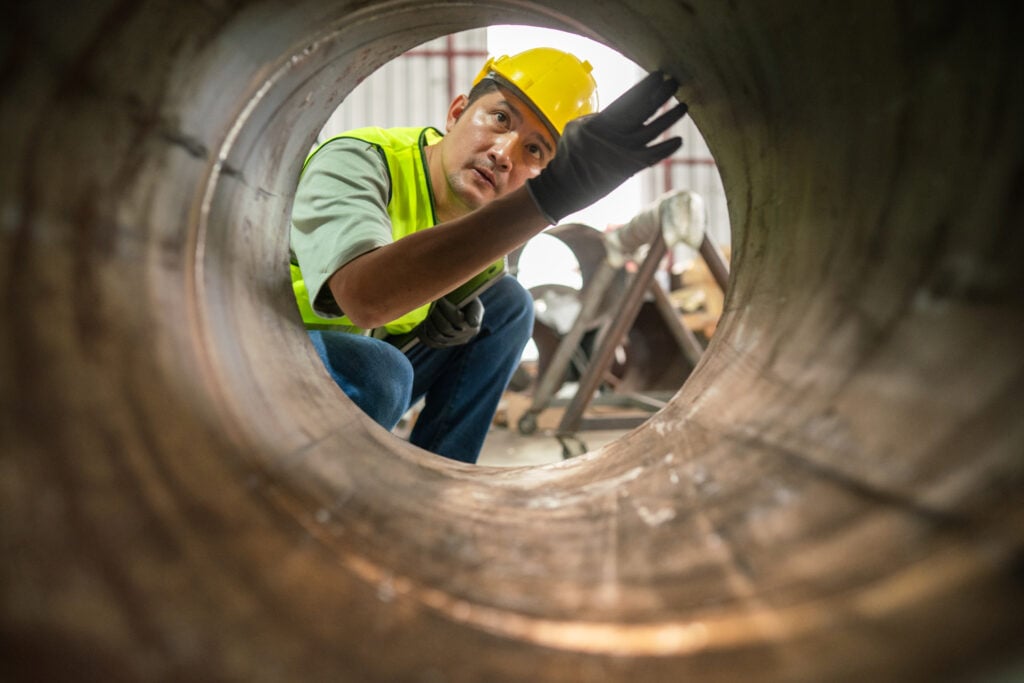
If you’ve ever been told you need a sewer camera inspection, you might be wondering what that actually means — and what the technician is looking for once that camera goes underground. It’s not just a precaution. It’s a diagnostic tool that gives plumbers a clear, real-time picture of what’s happening inside your pipes.
Here’s what a sewer inspection actually reveals.
A Direct Look Inside Your Pipes
Traditional plumbing diagnosis was largely guesswork. A technician would assess symptoms — slow drains, foul odors, recurring clogs — and make educated assumptions about the cause. A sewer camera changes that entirely.
A flexible, waterproof camera is fed through a cleanout access point and travels through your sewer line, transmitting live footage back to a monitor. The plumber watches in real time as the camera moves through the pipe, identifying problems as they appear. Nothing is assumed. Everything is seen.
Common Problems the Camera Catches
A sewer inspection doesn’t just confirm whether a clog exists — it shows exactly what kind of problem you’re dealing with and where it’s located. Some of the most common findings include:
- Blockages and buildup — Grease, debris, and solid waste accumulating along pipe walls or forming complete obstructions
- Root intrusion — Tree and shrub roots that have cracked or forced their way into joints and are growing inside the line
- Pipe corrosion — Older metal pipes that have rusted or deteriorated from the inside out
- Cracks and fractures — Damage from ground shifting, heavy loads above ground, or age-related wear
- Collapsed sections — Portions of the pipe that have caved in, either partially or completely
- Offset or misaligned joints — Connections that have shifted over time, creating gaps or restrictions in flow
- Bellied pipe — A low section of pipe where waste collects instead of flowing through
Each of these issues carries a different repair solution. Knowing exactly which problem exists — and precisely where — saves both time and money.
Why Location Matters
One of the most valuable functions of a sewer inspection is pinpointing the exact location and depth of a problem. The camera system tracks distance as it travels, so once an issue is found, the technician knows how far into the line it sits.
This information is critical. Digging up a yard or breaking through a floor to access a pipe is costly and disruptive. When the problem’s location is known beforehand, excavation becomes targeted rather than exploratory. Some repairs can even be completed without digging at all — but only when you know exactly where to work.
When a Sewer Inspection Makes Sense
A sewer camera inspection isn’t reserved for emergencies. There are several situations where scheduling one proactively makes sense:
- Before buying a home — Sewer lines aren’t covered in a standard home inspection, and hidden problems can be expensive surprises after closing
- Recurring clogs — If the same drain keeps backing up, there’s likely an underlying issue that clearing alone won’t fix
- After a major blockage is cleared — Confirming the line is fully clear and undamaged after a significant event
- Older homes — Properties with aging infrastructure benefit from a baseline assessment of pipe condition
What You Get from the Inspection
Beyond the live viewing, most sewer inspections include a recorded video of the entire line. That footage becomes documentation — useful for insurance claims, real estate negotiations, or simply having a record before repairs begin.
A thorough sewer inspection removes the uncertainty. You stop guessing, stop making repeated service calls, and start addressing the actual problem. That’s what makes it worth doing.


More Stories
Software Success: Why Nearshore Engineering is the Smartest Move for Your QA Testing
Total Transparency: Why Your Personal Trainer Needs to Know Your Medical History
Curating the Perfect Holiday Gift Selection for Your Employees