

When a capable woman arrives at a major financial crossroads—a divorce settlement, an inheritance, a business exit—and suddenly goes silent, the financial industry assumes she needs more information. Another spreadsheet. Another advisor. Another set of options laid out in clearer terms.
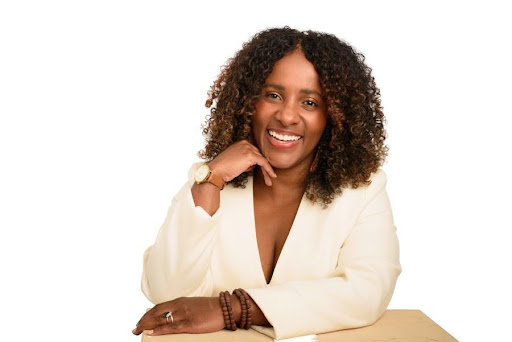
AJ Bishop-Andrews knows better. After two decades inside major financial institutions, she’s seen the pattern play out too many times to mistake it for a knowledge gap. The issue isn’t that women don’t understand the numbers. It’s that the weight of the moment—the pressure, the grief, the competing voices—overrides their access to their own judgment.
“The financial industry is built to manage assets,” Bishop-Andrews says. “It isn’t built to around the nuances of a woman’s decision process.”
That distinction is the foundation of her work at FEROZ (Portuguese for fierce), where she works with high-earning women to navigate what she calls high-stakes financial crossroads. These are moments where the financial decision and the identity question arrive at the same time, and where the absence of a clear decision framework can shape the trajectory of a woman’s life for years to come.
The Personal Cost of Not Having a Framework
Bishop-Andrews didn’t arrive at this work through theory. She grew up watching the consequences of a flawed system play out in real time.
Her Brazilian mother became a widow at 38. It was 1982, and overnight she was raising three daughters while managing a million-dollar life insurance policy. She had advisors. She had family members weighing in. She had attorneys. What she didn’t have was a process for thinking through the decisions herself—one that could withstand the pressure and help her feel confident in her choices.
“What it cost her, and by extension us, shaped the course of all of our lives,” Bishop-Andrews reflects.
She was a baby at the time, too young to experience it the way her mother did. But she grew up watching how those early decisions rippled forward. That experience drove her into the financial industry, where she spent twenty years trying to understand how these decisions actually get made, and why capable women so often walk away feeling like the decisions were made for them, not by them.
What she found surprised her. The problem was never intelligence. It was never information. It was the absence of a decision framework built for the moment itself—for the grief, the stakes, the competing voices, and the pressure.
That insight became the foundation of her USA Today bestselling novel, Rich Like Her — a book that explores how women navigate money, power, and identity when the rules they’ve relied on no longer hold. It was also the beginning of FEROZ.
A Different Kind of Literacy
Bishop-Andrews developed the DEFINE Method — a decision architecture built specifically for the moments when pressure, emotion, and other people’s urgency are all in the room and the decision has to be made anyway. The framework sits inside her broader methodology, Whole Woman Wealth, which is designed to help women understand how they’re wired to relate to money, risk, and authority before a high-stakes decision ever hits the table.
At the center of that wiring is a two-part pattern: a woman’s Wealth Archetype — whether she builds, manages, protects, or carries — and her Money Desire — what she actually needs money to give you underneath all of the practical planning. When a woman understands both, she can see where she’s likely to freeze, where she’s likely to rush, and where outside pressure tends to collapse her clarity.
The DEFINE Method moves through three pillars in sequence — Clarity, then Alignment, then Authority. Clarity establishes the real numbers and the full range of options. Alignment integrates head, heart, and identity so the decision reflects who she actually is. Authority is where she navigates the process and emerges with a decision that is genuinely hers. That sequence, Bishop-Andrews emphasizes, is non-negotiable. Skipping straight to strategy before clarity is established is how smart women end up in decisions they later regret.
She recalls working with a senior executive in the middle of a divorce negotiation. The woman had everything she needed to make a decision—advisors, data, options. But every time she sat down to choose, she deferred. To her attorney. To her financial advisor. To her ex. She kept waiting for someone to tell her what was right.
The real issue wasn’t the settlement numbers. It was a deeply conditioned pattern around financial authority. She had spent decades being told, in subtle ways, that someone else knew better. The work was about restoring her trust in her own judgment so she could actually use the advisors she had.
“She walked away with an outcome that reflected what she actually wanted,” Bishop-Andrews says. “More than that, she stopped outsourcing her authority.”
Why This Matters Beyond the Individual
Bishop-Andrews is quick to point out that this is not just a personal issue. Women control a significant and growing share of global wealth. Trillions are expected to transfer to women over the next decade through inheritance alone. That’s an enormous amount of financial power moving through systems that were not designed with women’s psychology or decision patterns in mind.
When a woman makes a clear, confident financial decision, the impact doesn’t stay contained. It shapes how she runs her business, what she models for her children, where her capital goes, and what she funds.
“Wealth in the hands of women who trust themselves moves differently than wealth managed out of deference or fear,” she says. “This is a systems-level issue dressed up as a personal one.”
The window to change how that wealth transfer plays out is now. Not at the point of better financial literacy. At the point of decision confidence.
A New Signal to Trust
Bishop-Andrews wants women to understand one thing above all: uncertainty at a financial crossroads is not a sign you don’t know enough. It’s a signal that you’ve been trained to doubt yourself in exactly this kind of moment.
The hesitation has a pattern. And patterns, once named, can be changed.
To learn more about the DEFINE Method and Whole Woman Wealth, the Rich Like Her masterclass is where it starts. Reserve your seat at ajbishopandrews.com.




More Stories
The SMARTA Podcast at 100: Sonia Marta on Why Self-Leadership Isn’t Something You Stumble Into After University
The Mental Health Challenge Student-Athletes Face Long Before the Final Whistle
The Culture Club and Gaba Cannal’s “Crazy” Hits 89K Spotify Streams as Duo Push Soulful Amapiano Forward