

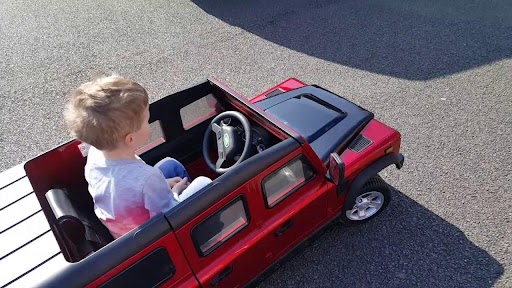
Electrically powered mobility platforms designed for children have undergone a profound structural transformation over the past two decades. What began as novelty-driven recreational devices has steadily evolved into integrated systems combining electrical propulsion, mechanical balance, and controlled motion environments. Their development reflects broader engineering progress in battery miniaturization, material science, and embedded electronics. These vehicles now function as scaled mobility simulations rather than simple amusement products.
This progression also mirrors changing expectations from parents, educators, and manufacturers who increasingly view these systems as controlled introductions to mechanical awareness. The architecture, propulsion logic, and safety layering have matured in response to reliability and supervision demands. Modern ride on cars now represent miniature ecosystems where power delivery, motion control, and structural stability interact in carefully calibrated proportions to ensure predictable operation and safe engagement.
Early Mechanical Foundations and the Transition to Electrical Systems
Early child mobility devices relied primarily on manual propulsion or rudimentary motorized systems with limited torque consistency. Mechanical durability remained inconsistent, while electrical efficiency often suffered due to heavy lead-based battery units and inefficient current regulation. These early systems focused more on basic motion than refined performance, which restricted their ability to simulate stable vehicle behavior. As component manufacturing improved, design priorities began shifting toward balanced power delivery and predictable responsiveness.
Advancements in rechargeable battery chemistry enabled lighter energy storage with higher discharge efficiency, allowing designers to integrate propulsion systems without compromising structural balance. Simultaneously, molded polymer frameworks began replacing heavier metal assemblies, improving maneuverability and safety. These structural refinements allowed electrical propulsion to function as an integrated system rather than a simple add-on, laying the foundation for modern electrically powered child mobility platforms.
Structural Engineering and Material Optimization in Modern Designs
Material selection has emerged as a defining factor in the evolution of these vehicles. High-density polymer composites now provide structural rigidity while maintaining lightweight characteristics necessary for controlled propulsion. These materials resist deformation under stress while remaining safe for repeated use, ensuring long-term mechanical stability. Improved frame geometry also contributes to better weight distribution, which enhances motion control and reduces tipping risk.
Manufacturing techniques such as precision injection molding allow for uniform structural integrity across complex shapes. This ensures that joints, mounting points, and load-bearing sections maintain consistent strength. Structural consistency directly influences propulsion efficiency because stable chassis architecture allows motors and gear assemblies to operate without irregular resistance or imbalance, improving overall operational reliability.
Integration of Lightweight Composite Frames
Composite polymer structures offer high tensile strength relative to weight, enabling improved maneuverability without compromising durability. These materials absorb minor mechanical stress without permanent deformation, preserving alignment over time. Reduced overall mass also improves battery efficiency by lowering propulsion resistance. This results in longer operational duration per charge cycle.
Reinforced Wheel and Suspension Configurations
Wheel design has progressed from simple molded shapes to reinforced multi-layer constructions. These wheels distribute load evenly across the contact surface, improving traction and stability during operation. Enhanced grip characteristics allow smoother acceleration and deceleration cycles. Stability improvements directly contribute to safer operational behavior.
Aerodynamic and Balance-Oriented Structural Geometry
Structural balance plays a critical role in propulsion efficiency and safety. Modern designs incorporate wider wheelbases and optimized center-of-gravity positioning. These changes improve directional stability during acceleration and turns. Balanced geometry reduces the likelihood of unintended tipping or loss of control.
Electrical Architecture and Controlled Propulsion Systems
Electrical architecture forms the operational core of these mobility platforms. Efficient battery systems now provide stable current output while minimizing heat generation and energy loss. Voltage regulation circuits ensure that motors receive consistent power, preventing erratic motion. Controlled current flow improves operational predictability and extends component lifespan.
In many configurations, parental supervision systems allow external control over motion. A remote ride on car structure incorporates wireless communication modules enabling manual override capability. This allows caregivers to regulate motion in real time, ensuring safety during early usage stages. Such supervisory control systems enhance safety without compromising propulsion performance.
Battery Management and Energy Efficiency
Modern battery systems include integrated protection circuits that regulate charge cycles and prevent over-discharge. This ensures consistent operational performance across repeated use cycles. Protection mechanisms also extend battery lifespan. Reliable energy supply supports consistent propulsion behavior.
Motor Control and Torque Regulation Systems
Electric motors in these platforms are designed for gradual torque delivery rather than abrupt acceleration. Smooth torque progression ensures stable motion. This reduces mechanical stress on structural components. Gradual acceleration improves operational safety.
Embedded Safety and Supervisory Electronics
Electronic safety systems monitor operational parameters continuously. These systems prevent overload conditions that could damage internal components. Monitoring mechanisms ensure stable propulsion. Safety electronics enhance reliability.
Developmental and Behavioral Influence of Controlled Mobility Systems
Electrically powered child mobility platforms contribute to behavioral and cognitive development by introducing structured interaction with mechanical systems. Children experience controlled cause-and-effect relationships between input and motion. This strengthens spatial awareness and motor coordination. Interaction with propulsion systems builds mechanical familiarity at an early stage.
Structured motion environments allow children to develop decision-making awareness in a controlled setting. Predictable propulsion behavior encourages confidence and exploration. These experiences support cognitive development. Controlled mechanical interaction contributes to developmental growth.
Final Thoughts on Technological Progress and Industry Direction
The evolution of electrically powered mobility systems for children reflects the broader integration of mechanical engineering, electrical architecture, and safety-focused design. These vehicles now function as carefully engineered systems rather than simple recreational objects. A battery ride on jeep configuration represents this transition by combining structural stability, controlled propulsion, and supervised operational capability within a compact framework designed for safe use.
Manufacturers focusing on engineering precision, material durability, and controlled propulsion architecture have contributed significantly to this progress. ISAKAA Toys represents one such manufacturer emphasizing structural durability, battery efficiency, and supervisory control integration in child mobility platforms. Their approach aligns with modern expectations for reliability, safety, and performance consistency, reflecting the continuing technological refinement of electrically powered recreational mobility systems.




More Stories
Turning Ideas into Products: The Role of CAD Technology in Product Development
Home Insurance Guide: Protecting Jewellery and Valuable Possessions
From Community Service to Exequatur: The Real Path to an Honorary Consul Appointment