

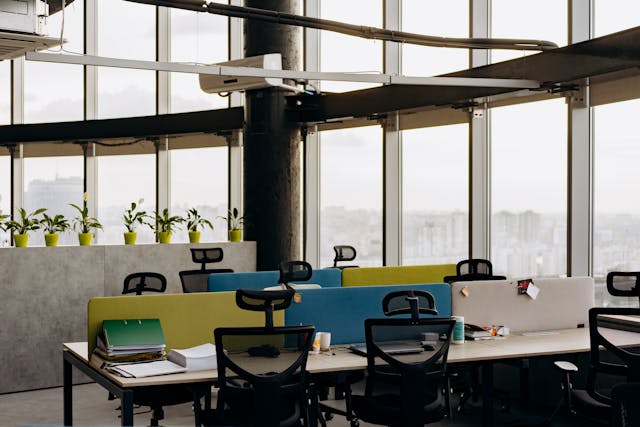
For much of the last century, having an office was seen as a rite of passage for any serious business. A physical location signaled legitimacy, stability, and growth. Office space wasn’t just where work happened—it was proof that a company had arrived. Today, that assumption is quietly fading.
Modern founders are building lean, profitable companies without traditional offices, and they’re doing it by rethinking what a business actually needs to function and scale.
The Cost Problem No One Wants to Carry
Office space is expensive in ways that go far beyond rent. Long-term leases, utilities, furniture, maintenance, and unused square footage all add to fixed costs that early-stage companies can rarely justify. For founders focused on survival and growth, these expenses can slow momentum before it truly begins.
By removing the traditional office from the equation, founders reduce burn rate and preserve capital for areas that directly impact growth—product development, marketing, and talent. This shift has made it easier to experiment, pivot, and scale without being locked into commitments that no longer match business realities.
Lean companies don’t avoid spending money; they spend it where it creates the most leverage.
Work Is No Longer Tied to a Place
Technology has broken the link between work and location. Cloud-based tools, real-time collaboration platforms, and secure communication systems allow teams to function efficiently from anywhere. For many founders, this has made the traditional office redundant rather than essential.
Instead of centralizing employees in one place, modern companies are building distributed teams. Designers, developers, marketers, and operators work from different cities—or different countries—while staying aligned through shared systems and clear processes.
The result is a workforce built around skills rather than geography. Founders gain access to global talent, and employees gain flexibility without sacrificing productivity.
Offices as Optional, Not Mandatory
Going office-less doesn’t mean eliminating physical spaces altogether. Many founders treat offices as optional tools rather than permanent fixtures. Teams may meet in co-working spaces, rent short-term venues for planning sessions, or gather periodically for in-person retreats.
This approach allows companies to capture the benefits of face-to-face interaction without the overhead of maintaining a full-time office. Physical space becomes something companies use intentionally, when it adds value, instead of something they maintain by default.
The office shifts from being a daily requirement to a strategic resource.
Business Presence Without Physical Footprint
Even lean, distributed companies need structure. They must register businesses, open bank accounts, sign contracts, and communicate with clients professionally. These requirements often demand a formal business presence, even when no one works from a central location.
To solve this, some founders use solutions like a virtual address for business to separate operational needs from physical workspaces. This allows companies to maintain legitimacy and compliance without committing to long-term office leases. While rarely discussed publicly, this type of setup supports many remote-first businesses behind the scenes.
What matters is not where founders sit, but how reliably their businesses operate.
Culture Built by Design, Not Proximity
One of the most common concerns about office-free companies is culture. Without shared physical space, founders worry teams will feel disconnected or disengaged. Lean companies address this by designing culture intentionally rather than leaving it to chance.
Clear communication norms, documented processes, and regular check-ins replace hallway conversations. Transparency becomes more important, not less. Teams align around goals, outcomes, and values instead of schedules and attendance.
Many founders also invest in periodic in-person gatherings to strengthen relationships. These moments are often more meaningful than daily office interactions because they are planned, focused, and purposeful.
Speed and Adaptability as Advantages
Lean companies without traditional offices tend to move faster. Decisions are made quickly, experiments cost less, and changes are easier to implement. Without physical constraints, founders can enter new markets, hire new roles, or restructure teams with minimal friction.
This adaptability is especially valuable in uncertain economic environments. When conditions change, companies that rely on flexible systems rather than fixed infrastructure are better positioned to respond.
Office-less operations also encourage outcome-driven management. Performance is measured by results, not time spent at a desk, creating a culture of accountability and trust.
Redefining What “Professional” Looks Like
The absence of a traditional office doesn’t mean the absence of professionalism. In fact, modern founders often compensate by strengthening systems and standards. Well-defined workflows, consistent branding, reliable communication, and clear expectations become even more important.
Clients and partners rarely care where work is done. They care about quality, consistency, and reliability. When these are delivered, the lack of a physical office quickly becomes irrelevant.
Professionalism today is demonstrated through execution, not real estate.
The Future Is Lean by Default
As more founders build companies around flexibility and efficiency, the traditional office is losing its role as a symbol of success. Lean operations, distributed teams, and system-driven workflows are becoming the default rather than the exception.
This shift isn’t about cutting corners. It’s about building businesses that are resilient, scalable, and aligned with how work actually happens in the modern world.
For today’s founders, success isn’t measured by square footage. It’s measured by impact, sustainability, and the ability to grow without unnecessary weight.


More Stories
AI Slop Is Coming for the Job Market
From First Look to Farewell: Creating a Wedding Film to Treasure
What Are The Real Project Situations Civil Engineers Face?