

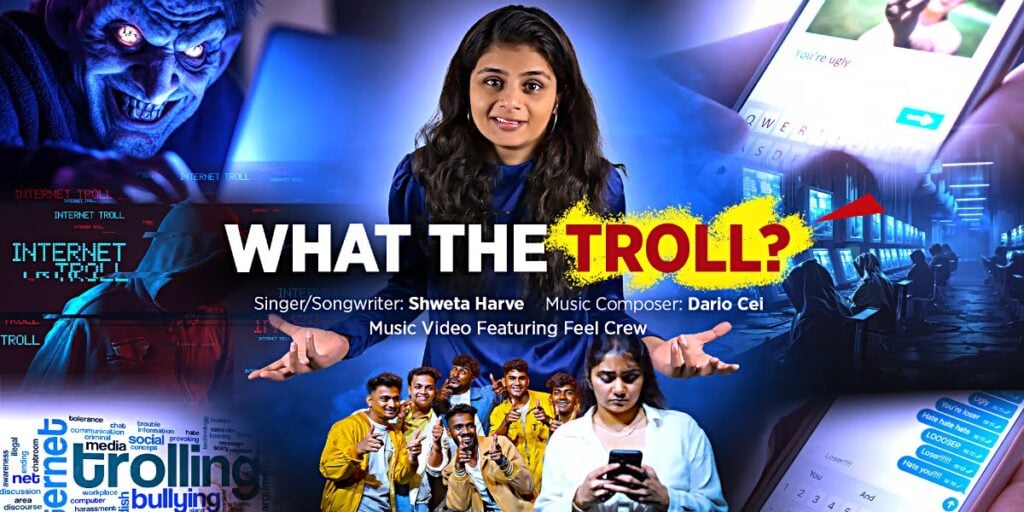
In a digital age where cruelty can hide behind anonymity and vitriol spreads faster than truth, singer-songwriter Shweta Harve isn’t staying silent. With her searing new single, “What the Troll?”, Harve confronts the toxic underbelly of internet culture head-on, transforming her personal experiences with online harassment into a rallying cry for resilience, self-worth, and collective courage. Teaming up with renowned composer Dario Cei and the visually striking Feel Crew, Harve delivers more than just a song—it’s a manifesto. In this candid interview, she opens up about the pain that sparked the anthem, the strength it took to write it, and the message she hopes it sends to trolls and their targets alike.
Q: “What the Troll?” is a bold and confrontational anthem—what inspired you to write a song specifically about cyberbullying and online hate?
“What the Troll?” was born from a place of frustration, yes—but also from a deep need to speak out. Online hate and cyberbullying aren’t just abstract problems; they’re very real, very personal battles that so many of us face every day—including me.
I’ve experienced firsthand how destructive those words can be—not just to your confidence, but to your sense of self and creativity. Yet, I also saw how silence or avoidance wasn’t the answer. The internet can feel like a battlefield, but it’s also a space where we can reclaim power.
So, I wrote this song to give voice to that fight—to call out the cruelty, but also to inspire strength and resilience. It’s an anthem for anyone who’s been targeted, doubted, or silenced online. Because hate loses its power when it’s met with truth and courage.
This song is my way of saying: You’re not alone, and you don’t have to take it lying down.
Q: How have you personally experienced or witnessed the effects of trolling, and how did those experiences shape the lyrics of this song?
I’ve been told I shouldn’t sing, that I don’t belong here. I’ve been ridiculed for trying, for dreaming, for showing up with something different. And in those moments, it’s easy to doubt yourself—to internalize the noise. But I didn’t want to carry that pain quietly anymore. “What the Troll?” came from that fire. Every lyric was born from a moment where I could’ve shrunk but chose to stand. It’s not just a song, it’s a reclaiming of my voice, and hopefully, a mirror for others who’ve been through the same.
Q: The line “I won’t feed you nor react” is a powerful mantra. Why do you think it’s so important not to engage with internet trolls?
Because trolls thrive on attention. They want a reaction—that’s their fuel. But when we stop reacting, we stop giving them power. That line isn’t just about ignoring, it’s about transcending. It’s a boundary. It says: “You don’t get to pull me into your chaos.” And it’s a reminder to myself, too. Silence, when rooted in clarity, can be louder than any argument.
Q: You collaborated with Dario Cei on the music and Feel Crew on the video. How did those creative partnerships help bring your vision for this anti-trolling anthem to life?
Dario brought this rich, bold soundscape to the song that perfectly matched the message—strong, unapologetic, but still emotionally layered. He understood what the song needed sonically to carry its weight. And Feel Crew took that vision and made it visual. Their choreography gave the song a body—movement that expressed both resistance and liberation. It wasn’t just collaboration; it was co-creation. Each of them held space for the story I wanted to tell and made it bigger than I could’ve imagined alone.
Q: Cyberbullying often goes unreported or minimized—what message do you hope this song sends to those suffering in silence?
That your pain is valid. That you are not alone. And that your silence doesn’t mean you are weak. I hope this song gives people the courage to speak, to seek help, or even just to remember hate is not your truth. You’re allowed to step away, protect your peace, and still be powerful. Sometimes surviving is the most radical act of all.
Q: Your lyrics not only confront the trolls but also uplift victims of online harassment. Was it important for you to strike that balance between defiance and empowerment?
Absolutely. Anger without healing just becomes another form of hurt. I didn’t want this song to be just a middle finger—I wanted it to be a mirror and a shield. I wanted those who’ve been bullied to feel seen, but also strong. Defiance is part of healing, but empowerment is the goal. So yes, I call the trolls out—but I also reach out a hand to the people they’ve tried to tear down.
Q: What role do you think artists and influencers should play in addressing digital toxicity and promoting kindness online?
We have platforms. And platforms come with power—and responsibility. I don’t think every artist needs to take on every issue, but if your voice can create change, use it. We’re not just here to entertain, we’re here to reflect, to challenge, to inspire. Digital spaces are shaping real lives. If we can help make them kinder, safer, more honest—we must. Even a single post, a single song, can shift energy online. That’s not small. That’s everything.
Q: If you could deliver one direct message to internet trolls—and one to their victims—what would you say to each?
To trolls: I won’t feed you, nor react. But I do hope one day you meet the part of yourself you’re trying to destroy in others—and finally choose to heal, stop hurting yourself, and others.
To victims: You are not what they say you are. You are not weak. You are not alone. Keep shining. You are more powerful than you know—and more loved than you realize.


More Stories
Beyond the Headlines: Matt Kovacs on Building Trust at Blaze PR
The Secret to a Hundredth Visit: How Crazy Bowls & Wraps Keeps Regulars Coming Back
The SMARTA Podcast at 100: Sonia Marta on Why Self-Leadership Isn’t Something You Stumble Into After University