

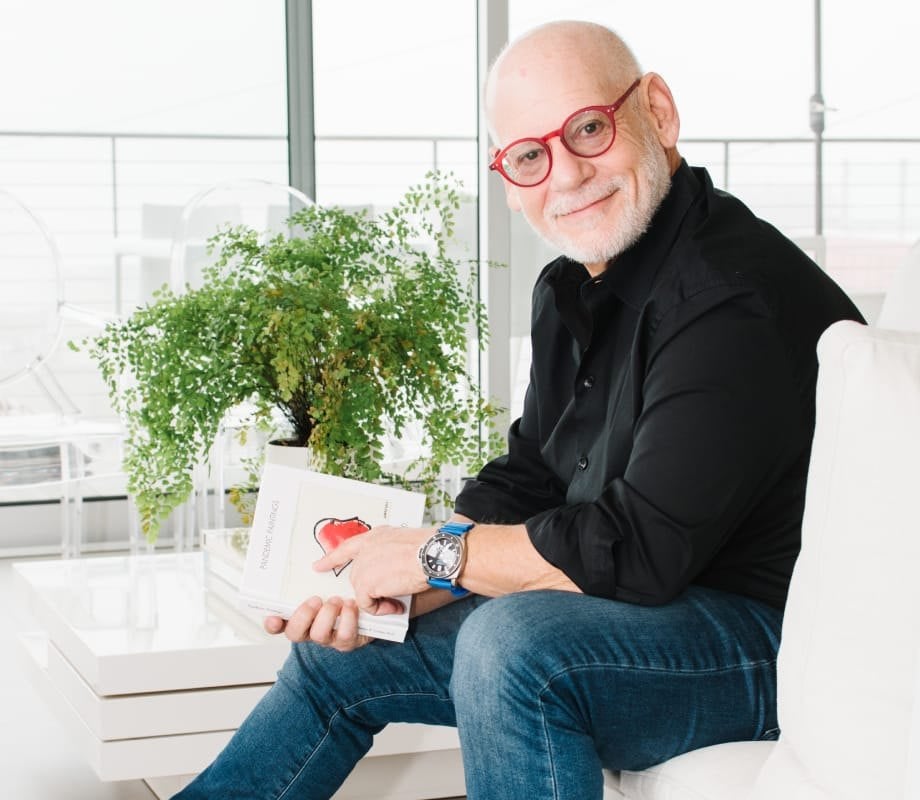
There is a version of Dr. Steven R. Cohen’s biography that reads as a straight line: Columbia Presbyterian, the National Institutes of Health, the University of Pennsylvania, UCLA, a professorship, a string of inventions. The version he brought to TEDxClemsonU on September 26, 2026 started somewhere less tidy.
Watch “How Creativity Can Save Your Life”, Dr. Cohen’s TEDxClemsonU talk, on the TEDx Talks channel.
The student who struggled
Dr. Cohen was diagnosed with dyslexia as a child. Reading came slowly, school was a fight, and the teachers around him had little idea what to do with a bright student who could not perform on paper. At one point he left the conventional school system for a military school.
He has since come to see those years as formative rather than wasted.
“I think I have this creativity as a result of having learning disabilities and dyslexia.”
Many educators now say something similar: that people with dyslexia often build compensating strengths, particularly in spatial reasoning and in seeing the whole shape of a problem before its parts. For a surgeon who rebuilds faces in three dimensions, those are not side skills.
The long climb
What followed was one of the more demanding training paths in American medicine. Dr. Cohen trained in general surgery at Columbia Presbyterian Medical Center in New York, completed a two-year fellowship at the National Institutes of Health, trained in plastic surgery at the University of Pennsylvania and the Children’s Hospital of Philadelphia, and finished with a craniofacial fellowship at UCLA under Dr. Henry Kawamoto.
By 1990 he was directing the craniofacial program at the University of Michigan. He went on to co-direct the Center for Craniofacial Disorders at Children’s Healthcare of Atlanta, and in 1999 became Chief of Craniofacial Surgery at Children’s Hospital of San Diego.
The message in the room
TEDxClemsonU’s 2026 program centered on firsts, including the experience of being the first in a family to go to college. Many in the audience were students still working out where they fit. Dr. Cohen’s account gave them a concrete example of a mind that did not suit the system it was placed in, and went on to change a field anyway.
His point was not that struggle is good for people. It was narrower and more useful. The habits a person builds to get around an obstacle, approaching a problem from the side, trusting what they can see over what they were told, refusing the first explanation, are the same habits that produce original work later.
Dr. Cohen is the founder of FACES+ in San Diego and a Clinical Professor of Plastic Surgery at UC San Diego. More information is available at facesplus.com.



More Stories
Why Professional Coaching is Your Shortcut to Success
Understanding the Role of IB Chemistry Tutors in Structured Exam Preparation
How to Choose the Right Foreign Education Consultant in Mumbai for Your Study Abroad Journey