

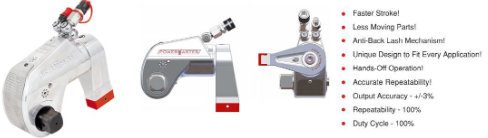
Specialised instruments called hydraulic torque wrench machines are used to precisely tighten or loosen bolts with little effort on the part of the user. In contrast to manual wrenches, these devices produce torque using hydraulic pressure, which enables high torque production, reproducibility, and safety in heavy-duty applications including mining, oil and gas, ship maintenance, turbines, and renewable energy installations (wind and solar).
Let’s look more closely at the hydraulic wrench & torque and understand what they are, how they work, where they are used and how to select one that perfectly fits for your work.
What Is A Hydraulic Wrench?
An industrial instrument called a hydraulic wrench—more specifically, a hydraulic torque wrench—is made to provide precise, high, and consistent torque to tighten or loosen massive bolts and nuts that are too heavy or demand too much power for manual tools.
Hydraulic wrenches are often used in industries where equipment quality and safety depend on exact bolt tightening. Additionally, because of their compact design, they can be used in places where traditional equipment may not be as available.
Key Benefits Of Hydraulic Wrenches
Some of the major benefits include:
- High torque output for demanding applications
- Controlled and accurate bolt tightening
- Improved productivity compared with manual tools
- Reduced physical effort for operators
- Suitable for repetitive industrial bolting tasks
Understanding A Hydraulic Torque Machine
Hydraulic torque machines, often known as hydraulic torque wrenches, are specialised instruments made for industrial bolting tasks. They provide tremendous torque by hydraulic pressure, enabling users to precisely tighten or loosen big bolts with little physical strain. These devices are extensively utilised in sectors including plant maintenance, mechanical engineering, energy, and construction.
Common Industrial Applications:
Hydraulic torque equipment can be used across several industries and applications, including:
- Construction and infrastructure projects
- Power generation facilities
- Oil and gas equipment
- Manufacturing plants
- Heavy machinery maintenance
- Steel structures and industrial installations
These tools are useful for jobs involving several fasteners that need to be tightened uniformly because of their capacity to provide consistent torque.
How To Pick The Correct Hydraulic Torque Instrument
A number of variables, including the necessary torque range, bolt size, working area, operating pressure, and application requirements, influence the choice of tool.
Compatibility with the hydraulic pump or power source, tool longevity, and convenience of use are additional crucial factors.
Importance Of Quality And Reliability
Industrial bolting tools operate in demanding environments, so quality and reliability should be important considerations. Choosing equipment from an experienced supplier can help businesses select suitable tools for their specific applications and maintain consistent performance.
Wrapping up!
An industrial instrument called a hydraulic wrench—more specifically, a hydraulic torque wrench—is made to provide precise, high, and consistent torque to tighten or loosen massive bolts and nuts that are too heavy or demand too much power for manual tools.
Hydraulic wrenches are often used in industries where equipment quality and safety depend on exact bolt tightening. Additionally, because of their compact design, they can be used in places where traditional equipment may not be as available.
Bolting Systems provides expert equipment made for tough applications for companies seeking reliable solutions for industrial bolting needs.
Choosing the appropriate equipment, whether it be a hydraulic wrench or a hydraulic torque machine, may enhance tightening precision, operational effectiveness, and general workplace productivity.
Industries can reduce the effort required for heavy-duty bolting operations while achieving more consistent fastening results with the correct hydraulic torque equipment and operating procedures.


More Stories
Key Benefits of Using Spline Impact Sockets for Industrial Applications
How Commercial CAD Drafting Supports Building Permit Drawings
Where Small Business Websites Lose Leads After the Click