

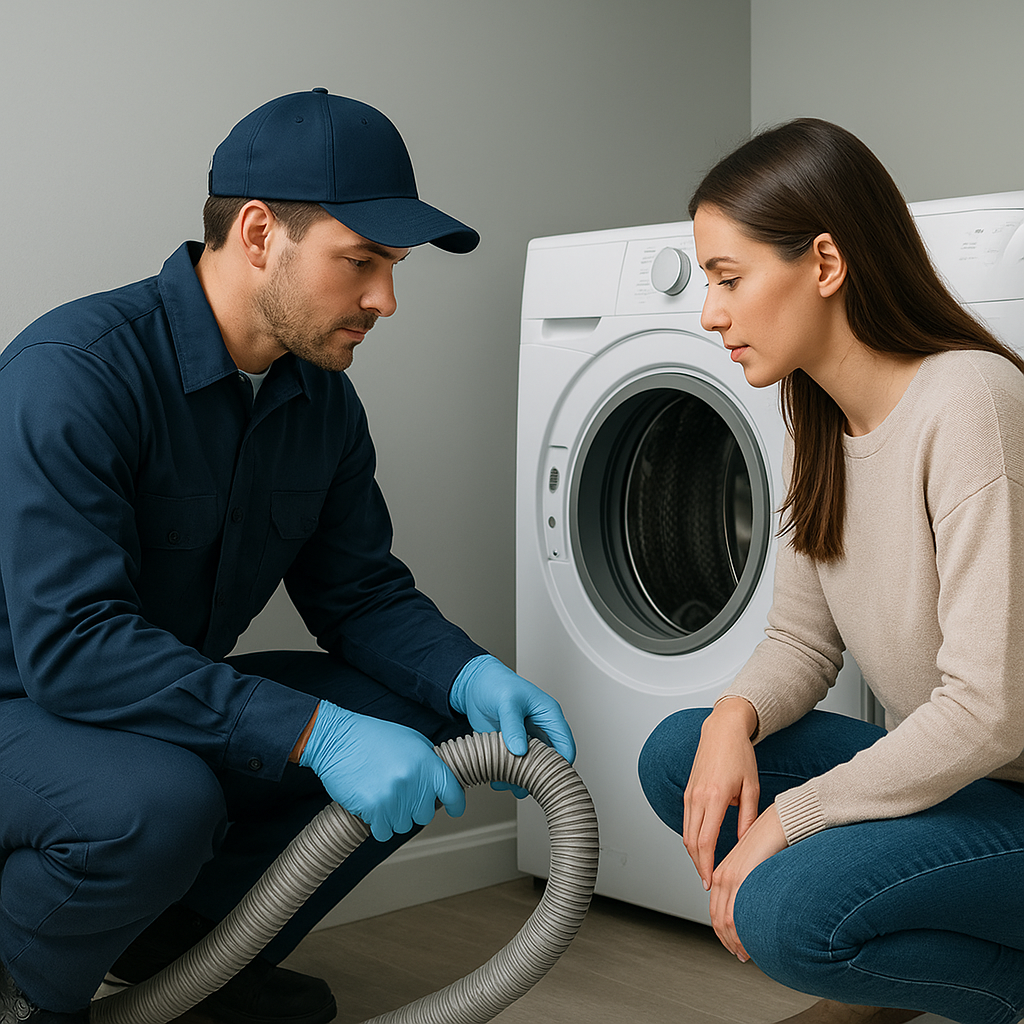
Why does dryer vent cleaning matter?
Dryer vent cleaning matters because lint can accumulate beyond the lint screen and restrict the exhaust path. Reduced airflow can make a dryer work longer and hotter, while increasing the need to investigate a potential fire risk.
Warning signs include longer drying cycles, excess heat around the appliance, lint collecting near the dryer, or an exterior vent flap that does not open while the dryer runs. These symptoms do not prove that lint is the cause. A defective appliance, crushed or damaged duct, poor installation, or a faulty moisture sensor can produce similar performance problems.
The U.S. Fire Administration advises cleaning the lint filter before and after each cycle, checking behind the dryer for lint, inspecting the venting system for damage or restrictions, and confirming that the exterior cover opens during operation, according to its clothes dryer fire safety guidance. Homeowners should keep the area behind the appliance clear and arrange an inspection when warning signs persist. A professional evaluation should distinguish removable lint from duct damage or appliance defects rather than present cleaning as a guaranteed repair, safety certification, or code-compliance determination.
What should a professional service include?
A professional dryer vent cleaning service should define what it will inspect, clean, document, and exclude before work begins. The scope should cover the accessible exhaust path, the transition connection behind the dryer, and the exterior termination, not just the lint trap or the first visible section.
Ask how the technician will identify visible restrictions, crushed sections, disconnected joints, or other damage. The equipment should suit the duct’s configuration and length, while protective measures should keep lint and debris from spreading through the laundry area. A careful provider should also explain whether the work involves a rigid duct, flexible transition, shared run, roof termination, or another access challenge.
Require written observations and, where practical, before-and-after photographs. Documentation should identify sections that were inaccessible, damaged, disconnected, or outside the cleaning scope. It should also separate four different services: cleaning removes accumulated debris; inspection evaluates visible conditions; repair addresses a defect; and replacement substitutes damaged or unsuitable ductwork.
That distinction matters when a dryer still runs poorly after cleaning. A routine cleaning does not prove that every concealed section is clear or safe, and it does not establish code compliance. It also cannot certify that the dryer, installation, or exhaust design has no underlying defect. For larger properties, the provider should record which machines and duct sections were serviced, along with any access limitations and recommended follow-up work.
What questions should you ask before hiring?
Ask the provider to define the cleaning scope, explain how problems will be documented, and separate cleaning from repairs in the estimate. A clear answer to those questions helps you judge whether the proposed service fits the property rather than assuming every vent requires the same work.
Ask what parts of the exhaust path are included. Does the service cover the transition hose, accessible duct sections, and the wall or roof termination? dryer vent cleaning salt lake city should account for the system’s layout and access limitations, not just the connection behind the appliance.
Also ask how the company reports crushed ducting, disconnected joints, obstructions, inaccessible runs, or suspected installation problems. Request an itemized estimate that separates cleaning, repairs, replacement parts, added access work, and follow-up visits. This prevents a low initial quote from obscuring work that may be recommended later.
Before scheduling, confirm the provider’s insurance, arrival window, cleanup procedures, and process if the dryer still performs poorly afterward. The answer should distinguish a remaining vent problem from an appliance or installation issue.
Commercial operators should discuss the number of machines, shared or extended duct runs, access restrictions, maintenance records, and who can approve additional work. Ask for service records that identify the machines and duct sections addressed, along with any recommended follow-up.
What Salt Lake City code questions matter?
Ask code questions when the work involves installing, altering, rerouting, or replacing dryer exhaust components, not just removing lint from an existing accessible system. Utah’s mechanical code includes provisions for clothes-dryer exhaust systems, while the applicable requirements can depend on the property, project scope, and work being performed.
For installation or alteration work, review Salt Lake City’s current building-code resources and ask whether the proposed repair requires a permit, inspection, or separate licensed trade. A contractor may also recommend an HVAC, electrical, appliance, or other specialist evaluation if the concern extends beyond cleaning.
The cleaning provider should identify observable conditions such as crushed ducting, disconnected joints, restricted airflow, damaged materials, or an inaccessible run. However, a routine cleaning appointment should not be presented as a code inspection or compliance certification. Ask what the technician is qualified and authorized to determine, what remains unexamined, and whether repairs require another professional. Property managers and commercial operators should document who approved the work and retain records of any permit or inspection requirements.
When should you schedule cleaning or further repair?
Schedule an evaluation promptly if drying times increase, the dryer or laundry area feels unusually hot, airflow seems weak, or the exterior vent cover fails to open normally during a cycle. These signs warrant inspection, not automatic proof that lint is the only problem.
If the duct is crushed, disconnected, visibly damaged, or produces a burning odor, stop using the dryer until the condition is assessed. Repeated overheating or symptoms that remain after cleaning also justify diagnostic work, especially if an appliance fault, poor installation, or a moisture-sensor problem may be involved. A cleaning appointment fits an accessible exhaust path that needs lint removal and airflow verification. It does not substitute for duct replacement, reconnection, appliance repair, or an installation review.
Commercial operators may need recurring maintenance based on machine volume, duct length, shared runs, access limits, and maintenance records rather than a one-time visit. Choose a provider that defines the scope, documents findings, identifies limitations, and separates observed conditions from recommended repairs.
For more coverage on this topic, see related articles on our publishing site.



More Stories
What Is an NDA and When Do Inventors Need One?